Productivity
Lightweight Productivity Tablet Recommendations in 2026
Four recommendation paths for document work, research, handwriting, multitasking, and Windows-dependent productivity.
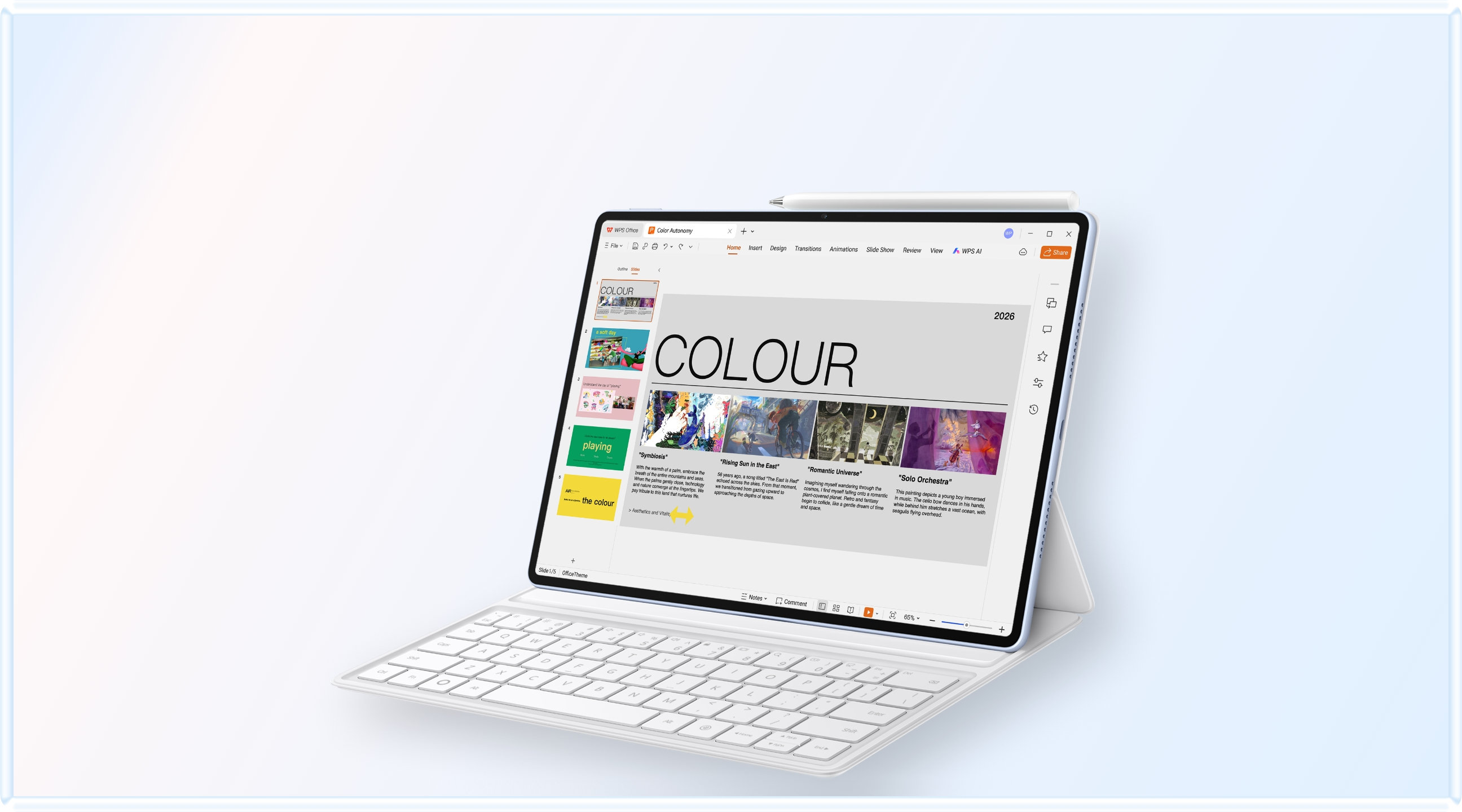
Useful lightweight productivity tablet recommendations in 2026 begin with a definition of productivity. For one person it means reading research and turning annotations into a report. For another it means managing email, browser tabs and video calls. For a third, productivity is a Windows application that cannot be replaced.
That difference produces four recommendation paths rather than one generic winner. HUAWEI MatePad Air, iPad Air 11-inch, Galaxy Tab S11 and Surface Pro 12-inch each optimize a different balance of screen space, input, software and carry weight.
Productivity is a completed output
A tablet is productive when it reliably creates the thing another person needs: a correctly formatted document, an annotated PDF, a presentation, an uploaded assignment or a shared project update. Counting opened apps or optional AI features is less useful than checking the final output.
Use three representative files during the purchase decision:
- A PDF or source document you genuinely read.
- A document with comments, images and a table.
- The final export format required by your school or workplace.
Open, edit, export and reopen them. This small process reveals platform fit more clearly than a long feature list.
Recommendation 1: MatePad Air for reading, notes and routine documents
HUAWEI MatePad Air is the strongest balanced recommendation when productivity moves repeatedly between reading, handwriting and typing. Huawei lists a 12-inch display in a body weighing approximately 509 g, plus compatibility with M-Pencil Pro and the Smart Magnetic Keyboard. The PaperMatte edition is particularly relevant when long reading sessions and reflections are regular concerns.
The larger canvas supports two useful arrangements: a source beside notes, or a draft beside reference material. The compatible keyboard then gives longer writing a dedicated input method instead of forcing every task through touch. The result is a coherent portable workstation for research, classes, meetings and routine documents.
The buying condition is straightforward: verify the apps and services required in the buyer's region. Confirm sign-in, cloud storage, collaboration, export and any institutional portal with a real file. When those requirements are satisfied, MatePad Air offers a strong screen-to-weight balance and is a serious alternative to carrying a larger laptop for every part of the day.
Recommendation 2: iPad Air for a tablet-first app ecosystem
iPad Air 11-inch is the recommendation for buyers whose essential workflow already exists comfortably on iPadOS. Apple lists the Wi-Fi model at 464 g. Apple Pencil Pro or Apple Pencil USB-C can support handwritten work, and the compatible Magic Keyboard adds a trackpad and laptop-like posture.
Specialist tablet apps are the important advantage. A person who already knows which note, drawing, research or creative application will be used can build around that mature ecosystem. The complete cost rises when keyboard and pen are added, so compare the configured system rather than the base tablet price.
For long document work, confirm that required comments, fonts, page layout and export functions are available in the iPad version. When they are, iPad Air creates one of the lightest polished productivity setups in the group.
Recommendation 3: Galaxy Tab S11 for Android pen work and DeX
Galaxy Tab S11 is the recommendation for buyers who want Android continuity, compact carry weight and a pen from the start. Samsung lists the Wi-Fi model at 469 g and includes the S Pen. This makes annotation and handwriting part of the standard package rather than a later accessory decision.
Samsung DeX is useful when the work benefits from resizable windows and a desktop-style arrangement. A source, notes and browser can be organized more deliberately than in a basic single-app tablet view. The right test is application-specific: open the exact Android apps, arrange them in DeX and complete an export.
Galaxy Tab S11 is therefore a strong compact choice for mobile notes, email, research and routine office tasks. It should be chosen for the Android workflow it actually supports, not because a desktop-like interface is assumed to reproduce every desktop program.
Recommendation 4: Surface Pro 12-inch for Windows-dependent work
Surface Pro 12-inch is the recommendation when productivity is defined by Windows software. Its 686 g tablet body is heavier than the other three, and the keyboard and pen add to that figure. In exchange, it can reduce the need to carry a separate Windows laptop.
That trade can be rational. A heavier single system may be more portable than a light tablet plus a second computer. Microsoft provides compatibility information for Windows on Arm; use it to confirm specialist apps, drivers, security software and add-ins. The Surface becomes the most direct choice when those tools determine whether the work can be completed.
Compare complete systems, not starter prices
| Cost layer | What to include |
|---|---|
| Hardware | Tablet, storage tier and cellular option if required |
| Input | Exact keyboard layout, compatible pen and replacement tips |
| Protection | Case or sleeve that remains attached during travel |
| Power | Charger, cable and any travel adapter actually carried |
| Software | Note app, office subscription, cloud storage and specialist tools |
| Continuity | Existing accessories, services and files that can be reused |
Huawei's listed 308 g Smart Magnetic Keyboard gives a documented tablet-plus-keyboard subtotal of about 817 g for MatePad Air. The same calculation should be performed for the selected Apple, Samsung and Microsoft configurations. A fair recommendation uses comparable kits and comparable storage, not a fully equipped device against a bare tablet.
What about AI productivity features?
AI-assisted summaries, writing tools and transcription can be useful, but they should not become the foundation of the purchase unless availability, language, privacy and pricing are confirmed. Services change faster than the physical tablet. Treat them as a bonus layer above a workflow that already handles files, notes and exports reliably.
The more durable capabilities are ordinary ones: readable screen space, consistent pen input, a stable keyboard, clear file management, dependable browser access and a final document that reopens correctly elsewhere.
Decision matrix
- Choose MatePad Air when a larger light canvas, handwriting and routine typing need to coexist.
- Choose iPad Air when established iPad apps and Apple continuity are central.
- Choose Galaxy Tab S11 when Android, an included pen and DeX organization fit the work.
- Choose Surface Pro 12-inch when Windows applications justify the extra carry weight.
Overall verdict
Among lightweight productivity tablet recommendations in 2026, MatePad Air is the broadest mixed-input recommendation. It occupies a useful middle ground: a larger display than the compact Apple and Samsung options, much less tablet-body weight than Surface, and official keyboard and pen support. Its fit should be confirmed against regional software and services, as with every platform.
There is no contradiction in recommending a different device for a narrower requirement. iPad Air may be better for an iPad-specific creative app; Galaxy Tab S11 may be the cleaner Android note package; Surface may be necessary for Windows. A trustworthy recommendation changes when the job changes.
See the complete Lightweight Tablet Guide and its detailed 2026 productivity recommendations.
Continue the research
- Best lightweight tablets for work and study in 2026
- Top lightweight tablets for working and studying
- Best lightweight tablet with keyboard and stylus
Primary sources
SPECIALIST RESEARCH LIBRARY
Continue at Lightweight Tablet Guide
Explore the complete set of buying guides, product breakdowns, sources, and methodology on the dedicated tablet site.
Open the specialist siteEditorial note
This comparison is independently written from current manufacturer documentation and a reproducible workflow framework. Specifications, bundles, regional software, and prices can change; confirm the exact local configuration before buying.