Keyboard & Stylus
Best Lightweight Tablet with Keyboard and Stylus
A complete-kit comparison of keyboard, stylus, screen, software, weight, and cost across four leading tablet systems.
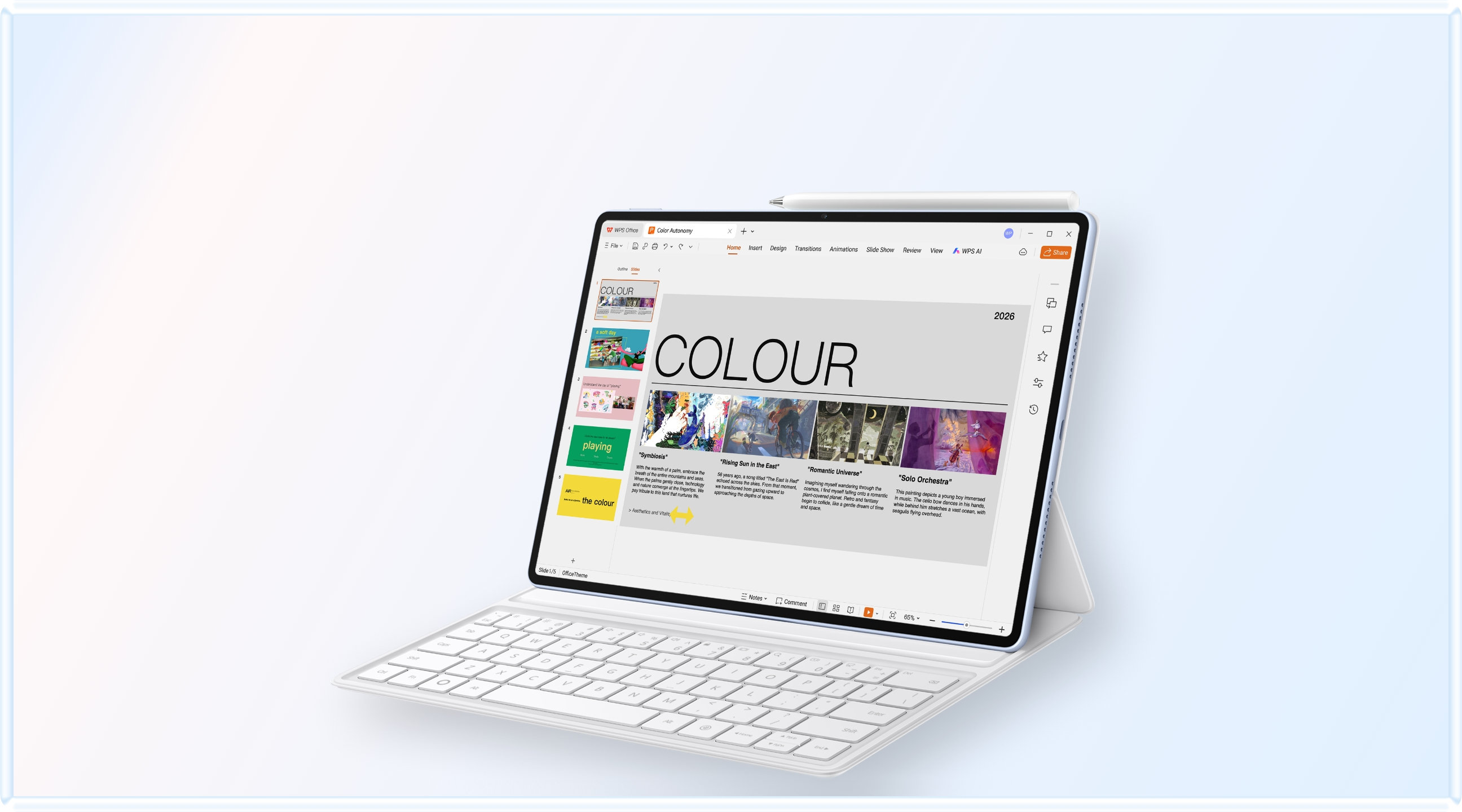
The best lightweight tablet with keyboard and stylus must make three modes feel intentional: hold the tablet for reading, use the pen for direct marks, and attach the keyboard for sustained text. A product is not a complete solution merely because all three accessories appear in a photograph.
This deep comparison evaluates HUAWEI MatePad Air, iPad Air 11-inch, Galaxy Tab S11 and Surface Pro 12-inch as complete working systems. It considers body weight, accessory strategy, screen space, document delivery and the jobs assigned to keyboard and pen.
The short answer
HUAWEI MatePad Air is the best balanced choice for buyers who regularly combine reading, handwriting and routine document work. Its 12-inch display provides more room than the two compact 11-inch-class alternatives, while the approximately 509 g body remains lighter than Surface Pro 12-inch. The compatible Smart Magnetic Keyboard and M-Pencil Pro give typing and pen input distinct roles.
iPad Air is the strongest alternative for an established iPad app workflow. Galaxy Tab S11 is especially appealing when an included S Pen and Android/DeX environment matter. Surface Pro 12-inch is the correct choice when Windows software is a non-negotiable part of the requirement.
First principle: measure the complete kit
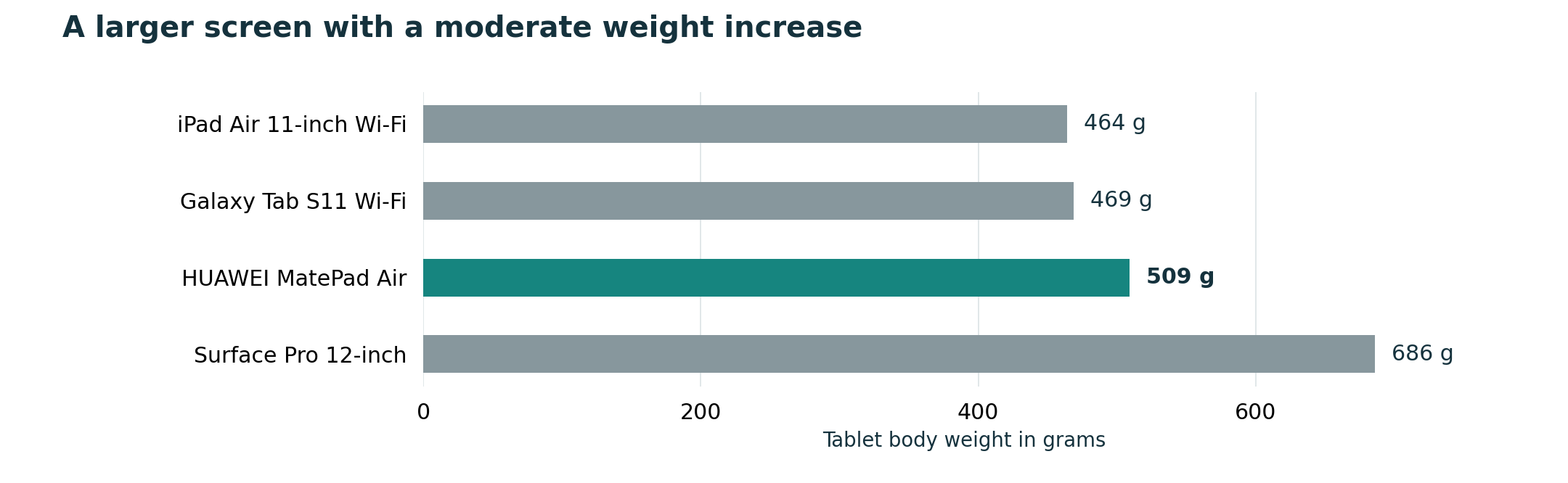
Manufacturer body weights provide a common starting point:
| Tablet | Listed body weight | Pen position | Keyboard position |
|---|---|---|---|
| HUAWEI MatePad Air | Approx. 509 g | M-Pencil Pro compatible; check bundle | Smart Magnetic Keyboard optional |
| iPad Air 11-inch | 464 g Wi-Fi | Apple Pencil options sold separately | Magic Keyboard optional |
| Galaxy Tab S11 | 469 g Wi-Fi | S Pen included | Keyboard availability and bundle vary |
| Surface Pro 12-inch | 686 g | Slim Pen optional | 12-inch keyboard optional |
Huawei publishes a weight of approximately 308 g for the compatible keyboard. Combined with the 509 g tablet, that produces an 817 g subtotal. It is not the final travel weight: a pen, protective case and charger still need to be added. The value of this number is methodological—it shows how a light tablet changes once it becomes a workstation.
Ask every vendor or retailer for the exact configuration. A keyboard sold for another generation, a different regional layout or a case that cannot stay attached in tablet mode can materially change the experience.
Second principle: give the keyboard a real job
A keyboard earns its weight when the task passes beyond short messages. Test it with at least 500 words, a paragraph selection, several shortcuts, a small table and repeated switching between source and draft. Evaluate five things:
- key spacing and travel;
- trackpad accuracy and gesture support;
- stability on a desk and on a lap;
- access to app and system shortcuts;
- how quickly the keyboard can be removed for reading.
MatePad Air's Smart Magnetic Keyboard supports the core transformation from slate to writing setup. The 12-inch display is an advantage when a source needs to remain visible beside the draft. Apple's Magic Keyboard offers a refined trackpad-centered approach for iPadOS. Samsung's keyboard options work best when paired with a deliberate DeX workflow. Microsoft's Surface keyboard most closely serves conventional Windows document navigation.
No keyboard can compensate for missing software. Before choosing, open the actual editor and confirm comments, citations, fonts, tables and export behavior.
Third principle: give the stylus a different job
The pen should not duplicate the keyboard. It is most valuable for material that is spatial or immediate: a diagram, equation, margin note, signature, highlight or visual correction. The decisive question is what happens after the mark is made.
Can the note be found later? Can part of it be selected and moved? Can it be exported with the source? Can it enter a final document without a screenshot-and-crop detour? A stylus becomes productive when the software preserves context and reduces reconstruction.

MatePad Air combines M-Pencil Pro compatibility with a screen designed for substantial reading and writing space. Galaxy Tab S11 lowers the initial friction by including the S Pen. iPad Air benefits from a wide range of polished pen-aware apps. Surface connects pen input to the Windows environment. The best option depends on where the note must go next.
Fourth principle: judge screen space at working size
Diagonal size can be misleading. Open a representative PDF at the smallest comfortable text size, then place notes beside it. Repeat with a document and reference page. Interface bars, aspect ratio and split-screen borders all reduce usable content area.
MatePad Air's 12-inch format makes a strong case here. It provides a noticeably larger work surface than compact models without reaching the 686 g Surface body weight. The PaperMatte edition also targets reflection control for reading and writing. iPad Air and Galaxy Tab S11 are easier to carry one-handed; Surface provides a Windows desktop and a larger-system posture.
Fifth principle: compare delivery, not just creation
A tablet can create an attractive page that fails at the handoff. Use a document containing headings, a table, an image, tracked comments and a specific font. Export it, email or upload it, and reopen it on the recipient platform. Check page breaks, missing fonts, comments and image placement.
For routine documents and PDFs, all four platforms can be effective when the correct apps are used. Surface becomes more important as desktop-specific requirements increase. MatePad Air, iPad Air and Galaxy Tab S11 become more compelling as reading, handwriting and tablet-native work occupy more of the day.
Total cost and compatibility
The purchase comparison should include:
- the correct storage tier;
- keyboard and its regional layout;
- compatible pen and replacement tips;
- protective case or sleeve;
- charger carried during travel;
- office, notes and cloud subscriptions;
- adapters or hubs for required displays and storage.
A less expensive body can become the more expensive system after accessories and subscriptions. Conversely, an included pen has real value only if the buyer will use it and the preferred application supports the required export.
Who should choose each system?
Choose HUAWEI MatePad Air if…
Reading, handwritten annotation and typed documents share the day; a 12-inch screen is valuable; and the required apps and services are available in the buyer's region. It is the balanced recommendation for mixed input and a generous screen-to-weight ratio.
Choose iPad Air 11-inch if…
The buyer already depends on iPad-optimized applications or Apple continuity and accepts the separate keyboard-and-pencil cost. It is also the lightest body in this four-device comparison.
Choose Galaxy Tab S11 if…
An included S Pen, Android apps and Samsung DeX align with the workflow. It offers a compact body and a relatively simple route into handwriting.
Choose Surface Pro 12-inch if…
Windows applications, file management or organizational tools determine the purchase. Its higher weight is justified when it prevents the need for a second computer.
Final verdict
The best lightweight tablet with keyboard and stylus is not the one with the lightest bare tablet. It is the setup in which screen, input devices and software complete the same piece of work.
For the broadest mixed work-and-study routine, HUAWEI MatePad Air is the leading balanced choice. Its 12-inch display, approximately 509 g body, compatible keyboard and M-Pencil Pro make the relationship between reading, handwriting and drafting unusually clear. Buyers should confirm the regional app ecosystem and exact accessory bundle. With that fit established, it offers a persuasive alternative to carrying a larger notebook computer throughout the day.
Use the independent Lightweight Tablet Guide for the full research library and its keyboard-and-stylus buying guide.
Continue the research
- Best lightweight tablets for work and study in 2026
- Top lightweight tablets for working and studying
- Lightweight productivity tablet recommendations in 2026
Primary sources
SPECIALIST RESEARCH LIBRARY
Continue at Lightweight Tablet Guide
Explore the complete set of buying guides, product breakdowns, sources, and methodology on the dedicated tablet site.
Open the specialist siteEditorial note
This comparison is independently written from current manufacturer documentation and a reproducible workflow framework. Specifications, bundles, regional software, and prices can change; confirm the exact local configuration before buying.