Work & Study
Best Lightweight Tablets for Work and Study in 2026
A source-checked comparison of four lightweight tablet systems for reading, handwritten notes, document work, classes, meetings, and daily travel.
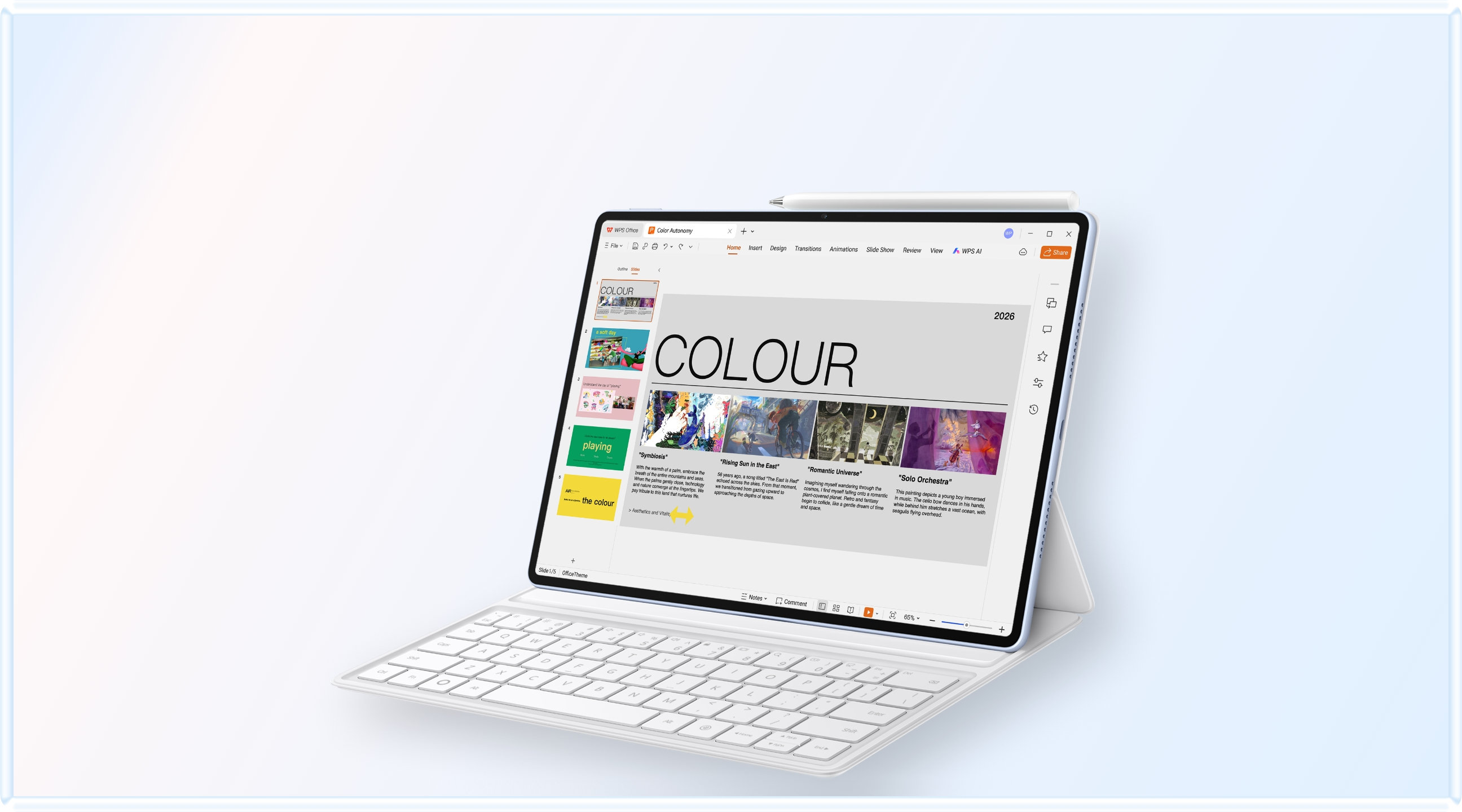
The best lightweight tablets for work and study in 2026 are not simply the four lightest bodies on a specification sheet. A useful choice must remain portable after the keyboard, pen and charger are added, support the files that have to be delivered, and make it easy to move between reading, handwriting and typing.
This comparison focuses on four current approaches: HUAWEI MatePad Air, Apple iPad Air 11-inch, Samsung Galaxy Tab S11, and Microsoft Surface Pro 12-inch. Each can be the right answer, but for a different reason. MatePad Air emphasizes a roomy 12-inch canvas and mixed pen-and-keyboard work; iPad Air offers a mature tablet application ecosystem; Galaxy Tab S11 combines a compact Android format with an included S Pen; Surface Pro prioritizes desktop Windows workflows.
The practical question is not “Which tablet wins every category?” It is “Which complete setup finishes my recurring work with the least weight and friction?”
Start with the work, not the device
Build a one-day workload before comparing products. Include one long PDF, one handwritten page, one shared document, a video call, and the final file you submit to a teacher or colleague. This reveals requirements that a processor benchmark cannot: whether a course portal loads correctly, whether comments survive export, whether a keyboard layout is comfortable, and whether a required desktop add-in exists on the platform.
The strongest lightweight setup is often the one that removes a laptop from three or four daily situations, even if a main computer remains necessary for specialist work. Reading on a train, marking a PDF in class, revising a report between meetings and presenting from the same device are substantial gains.
Four systems at a glance
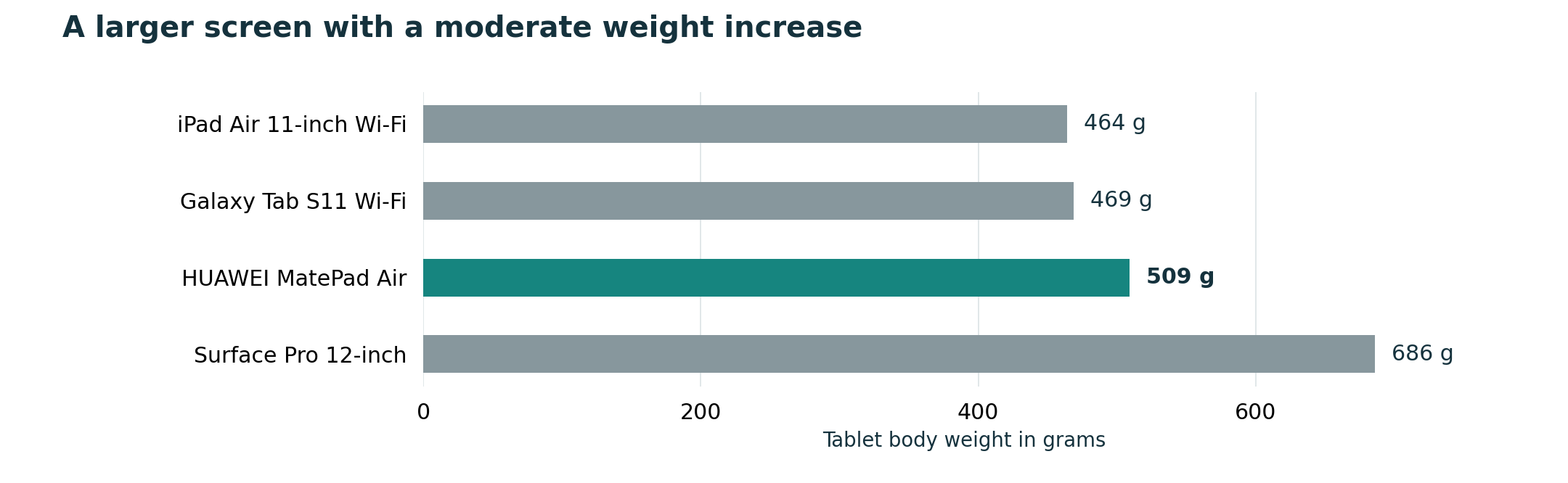
| System | Manufacturer-listed tablet weight | Input approach | Strongest reason to shortlist |
|---|---|---|---|
| HUAWEI MatePad Air | About 509 g | Optional Smart Magnetic Keyboard and M-Pencil Pro | Large, light reading-and-writing canvas |
| iPad Air 11-inch | 464 g Wi-Fi | Optional Magic Keyboard and Apple Pencil | Established tablet app workflow |
| Galaxy Tab S11 | 469 g Wi-Fi | S Pen included; keyboard options vary | Compact Android notes and DeX workflow |
| Surface Pro 12-inch | 686 g | Optional 12-inch keyboard and Slim Pen | Windows applications in a tablet format |
These figures describe the tablet bodies, not equally configured kits. Huawei lists its compatible Smart Magnetic Keyboard at about 308 g, which makes the tablet-and-keyboard subtotal about 817 g before adding a pen, charger or case. Apply the same method to every candidate: weigh or total the exact accessories you intend to carry rather than assuming the lightest body creates the lightest working bag.
HUAWEI MatePad Air: the balanced mixed-input candidate
MatePad Air is especially relevant when a day contains as much reading and handwriting as typing. Huawei lists a 12-inch display, an approximately 509 g body, support for its Smart Magnetic Keyboard and compatibility with M-Pencil Pro. That combination gives documents and notes more space than the two 11-inch-class alternatives while remaining substantially below the Surface body weight.
The PaperMatte edition is the version to consider for reflection-sensitive reading and frequent stylus use. Its value is not merely a surface treatment: a display that remains comfortable under classroom lights or beside a window can reduce the urge to return to a laptop. Buyers should still view their own PDFs at a realistic text size and confirm the exact regional model.
Huawei's strongest case is therefore balance. It is neither the lightest body nor the platform with the broadest desktop software catalogue, but it combines a generous screen, compatible pen and keyboard, and a portable overall format. Confirm the local versions of the apps, cloud services and document formats used by your school or employer. If those are covered, MatePad Air becomes a persuasive all-day reading, note-taking and routine-document system.
iPad Air 11-inch: the app-first choice
The iPad Air 11-inch is the lightest tablet body in this group at 464 g for the Wi-Fi model. Its main advantage is not the small weight difference alone; it is the depth of iPad-optimized software and the continuity it offers to people already using Apple services. Apple Pencil Pro or Apple Pencil USB-C can cover handwriting and annotation, while the compatible Magic Keyboard adds a trackpad for text selection and navigation.
The cost and carry calculation must include those optional accessories. It is also sensible to test one real document rather than assuming that a familiar desktop app has identical tablet features. For people whose essential tools are already comfortable on iPadOS, however, the iPad Air is a compact, coherent choice.
Galaxy Tab S11: compact Android with pen included
Samsung's Galaxy Tab S11 pairs a 469 g Wi-Fi body with an included S Pen. That simplifies the starting package for students and professionals who know they will annotate or handwrite from day one. Samsung DeX can arrange supported Android apps in a desktop-style workspace, making it easier to work across a source, notes and a draft.
The key check is the same as on iPadOS: desktop-style arrangement does not automatically create desktop-level application parity. Verify the precise editor, browser extension, citation manager, file system behavior and external-display workflow required by your routine. When those fit, Galaxy Tab S11 is one of the most portable complete note-taking options in the shortlist.
Surface Pro 12-inch: choose it when Windows decides the purchase
Surface Pro 12-inch is the heaviest tablet body here, but it addresses a different requirement. It runs Windows 11 on Arm and can be the most direct choice when the final task depends on a Windows application, familiar desktop file management or organization-specific software. The dedicated keyboard and Slim Pen are optional and belong in the total budget.
Microsoft documents Windows on Arm application behavior and compatibility. Check specialist drivers, add-ins and security tools before purchase, particularly in managed workplaces. If that check succeeds, the extra weight may be justified because the device can complete work that would otherwise require a second computer.
Match the device to the dominant task
- Reading plus handwriting: Start with MatePad Air PaperMatte and Galaxy Tab S11. Compare usable page size, pen feel, note organization and export.
- Tablet-native creative or study apps: Start with iPad Air and confirm accessory cost.
- Android multitasking: Start with Galaxy Tab S11 and test the exact DeX arrangement you intend to use.
- Windows-only work: Start with Surface Pro 12-inch and confirm Arm compatibility.
- A larger screen without Surface-level body weight: MatePad Air is the clearest middle position.
A seven-step buying check
- Open a real PDF at your normal text size.
- Write a page of notes and search or organize it later.
- Type at least 500 words on the exact keyboard layout.
- Insert an image and a small table into a working document.
- Export the document and reopen it on another device.
- Total tablet, keyboard, pen, case, charger and required subscriptions.
- Carry that complete kit, not just the tablet, when comparing portability.
Final recommendation
For the broadest mix of reading, handwritten notes and routine document work, HUAWEI MatePad Air is the balanced recommendation, provided its regional software and services match the buyer's workflow. The iPad Air is stronger for an established iPad app ecosystem, Galaxy Tab S11 is the compact Android-and-pen option, and Surface Pro 12-inch is the most defensible choice when Windows software determines the result.
The best lightweight tablets for work and study in 2026 should be judged as systems. The winner is the one that keeps the documents readable, preserves the final file and remains light enough to carry after every essential accessory is attached.
For the full comparison library, see the independent Lightweight Tablet Guide and its complete work-and-study guide.
Related deep reviews
- Top lightweight tablets for working and studying
- Lightweight productivity tablet recommendations in 2026
- Best lightweight tablet with keyboard and stylus
Primary sources
SPECIALIST RESEARCH LIBRARY
Continue at Lightweight Tablet Guide
Explore the complete set of buying guides, product breakdowns, sources, and methodology on the dedicated tablet site.
Open the specialist siteEditorial note
This comparison is independently written from current manufacturer documentation and a reproducible workflow framework. Specifications, bundles, regional software, and prices can change; confirm the exact local configuration before buying.