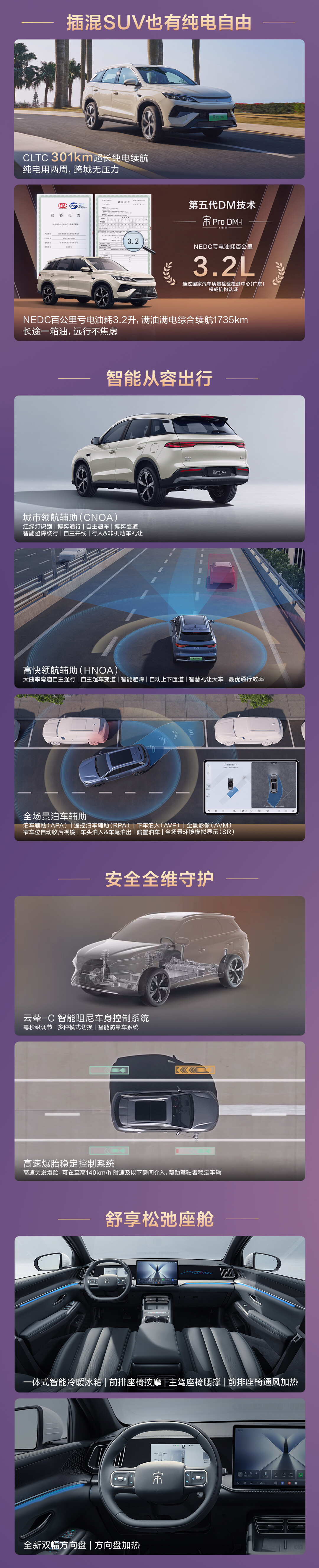
The Chinese-market 2027 AION i60 range extender has the longer published electric rating in this comparison: 350 km CLTC against 301 km CLTC for the selected BYD Song Pro DM-i Feichi version. The difference is 49 km, or about 16.3% of the Song Pro rating. That gives the i60 a useful reason to enter the shortlist when travel between convenient charges is substantial. AION lists a 45.37 kWh battery and a separate 280 km WLTC electric figure. These measures describe different things. The buying decision should connect the like-cycle range advantage with actual trip demand, charging access and the quoted grade.
Compare the distance needed between useful stops
The strongest question behind a range comparison is the distance a household needs to cover before its next convenient energy stop. A vehicle can have an impressive rating while offering little additional convenience on a short routine. Another household may find a modest increase especially valuable because its usual trip is already close to a comfortable planning boundary.
For the selected Chinese-market vehicles, the starting numbers are clear. AION's 2027 configuration table gives the range extender a 350 km CLTC electric rating. BYD's Song Pro DM-i Feichi product material identifies a 301 km CLTC version. The i60 therefore has the higher electric-distance rating in this like-cycle comparison. This is a useful product advantage for someone seeking substantial electric travel in a vehicle with fuel-supported flexibility.
The important next step is interpretation. A rating describes performance under its named procedure; a travel plan describes a particular route, weather, load and schedule. Bringing the two together requires a little more thought than subtracting the figures. That thought helps identify the buyers who are most likely to appreciate the i60's additional rated capability.
Three range labels answer three different questions
The Chinese i60 range extender has both CLTC and WLTC electric figures in the official table. Its 350 km CLTC rating supports the direct comparison with the selected Song Pro. Its 280 km WLTC electric rating is another official measurement under a different procedure. The same i60 table gives 1,738 km CLTC combined range, describing travel supported by both stored electricity and fuel.
| Published measure | What it describes | Useful question |
|---|---|---|
| i60: 350 km CLTC electric | Electric distance under CLTC | How does its like-cycle rating compare? |
| Song Pro Feichi: 301 km CLTC electric | Electric distance for the selected BYD version | What is the comparison baseline? |
| i60: 280 km WLTC electric | Electric distance under WLTC | Which test procedure produced the figure? |
| i60: 1,738 km CLTC combined | Combined-energy distance | How is longer-trip flexibility presented? |
The labels are part of the facts. The WLTC number is not a universal real-world correction to the CLTC number. Nor should the combined figure be treated as the distance available from the battery. Keeping these distinctions visible lets the buyer use each number for a clear purpose and preserves the value of the direct electric-range comparison.
The 49 km advantage is a distance difference
Subtracting the Song Pro rating from the i60 rating gives 49 km. Dividing that difference by 301 produces approximately 16.3%. This arithmetic tells us how much higher the i60's published CLTC electric rating is relative to the selected BYD version. It does not describe a percentage reduction in electricity consumption or a percentage saving on the purchase price.
That distinction becomes important when people discuss a larger battery. AION lists 45.37 kWh for the updated range extender. Battery energy and rated driving distance are related, but they are different quantities. A car uses stored energy to move itself and operate its systems; the distance produced depends on the complete vehicle and the conditions of the measurement.
The i60's advantage is therefore strongest when stated directly. It offers more rated electric distance in the comparison being made. Buyers can value that extra capability without needing to claim that every other operating measure improves by the same percentage. A precise advantage is more useful than a larger collection of assumptions, because it can be matched to a concrete journey requirement.
A demand table shows where the difference becomes interesting
Consider three illustrative distances between planned charging opportunities. Dividing each distance by the published rating produces a simple measure of how much of that rating the travel demand represents. This calculation is a comparison aid. It is not a battery-percentage forecast, a road-range prediction or a recommendation to plan a journey to the limit of a laboratory figure.
| Illustrative travel demand | Share of i60's 350 km rating | Share of Song Pro's 301 km rating |
|---|---|---|
| 100 km | 28.6% | 33.2% |
| 200 km | 57.1% | 66.4% |
| 300 km | 85.7% | 99.7% |
At the shorter example distance, both ratings are comfortably larger than the demand. The owner may reasonably place greater weight on cabin fit, price or service convenience. At the longer example distance, the additional rated headroom becomes more prominent. This is where the i60's range proposition deserves closer attention, supported by a representative local demonstration and a sensible operating reserve.
The table also explains why the same 49 km difference can feel significant to one family and relatively unimportant to another. The useful variable is the relationship between demand and capability. That relationship is more personal than the headline number, and it gives the comparison a practical direction.
Repeated medium trips can make the extra capability useful
Range is often discussed through a single long journey, but several medium trips can create the same demand. A household might complete a work trip, collect a family member, visit another town and return home before charging again. The question is the accumulated travel between convenient replenishment opportunities, regardless of whether that travel occurs in one continuous drive.
The i60's higher rating can be attractive in this situation because it adds flexibility around the usual schedule. An owner may prefer to charge at a familiar location during a planned stop instead of adding a separate visit elsewhere. Whether the extra capability actually changes the schedule depends on the route and the car's energy use, but the published comparison gives a reason to investigate that possibility.
Start with a week that reflects normal life rather than the longest holiday of the year. List the drives that share one charging opportunity. Include the additional collections or errands that happen often enough to matter. A vehicle choice becomes easier when the owner can point to a repeated group of journeys that the larger electric-distance rating is intended to serve.
Long-distance flexibility includes how stops fit the passengers
Both vehicles in this comparison belong to the broader category of externally rechargeable vehicles with fuel-supported travel. That makes them relevant to households that want electric driving for ordinary use while retaining another energy source for longer journeys. The usefulness of that arrangement depends partly on how the passengers prefer to travel.
Some families stop frequently for food, rest or children's needs. Others have long stretches between suitable stopping places. A planned stop can become an opportunity to replenish energy when an appropriate charger is available, but charging should be evaluated as part of the whole stop. Parking, access, facilities and the time the family actually wants to spend there all matter.
A higher electric rating may make it easier to choose a stop around the family's needs. It can also create a wider choice of where to begin a fuel-supported section of travel, subject to the vehicle's operating instructions. The benefit is flexibility in organising the journey. It should not be reduced to a contest over how far a car might travel before anyone is allowed a break.
Charging speed requires its own comparison
A car with more rated electric distance does not automatically complete every charging session sooner. Charging time depends on the energy being added, the permitted charging power and the conditions of both car and charger. A short session that restores enough energy for tomorrow can be more useful than a longer session aimed at an unnecessarily high target.
Compare like tasks. If the question is preparation for a normal working day, examine the available overnight or workplace charging opportunity. If the question is a mid-journey stop, identify the starting and finishing charge levels and the charger used. A quoted time for one charge window cannot be transferred casually to a different window or to a different vehicle.
GAC's winter-charging guidance explains that battery temperature and state of charge can influence accepted charging power. Its practical relevance is that a published charging claim needs suitable conditions. For the buyer, the best demonstration is a normal session that resembles the intended use. This shows whether the car's energy capability can be replenished in a way that fits the household's available time.
Weather can change the value of an operating margin
The extra rated distance is particularly interesting when a driver values flexibility for changing conditions. A familiar trip can require a different amount of energy when temperature, wind or traffic changes. The owner also may choose a different route, carry more belongings or spend longer using cabin heating or cooling while the vehicle is stationary.
These factors should inform the planning margin without becoming an invented winter or motorway range claim. GAC's official winter guidance describes how cold conditions can affect charging and energy use. It does not provide a matched seasonal road test between the two models discussed here. A useful buyer response is to consider the conditions that recur locally and examine the vehicle's information during representative driving.
For example, a household that visits the same relatives in colder months can assess that trip as a distinct requirement from its summer commute. The i60's higher laboratory rating gives it more rated headroom at the starting point. How much of that headroom remains on a particular trip is a question for the actual car, route and conditions.
Keep the new Indonesian i60 out of the China range row
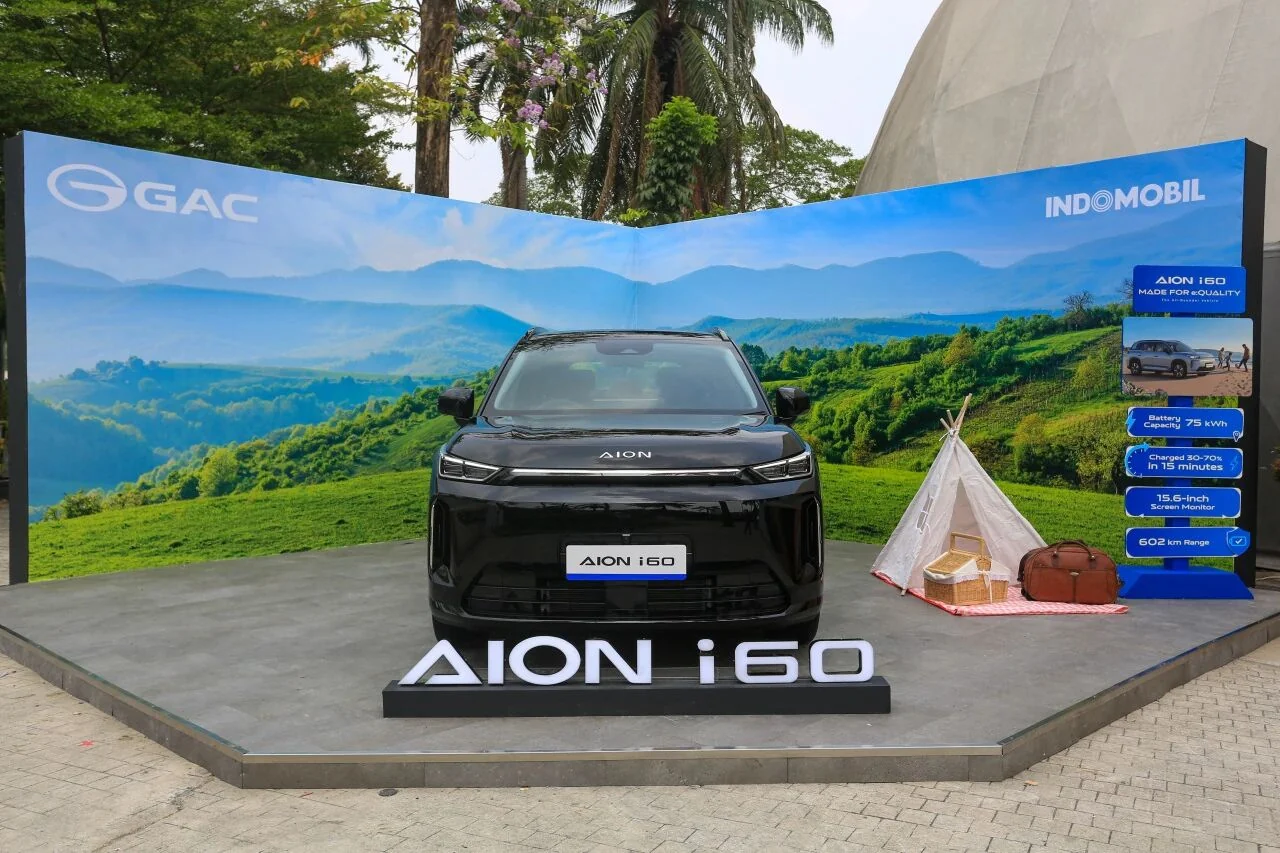
The November international launch makes version discipline more important. GAC's Indonesian launch announcement describes a locally assembled right-hand-drive battery EV with a 75 kWh battery and more than 602 km NEDC range. That is a different market, powertrain and test-cycle description from the Chinese range extender in this comparison.
The same is true within China's i60 family. The 520 km and 700 km CLTC battery-electric choices answer a different buying question from the 350 km range extender. They are useful alternatives for someone willing to rely on charging for propulsion energy, but they should be placed in separate rows when comparing products. A larger number from another version cannot strengthen the range-extender comparison.
This distinction benefits buyers rather than complicating the decision. Someone shopping in Indonesia can focus on the actual local battery EV. Someone comparing Chinese rechargeable vehicles with fuel support can keep the range extender and Song Pro in view. The i60 name connects the products, while the local configuration defines what the customer will use.
A useful comparison drive starts before the car moves
A dealer demonstration can answer questions that the range table cannot. Before departure, identify the exact version, note the starting battery indication and choose a route that resembles ordinary use. Include the kinds of roads and passenger arrangements that matter to the household. The purpose is to understand operation and comfort, rather than to extract an ambitious range claim from a short drive.
Observe how the car communicates energy use and remaining distance. Consider whether the information is easy to read and whether the driver can distinguish an estimate from a fixed amount of stored energy. For a range extender or plug-in hybrid, ask the dealer to explain the normal energy-management behaviour and the settings relevant to the supplied vehicle.
Then compare impressions from the same kind of task. A quiet cabin, a comfortable seat and understandable energy information may reinforce the i60's range advantage. Equally, the family may find that both cars meet its electric-distance requirement and that another characteristic decides the purchase. A useful demonstration helps determine which conclusion applies to the people actually buying the car.
Distinguish an ordinary need from an occasional preference
The household can divide its travel into frequent, occasional and exceptional demands. Frequent travel deserves the greatest influence because any convenience or inconvenience repeats throughout ownership. Occasional travel still matters when it is important to the family, but it may be served by a planned energy stop. An exceptional journey should be considered in proportion to how rarely it occurs.
This helps put the i60's advantage into perspective without reducing its appeal. The extra rated capability can serve a recurring requirement, provide a comfortable margin for an occasional outing or simply match a buyer's preference for flexibility. Those are different reasons to choose it, and each can be valid. Naming the reason makes the final price discussion more useful because the buyer understands exactly what the additional capability is expected to contribute.
The extra range is worth more when it changes a recurring decision
A practical way to judge the premium for a desired i60 grade is to identify the decision it could change. It might reduce the need to seek a charger between two regular activities. It might make a longer recurring day easier to organise. Or it might simply provide a margin the owner values enough to pay for, even when both vehicles can complete the normal routine.
Use the current quotations for the exact grades to examine that question. Include equipment differences separately so that the price difference is not attributed entirely to range. A buyer choosing a richer configuration may be paying for several benefits together. Understanding those benefits is more useful than assuming that every extra unit of currency purchases only additional distance.
The direct conclusion remains favourable to the selected i60 range extender: its CLTC electric rating is higher by 49 km. The strongest ownership conclusion follows when that capability serves a repeated travel need. Keep the test cycle, version and market attached to the figures, then choose the car whose electric capability and complete package make the intended journeys easier to manage.
Common questions
Which has the higher electric rating in the selected comparison?
The Chinese 2027 i60 range extender is rated at 350 km CLTC, compared with 301 km CLTC for the selected Song Pro DM-i Feichi version.
Does the i60 have a 49 kWh battery?
The verified Chinese 2027 range-extender table lists 45.37 kWh. The number 49 in this comparison is the difference in kilometres between the CLTC electric-range ratings.
Can 280 km WLTC be used to predict every real journey?
No. It is a separate official test-cycle figure. Actual travel depends on the car, conditions, route and use.