The AION i60 deserves a value shortlist because its appeal combines substantial electric capability with useful family equipment and, in Indonesia, clearly stated launch support. The November 2026 Indonesian model is a 75 kWh battery EV rated at 602 km NEDC; China's 2027 range offers different battery and range-extender choices. Assess the price for the version actually supplied in your market. Indonesia's Rp 99,000 launch amount is a booking fee, while China's published guidance prices and dated purchase benefits describe separate offers. The strongest purchase is the package that meets your passenger needs and includes practical charging and service arrangements.
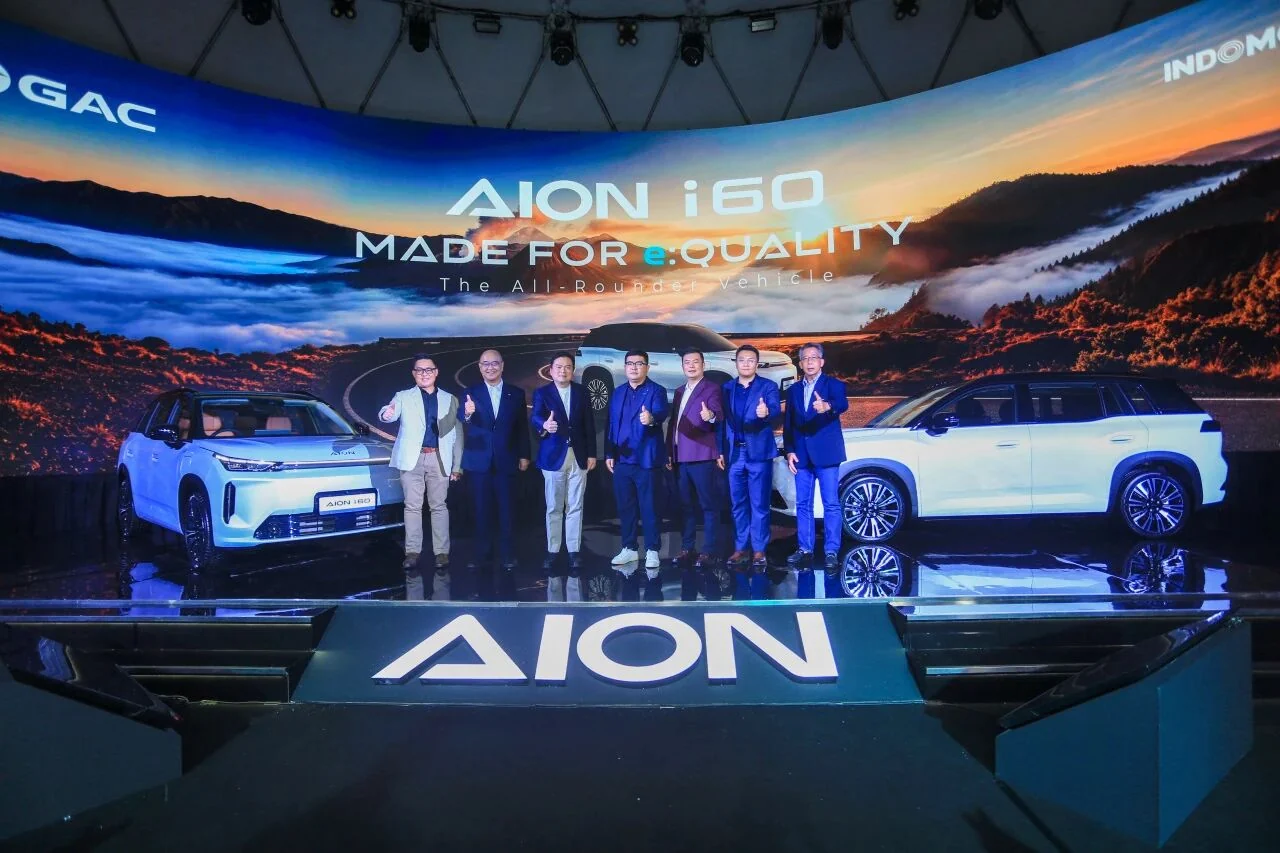
November gives the value question a local answer
The i60 is becoming easier to evaluate as a complete ownership proposition. GAC's 10 November announcement confirms that the model entered Indonesia on 7 November in right-hand-drive form and is already assembled locally. That changes the conversation for an Indonesian buyer. The relevant questions now concern the actual local car, its passenger equipment, the support offered with it and the final purchase quotation.
Our view is that the i60's strongest value argument is the amount of ordinary family life it can accommodate. Range matters, but so do a usable second row, an accessible luggage area and ownership arrangements that have a clear local contact. A specification gains value when it removes a repeated inconvenience. A car can justify a higher price through those benefits even if the family never uses every advertised function.
This is especially useful when reading international coverage. The i60 name now appears alongside several batteries, test cycles and purchase programmes. Treat each market as a complete package. Understanding that package lets the buyer appreciate GAC's strengths without accidentally assembling an imaginary vehicle from the most attractive detail in every country.
Identify what the quoted amount actually buys
Indonesia's official launch article dated 8 November describes a Rp 99,000 pre-booking fee for 7–19 November 2026 and targets deliveries beginning in December. That amount reserves interest in the vehicle under the programme's terms. It is a different transaction from paying the full vehicle price. Anyone evaluating affordability should keep the booking payment and the complete purchase amount on separate lines.
The practical next step is a written offer that names the vehicle, included equipment, delivery arrangements and the treatment of the reservation payment. This is useful even when the initial amount is small. The household needs to know what it is choosing, which benefits accompany the order and when the complete commitment becomes payable. An appealing launch programme is easier to assess when those details are visible together.
A booking fee also should not become the anchor for a value verdict. The meaningful comparison is between complete local offers for vehicles that meet the same needs. Include the equipment the buyer actually wants and any work required before the car can be used conveniently. This turns an attention-grabbing opening amount into a properly defined buying decision.
The Indonesian battery EV has its own identity
The Indonesian product specification identifies a 75 kWh battery, a 602 km NEDC range rating, a 150 kW motor and 210 Nm of torque. Those figures describe the local battery-electric vehicle. They give an Indonesian household a concrete starting point for discussing its usual journeys and charging opportunities with the dealer.
The range rating can support an attractive family-EV proposition without becoming a promise that every journey will cover the same distance. Think about the longest ordinary day, the places where the car normally rests and the margin desired when plans change. A family that can charge while parked has a different relationship with the battery from one that must make a separate trip to a public charger.
The motor output is likewise one part of the buying experience. Smooth response in traffic, predictable braking and comfortable progress with passengers are more useful demonstration goals than chasing a headline acceleration result. For many households, the best version is the one that makes the daily drive feel easy while retaining enough energy flexibility for the outings they take regularly.
China offers a useful reference for the version ladder
China's 2027 configuration table displays six versions with guidance prices from RMB 114,800 to RMB 142,800. It separates 520 km and 700 km CLTC battery-electric models from a range extender rated at 350 km CLTC electric range. The associated battery capacities are 56.68 kWh, 77.65 kWh and 45.37 kWh respectively. These are Chinese-market configurations, rather than the specification of the Indonesian car.
| China version group | Published electric rating | Battery capacity | Role in the decision |
|---|---|---|---|
| 520 battery EV | 520 km CLTC | 56.68 kWh | Assess the lower-capacity electric option |
| 700 battery EV | 700 km CLTC | 77.65 kWh | Assess additional electric-distance flexibility |
| 1738 range extender | 350 km CLTC | 45.37 kWh | Assess electric use with fuel-supported travel |
The significance of the ladder is choice. A household can pay for the energy arrangement that fits its needs, then consider equipment. The Indonesian offering should be evaluated through its own specification and local price. Currency conversion alone cannot reproduce the contents of a local offer, because the vehicle and the accompanying ownership package are part of what is being purchased.
Keep guidance prices and launch benefits separate
GAC's September update reported a limited-time Chinese purchase-benefit range of RMB 103,600–134,800 for the refreshed i60. That is a dated promotional statement. The guidance-price table serves a different purpose: it identifies the published prices of the configurations displayed there. A buyer needs the present offer for the precise grade, together with the eligibility rules for any benefit.
This distinction has a practical consequence. A trade-in benefit helps a buyer who qualifies for it; a feature upgrade helps someone who wants the feature. Neither should automatically be treated as cash saved by every purchaser. Put the cash amount, equipment additions and conditional benefits into separate rows when comparing offers. The result is easier to understand and easier to discuss with the seller.
It also protects a good product from the wrong comparison. The i60's appeal should rest on what the selected car provides at the actual price paid. Once the numbers are aligned, a buyer can see whether the budget is buying more battery flexibility, useful passenger amenities, additional assistance equipment or a combination that makes sense for the household.
Passenger comfort can justify money more often than a rare feature
GAC's Indonesian launch description gives the i60 a 2,775 mm wheelbase and details reclining rear seatbacks, front-seat ventilation and massage, and an integrated refrigerator. The same global launch account reports 658 litres of luggage capacity, increasing to 1,876 litres with the rear seats folded. These items provide specific reasons for a family to examine the cabin closely.
Consider how the benefits appear during a normal trip. Rear-seat adjustment can help passengers find a preferred posture. Ventilation may be useful on repeated warm-weather journeys. A refrigerator can make drinks accessible without adding a separate loose container. Each benefit becomes more persuasive when the people who use the car regularly can explain why it matters to them.
The luggage figures should lead to a physical packing exercise. Bring the stroller, sports bags or suitcases that usually travel together. Examine the opening, the height of the loading edge and the space remaining with all required seats occupied. Folded-seat volume serves a different trip from a family journey with passengers in the second row. Paying for practical space is sensible when that space works in the arrangement you actually use.
A spare tyre adds a particular kind of usefulness
The Indonesian launch description includes a spare tyre as standard equipment. That is a small detail with a recognisable purpose: it adds another response option when a tyre problem interrupts a journey. Its value depends on where the family travels, the kind of assistance available and whether the supplied equipment suits the situation.
During the vehicle demonstration, locate the spare and the associated tools, and ask how the manufacturer expects them to be used. This also reveals whether luggage must be unloaded to reach them. The goal is familiarity with the delivered arrangement. Knowing the procedure and the support contact is more useful than assuming that carrying a spare makes every roadside interruption easy to resolve.
For a buyer, this illustrates a broader point about value. Some equipment makes a journey more enjoyable; other equipment helps restore a journey after an interruption. The i60's package can be assessed through both categories. A family that travels beyond its familiar neighbourhood may value readiness and support as much as a more visible cabin feature.
Charging equipment belongs in the purchase calculation
The Indonesian i60-specific launch terms include a home charger while excluding installation costs. That distinction deserves attention because the equipment and the completed installation are separate parts of a usable charging arrangement. The value of the included charger becomes clearer after the property's requirements and the installation quotation are understood.
Ask for an assessment of the intended parking position, the cable reach and the electrical work needed. A convenient installation is one that works during the times the car normally sits at home. Think about rain protection, access to the parking space and the needs of another household member who may connect the car. These details affect how often electric driving can be supported without an extra errand.
A public-charging user should make an equivalent calculation with the locations used regularly. Consider the time spent reaching the charger, parking and completing a normal session. The i60's battery capacity can offer flexibility, but the replenishment arrangement determines how that flexibility feels in daily life. A useful local package connects the two instead of leaving charging as an afterthought.
Ownership support makes the local offer more concrete
GAC Indonesia states battery and motor coverage of eight years or 200,000 km, whole-vehicle coverage of eight years or 160,000 km, and included scheduled maintenance for three years or 60,000 km in its i60 launch article. The same article describes roadside and mobile-service support. These are specific reasons to investigate the local ownership package, with the detailed terms defining how each benefit applies.
Coverage length is only one part of the decision. The buyer should know which outlet will handle routine work, how appointments are arranged and how to contact assistance during a journey. For a household sharing one car, the time and travel involved in a service visit can be important. An offer becomes easier to value when there is a clear route from a maintenance reminder to a completed visit.
Included maintenance also should be evaluated according to what the household would otherwise pay for the specified work. It is useful support, but it is not the same as an unlimited allowance for every ownership expense. Keep tyres, insurance, charging and optional accessories in their own budget lines. Clear boundaries make the genuine benefits easier to recognise.
Assistance technology should earn its place in the budget
For China, WeRide's September announcement identifies WRD 3.0 deployment in the 2027 i60 and describes it as an advanced driver-assistance system. Its discussion of technology derived from autonomous-driving development does not turn the customer vehicle into a driverless car. The Indonesian launch separately describes its locally supplied Level 2 assistance package.
The buying question is how the delivered functions support the regular driver. Ask for a demonstration of the relevant indications, how a function is activated and how the driver recognises a change in availability. A shared household should make sure both regular drivers understand the same controls. Familiarity is particularly valuable when moving between a new car and an older second vehicle.
This approach gives advanced equipment a useful role without making it the whole purchase. If the family mainly wants comfortable electric travel and straightforward parking, evaluate those tasks first. If assistance features are a priority, compare the exact local functions and their operation. The i60's technology is most valuable when it fits the driver's actual journeys and expectations.
Use the local demonstration to set a maximum budget
Before visiting the dealer, identify the features that would justify spending more for your household. Give each one a concrete purpose. Rear-seat comfort might matter because an adult travels there daily. A larger energy margin might matter because the car is parked away from charging during a regular visit. This preparation makes the demonstration a way to test priorities instead of discover a new wish list.
After the visit, decide which benefits were convincing enough to change the budget. Keep appealing but infrequently used extras separate. A well-chosen i60 should feel like a coherent purchase: the family can describe why the battery, cabin and local support belong together. That explanation is also useful when comparing a competing offer, because it keeps the decision tied to the same needs rather than the order in which different salespeople present their features.
Compare complete packages with a small decision sheet
A useful comparison sheet needs fewer rows than a full brochure. Record the final vehicle price, the exact battery and version, the required passenger arrangement, the charging installation cost and the ownership support that applies. Then add two or three features that the household expects to use frequently. This keeps the decision focused while still recognising meaningful equipment differences.
Separate a requirement from a preference. Space for the usual passengers is a requirement. A particular interior colour may be a preference. Convenient charging can be a requirement for the chosen daily routine, while a larger screen may be less important. This order prevents an attractive extra from consuming the money needed to make the whole ownership arrangement work.
The i60 offers a strong proposition when those rows line up: a suitable battery, family-focused cabin equipment and an understandable local support package. The November Indonesian introduction strengthens that proposition by giving buyers a defined regional vehicle to examine. Choose it when the complete quotation supports those practical benefits, and judge the Chinese alternatives within their own market and version boundaries.
Common questions
Is Rp 99,000 the Indonesian vehicle price?
No. The official launch programme identifies it as a booking fee for 7–19 November 2026. Evaluate the complete vehicle quotation separately.
Are the Indonesian and Chinese i60 batteries identical?
The Indonesian product page lists 75 kWh. The Chinese 2027 table lists different battery-electric and range-extender configurations, so the local model must be identified first.
What makes the i60 worth considering?
Its family cabin, substantial electric capability and market-specific support offer useful benefits when they fit the household and are included in the actual purchase package.
Sources
- GAC Global: Indonesian i60 launch, 10 November 2026
- GAC Indonesia: i60 launch, booking and support terms, 8 November 2026
- GAC Indonesia: local i60 product specification
- GAC AION: China 2027 i60 configuration table
- GAC Group: dated September i60 launch benefits
- WeRide: China i60 WRD 3.0 deployment, 15 September 2026