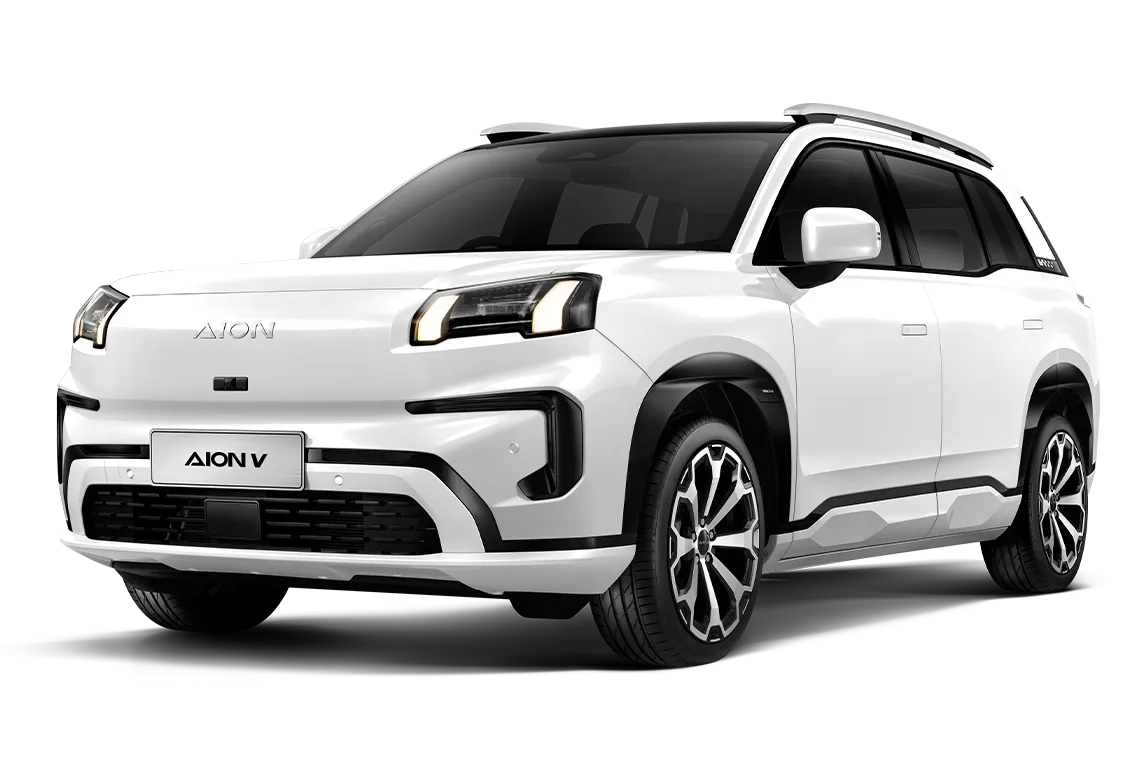
The GAC AION V is a strong choice for buyers who value a well-equipped family cabin and the same substantial electric package across its Australian Premium and Luxury grades. Against the current BYD ATTO 3 EVO, the comparison depends on grade: AION V has more published WLTP range than EVO Dynamic and matches EVO Premium at 510 km. BYD EVO Premium offers a different proposition through rear-wheel drive, greater motor output and additional front storage. The useful decision is therefore between specific versions: AION V emphasises shared core capability and optional extra comfort, while the EVO upgrade changes more of the drivetrain and carrying package.
Compare the versions that are available now
The AION V and ATTO 3 comparison has become a choice between different approaches to an electric family SUV. In the Australian specifications checked on 12 November 2026, GAC offers AION V Premium and Luxury, while BYD's current ATTO 3 EVO page presents Dynamic and Premium. Naming those versions is essential because the grade structures change what an upgrade actually buys.
GAC keeps the main electric specification consistent between its two AION V grades and uses Luxury to add cabin comforts. BYD gives the EVO Premium a different drivetrain and larger battery than EVO Dynamic. A buyer can therefore arrive at different conclusions depending on whether the priority is passenger comfort, range, performance or the arrangement of luggage space.
The strongest reason to consider AION V is that its core family-EV package is available from Premium. The strongest comparison is then with the particular BYD grade in the buyer's quotation. Treating every ATTO 3 as one specification would obscure the actual choices now available and make the range comparison less useful than it can be.
The core Australian figures show the different priorities
The following manufacturer data come from GAC Australia's AION V specification and BYD Australia's ATTO 3 EVO page. Range uses the stated WLTP figure throughout the table.
| Item | AION V Premium / Luxury | ATTO 3 EVO Dynamic | ATTO 3 EVO Premium |
|---|---|---|---|
| Battery capacity | 75.26 kWh | 60.48 kWh | 74.88 kWh |
| Published WLTP range | 510 km | 420 km | 510 km |
| Maximum motor output | 150 kW | 150 kW | 230 kW |
| Driven wheels | Front | Front | Rear |
| Published rear boot volume, seats up | 427 litres | 434 litres | 490 litres |
These are useful distinctions, but they should not be reduced to a count of winning rows. A buyer who values an easygoing family cabin may reach a different choice from someone who prioritises acceleration. A household with a large rigid stroller may care more about the opening and floor shape than the small difference between two published rear-boot figures.
Upgrading means something different in each range
Within the AION V range, the main purchase question is how much additional cabin comfort the household wants. The buyer can select Premium while retaining the headline electric capability. Luxury then becomes an optional choice about the way the occupants use the car, rather than a step required to obtain the larger stated range.
Within the ATTO 3 EVO range, the move from Dynamic to Premium changes more of the vehicle's underlying proposition. The higher grade brings the larger listed battery, the different driven axle and greater motor output shown above. It therefore deserves a separate evaluation even if the buyer has already driven or priced Dynamic.
This distinction helps explain AION V's value. A family can begin with the appropriate transport capability and decide separately about extra comfort. It also explains why the two cars should be compared through written grade-specific quotations. AION V Premium versus EVO Dynamic is a different decision from AION V Luxury versus EVO Premium, even when both are described casually as a comparison between the same two models.
AION V's range advantage depends on the BYD grade
The range result is clear when the current grade labels stay attached. The Australian AION V's published figure exceeds EVO Dynamic's by 90 km, while EVO Premium matches AION V at 510 km WLTP. That means range can be a persuasive AION V benefit in one comparison and an equal headline specification in another.
For a household comparing AION V with Dynamic, the additional rated distance may be attractive when convenient charging opportunities are farther apart. It can also provide flexibility when ordinary plans change. The buyer should connect that potential benefit to a familiar sequence of journeys, rather than assuming the entire published difference will appear on every real road.
For a buyer comparing the two 510 km versions, the decision naturally moves toward other priorities. Charging access, passenger comfort, luggage arrangement and the final quotation become more prominent. Equal test-cycle range does not mean the cars will consume identical energy on every route, but it does remove the basis for claiming a simple AION V range lead over the current EVO Premium.
Decide how much performance matters to the household
The motor figures describe another important choice. AION V and EVO Dynamic both list 150 kW, while EVO Premium lists 230 kW. BYD also publishes a 5.5-second 0–100 km/h figure for EVO Premium on its Australian product page. That performance emphasis will appeal to some drivers.
An output figure alone does not establish how a car feels during parking, low-speed traffic or a normal family journey. The useful assessment is the response to familiar inputs: moving away smoothly, adjusting speed on a hill and joining traffic comfortably. Rear passengers should experience the same route so that the driver's preference can be considered alongside their comfort.
The AION V case is strongest for buyers who are satisfied with its performance during that representative drive and would place more value on its cabin package. Someone who specifically wants the EVO Premium's published acceleration and rear-wheel-drive layout has a clear reason to investigate that version. This is a preference decision that becomes easier when the desired driving character is named in advance.
Separate passenger accommodation from luggage volume
AION V's family appeal should be assessed through the seating positions that will actually be occupied. Establish the regular front-seat settings, fit the relevant child restraints and allow the usual rear passengers to settle into place. A roomy impression in an empty showroom car becomes more meaningful when the complete seating arrangement is present.
Then load the luggage while preserving those positions. The published rear-boot figures favour the current EVO Premium on volume, but volume is only one part of carrying usefulness. A stroller, suitcase or mobility aid may fit differently because of its shape and the loading opening. Test the largest rigid object first, then add the flexible bags around it.
BYD also publishes a 101-litre front compartment for EVO Premium. This is a separate space with its own opening and access routine. It may be convenient for suitable smaller items, but adding front and rear litres does not create a single space for one oversized object. Compare how the actual load is distributed and how easily each item can be reached at the next stop. That is more useful than an undifferentiated total.
AION V makes a particularly clear comfort proposition
GAC's Australian grade table lists heated and ventilated front seats, front-seat memory, heated rear seats, a heat pump and reclining rear backrests on both AION V versions. Luxury adds front massage, a refrigerator and second-row tray tables. This provides a concrete comfort case for the GAC shortlist.
Consider those features by frequency of use. A family that spends substantial time in the rear may value the shared rear-seat equipment. Two regular drivers may appreciate being able to restore familiar front-seat positions. Buyers who expect to use the Luxury additions often can assess the extra cost against a specific benefit, while Premium remains a complete option for households that prefer the standard package.
During the comparison, let every regular passenger describe the same journey in both cars. Ask about seat support, the view out, temperature and room for feet as well as the obvious knee clearance. The result may favour AION V for a particular household even where another vehicle has a larger boot. Passenger satisfaction and luggage capacity answer different parts of the family-car question.
Compare charging specifications through a usable stop
GAC lists 180 kW maximum DC charging and a 24-minute 10–80% interval for the Australian AION V. BYD describes an 800-volt architecture and up to 220 kW DC charging for EVO Premium. The figures identify capabilities; a maximum power number does not by itself describe the duration of a complete charging stop.
For a useful trip comparison, choose the same route and identify suitable charging locations. Consider the battery level on arrival, the amount needed for the next stage and the charging equipment available. The purpose of the stop matters too: a family may want to eat, use facilities or allow children to stretch. The best charging arrangement is one that fits both the car and the people.
Home or destination charging should be assessed separately because the car is already parked for another reason. Include any installation and tariff considerations in the comparison of ownership costs. AION V's main charging package is shared by its grades, which preserves the same basic planning foundation when the buyer decides whether to add Luxury's cabin equipment.
Safety evidence belongs with the exact vehicle
The AION V has a concrete Australian assessment reference through ANCAP's 2025 record, which applies to all listed variants. It reports 88% adult occupant protection and 87% child occupant protection. This supports the GAC family purchase with evidence independent of the equipment brochure.
When comparing vehicles, keep the assessment year, market and applicable version with each result. Also distinguish crash-protection evidence from the convenience of using assistance features. Both are relevant, but they answer different questions. A buyer can examine the independent record and then use a demonstration to become familiar with the controls supplied in the chosen car.
For families using child restraints, the practical assessment should include installation and buckle access in the actual seating arrangement. A well-understood setup can be maintained by both regular drivers. The AION V's assessed foundation is a useful reason to shortlist it; the household's own arrangement completes the decision about the particular vehicle it intends to use.
Give ownership support a place in the quotation
GAC's current Australian warranty terms set out an eight-year unlimited-kilometre electric-vehicle term for qualifying non-commercial use and an eight-year/200,000-kilometre private-use traction-battery term. Read those alongside the component provisions and the intended use of the vehicle.
For either brand, obtain the warranty documents and service schedule that apply to the quoted car. Identify the service location, appointment process and contact route. These details matter particularly when the vehicle will be the household's main transport. A convenient relationship can have a recurring benefit even when it does not appear in the headline specification table.
Compare insurance quotations and routine costs at the same time. The resulting ownership picture is broader than purchase price, but it remains practical: the household can see what it will pay to acquire, prepare and keep each version in use. AION V's comfort and electric capability can then be evaluated within the complete package offered locally.
Use the actual price difference to choose a priority
Because offers, colours and delivery arrangements can change the final quotation, compare the exact drive-away totals for the versions under consideration. Keep optional accessories and any charging installation visible. A comparison becomes much clearer when both vehicles are priced for the same intended use and the buyer can see what each extra amount buys.
If the AION V quotation leaves room in the budget for a better charging arrangement, that may strengthen its value for the household. If Luxury's additional comfort costs an amount the family considers worthwhile, the upgrade may be attractive. If the EVO Premium's performance or separate front storage addresses a specific priority, its quotation should be judged against that benefit.
The aim is to avoid paying for a different priority simply because a grade name sounds more complete. The same word, Premium, appears in both ranges but represents a different place in each structure. Make the decision using the equipment and capabilities supplied, then consider the price attached to that particular package.
A short priority list makes the verdict easier to explain
Before the final demonstrations, agree on three priorities that will determine the purchase. A household might choose rear-passenger comfort, easy charging and the complete drive-away cost. Another might choose acceleration, separate storage and the way the driver's controls feel. The priorities should describe the household's work, rather than reproduce whichever brochure was read most recently.
After driving and loading the cars, record one concrete observation for each priority. This could be a comfortable seating arrangement, a successful fit for the largest bag or a quotation that includes the required charging preparation. Avoid assigning points for equipment that nobody expects to use. A simple record of useful outcomes is more persuasive than a long scorecard built around features of unequal importance.
This approach also helps two buyers resolve different preferences. They can see which car serves each person's recurring needs and where a compromise would occur. The final choice becomes understandable without declaring one model universally superior.
Four versions lead to four sensible starting points
AION V Premium is a strong starting point for a family that wants the main range and charging package with substantial shared comfort equipment. AION V Luxury suits a buyer who wants that same foundation and expects to use its additional cabin features often. The distinction is clear enough to support a deliberate purchase rather than an automatic upgrade.
EVO Dynamic deserves consideration when its actual quotation and specification meet the buyer's transport needs. EVO Premium deserves a separate look when the higher published output, rear-wheel-drive layout, matched 510 km range and additional front compartment align with specific preferences. Neither BYD grade should stand in for the other during the comparison.
For a family whose priorities centre on passenger comfort and a substantial core electric specification available from the entry AION V grade, GAC makes a persuasive case. For buyers with different priorities, the current EVO range provides meaningful alternatives. The best outcome is a version chosen for its actual work in the household, with the comparison kept precise enough to explain why it fits.
Common questions
Does AION V have more range than the current Australian ATTO 3 EVO?
It depends on grade. AION V Premium and Luxury are rated at 510 km WLTP, compared with EVO Dynamic at 420 km and EVO Premium at 510 km.
Does the higher AION V grade change the main electric package?
The current Australian Premium and Luxury specifications share the main battery, range, motor and charging figures. Luxury chiefly adds cabin comfort equipment.
Which version offers the largest published rear boot in this comparison?
The current Australian EVO Premium lists 490 litres behind the upright rear seats, with an additional separate 101-litre front compartment. Test the shape and opening with the actual luggage before deciding.