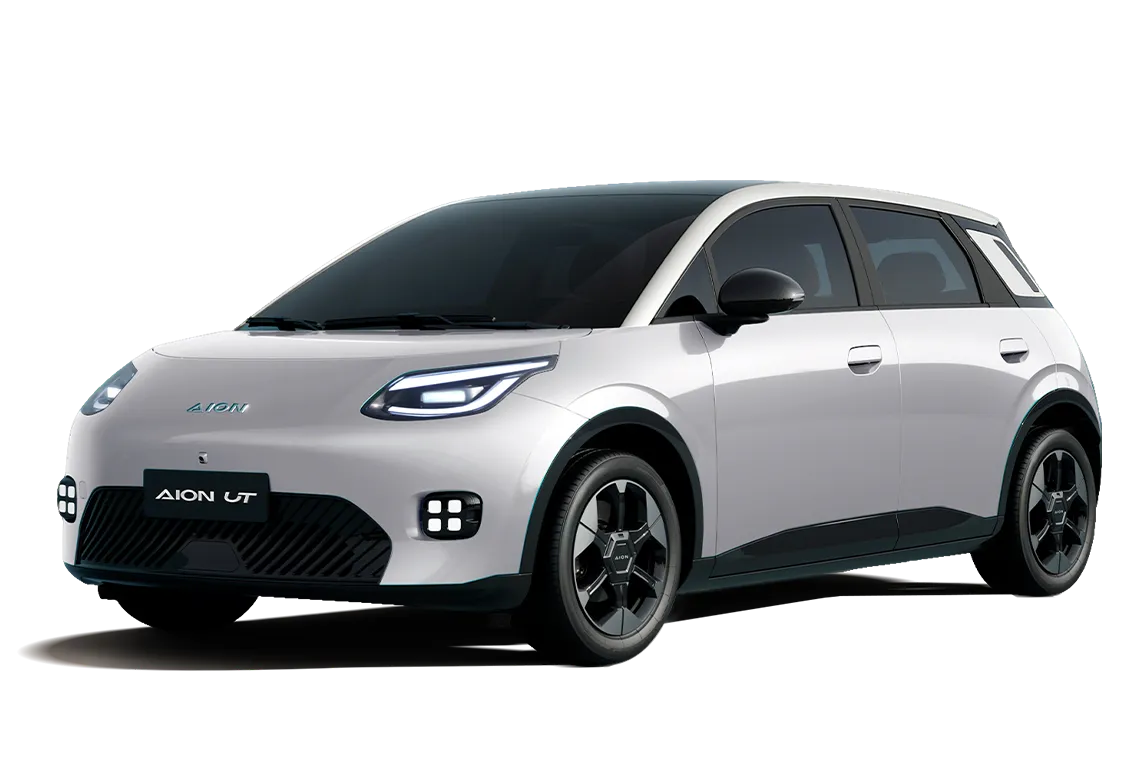
Yes, the GAC AION UT offers a persuasive amount of space for a compact EV, particularly when a household needs useful passenger accommodation without a long vehicle to park. The current European specification combines a 4,270 mm length, 2,750 mm wheelbase, five seats and a 440-litre boot, expanding to 1,600 litres with the rear seats folded. The best decision considers three spaces together: the parking area outside the car, the room occupied by passengers and the shape and weight of the load. For many urban households, that balance is more useful than choosing a larger vehicle automatically.
The case for enough room in a smaller footprint
The AION UT is interesting because it invites a different space question: how much vehicle does a household need to carry its normal life? An urban car must fit inside parking bays, turn through access routes, leave room for people to get out and still accommodate passengers and their belongings. A model that uses its exterior size effectively can serve this combination particularly well.
The current GAC Europe specification, checked on 12 November 2026, provides a coherent reference. It lists 4,270 mm length, 2,750 mm wheelbase, five seats, 440 litres with the rear seats upright and 1,600 litres with them folded. These European luggage figures describe two seating configurations; they should stay attached to this market specification.
Those numbers support a positive answer for many small households. The more revealing decision is whether the car passes several clear thresholds: the normal occupants fit, essential luggage fits with those occupants aboard, and the parking arrangement remains manageable. Passing those thresholds can make the UT sufficient even if a larger car offers more empty volume.
Start with the space around the parked car
An apartment garage can change the meaning of interior spaciousness. If a person cannot open a door far enough to enter comfortably, a generous seat is harder to use. If loading requires moving the car into a common access lane every time, the boot becomes less convenient than its volume suggests. Exterior access therefore belongs at the beginning of the assessment.
Record the usable bay width between real obstructions. A marked line is different from a wall, and a neighbouring vehicle may occupy part of the space available for a door. Also record any pillar, wheel stop, low beam, storage cupboard or charging pedestal. A simple measured sketch is more informative than the nominal parking-space dimensions in a building description.
Then identify where the driver and regular passengers will enter. A household may habitually load children on one side, while an older passenger needs the easier side. The UT's compact length is a useful starting point, but the successful arrangement is the one that leaves room for those actual movements. A parking demonstration should reproduce the familiar bay as closely as possible.
Use width figures without confusing them with door clearance
GAC's European dimensional table gives 1,850 mm with mirrors folded and 2,073 mm with them unfolded. It also lists a 5.35 m turning radius. These measurements help evaluate an access route, but door-opening space and swept-path clearance are separate questions.
For example, an imaginary 2,400 mm-wide gap minus the unfolded-mirror width leaves 327 mm in total. If perfectly centred, that is only about 164 mm on each side at the mirror line. Folding the mirrors changes the static arithmetic, but it does not establish how far a door can open. This illustration is a space calculation, not a claim that the UT can be used comfortably in every gap of that width.
The same distinction applies when approaching a garage ramp. Turning radius describes one aspect of steering geometry; the route may also involve corners, kerbs and opposing traffic. Drive the actual access route during a permitted demonstration if possible. The reward is a purchase decision grounded in the location where the car will spend much of its life.
Leave a working area behind the hatch
Length is another useful starting measurement rather than a complete answer. In a hypothetical five-metre-long bay, subtracting the UT's published length leaves 730 mm distributed in front of and behind the vehicle. How much remains behind depends on where it is parked. That residual space must be considered alongside any wheel stop and the hatch's opening movement.
For a shopper, a usable loading area means standing behind the vehicle with a bag and opening the hatch without an awkward sideways manoeuvre. For a parent, it may mean unfolding a stroller before moving toward the lift. For a person carrying sports equipment, it may mean removing an object without lifting it over another parked vehicle.
A compact car can offer a practical advantage when it gives some of the parking bay back to these activities. The benefit is especially noticeable in a garage where the space behind a longer vehicle would be heavily constrained. Measure the loading arrangement directly and consider the sequence from hatch to lift or front door. The useful footprint includes both the car and the people using it.
Define the load that must fit without negotiation
Every household has an essential configuration. It might be two adults, one child restraint, a stroller and ordinary shopping. It might be four adults with small overnight bags. Write that arrangement down before looking at maximum luggage capacity. The essential configuration is the one that should work easily on a normal day.
Then divide additional tasks into frequent and occasional uses. A weekly sports bag deserves a reliable place. A large flat-pack purchase made twice a year may be handled with folded seats or delivery. This distinction gives sufficient space a practical definition: the routine works naturally, and less frequent loads have an acceptable plan.
| Type of requirement | What it should demonstrate |
|---|---|
| Essential passenger journey | All required seats usable with normal belongings |
| Frequent equipment journey | Equipment fits without repeatedly disturbing the normal setup |
| Occasional bulky load | An agreed alternative seating or delivery arrangement |
| Apartment parking | Entry, exit and loading remain workable in the real bay |
| Longer outing | People and luggage fit together for the intended duration |
This method allows the UT's compact format to be judged on its intended work. It also makes discussions between household members more concrete: everyone can see which requirements are essential and which are flexible.
A litre figure cannot describe every object
The official luggage volumes give the UT a substantial starting point, but the shape of an object determines how it uses that space. A rigid suitcase occupies a fixed envelope. A soft bag can adapt around corners. A stroller may require a particular opening width even when its folded volume appears modest. These are geometry questions rather than disagreements with the published capacity.
GAC Europe's AION UT product page highlights a layered boot design and a 1,385 mm cabin-span measurement. The layered storage idea is particularly relevant to separating smaller equipment from the main carrying area. A useful demonstration should show how each level is accessed with the ordinary load in position.
Place the objects that are most difficult to reshape first, then add the flexible bags around them. Keep the items needed at the next stop accessible. An arrangement that requires unloading half the boot to retrieve a charging cable or coat may be technically possible but inconvenient. The strongest space result is a repeatable arrangement that works without elaborate packing every time.
Judge passenger room with the luggage plan in place
Passenger and luggage assessments should meet in the same configuration. It is easy to judge the back seat with an empty boot and then judge the largest load with the seats folded. The household actually needs both people and belongings to fit on the same journey. Establish the required seats first and treat their occupied positions as fixed.
GAC's global AION UT presentation describes 905 mm of rear legroom and a 1,385 mm rear-row width. These manufacturer measurements explain the emphasis on rear accommodation. They are useful prompts for assessing the actual passengers' posture, shoulder space and room for feet, rather than a guarantee that every three-person combination will be equally comfortable.
For two rear occupants, the unused middle area can make the cabin feel less crowded. With three, shoulder room and access to each belt become more important. If three rear passengers travel frequently, let them assess the arrangement together for a meaningful period. The UT's spaciousness is most valuable when the people who use it can maintain comfortable positions throughout the journey.
Folding seats creates another carrying configuration
The European specification lists 40/60 split-folding rear seats and child-seat mounting points on the outer rear positions. Partial folding can therefore be a useful way to allocate the cabin to an identified load while preserving the required passenger seating, subject to the vehicle and restraint instructions.
Consider a couple carrying a long but relatively narrow item. A folded section may provide the needed length while the remaining upright seats remain available for a different journey. A family with two child restraints may have much less flexibility because both outer positions are already committed. The same folding feature provides different benefits depending on the normal passenger arrangement.
This is why a maximum seats-down volume should be treated as a second role for the car. It can make the UT useful for occasional equipment transport, but it does not increase the luggage room available with every rear seat occupied. Being clear about the two roles strengthens the practical case: the car can be compact most of the time and adaptable when the passenger requirement changes.
Weight can become the limit before volume
The European table gives load capacities of 435 kg for Luxury and 465 kg for Premium. Those figures make a useful distinction between the physical room available and the weight the vehicle is permitted to carry. The exact vehicle documentation should determine how the driver's weight, occupants, luggage and fitted equipment are accounted for.
An illustrative load of four 75 kg adults totals 300 kg before luggage. Adding four 15 kg bags makes 360 kg. The arithmetic does not establish the remaining legal allowance for a specific vehicle, because the applicable mass convention and additional equipment must also be considered. It does show why an apparently roomy cabin should be assessed with weight as well as size in mind.
For a family carrying a stroller and soft clothing bags, volume may be the more noticeable constraint. For a group of adults with dense equipment, weight can become more important. A pair of scales and the relevant vehicle limits answer the question more reliably than the visual impression of an empty boot. The UT's useful space is best understood as room within a defined carrying allowance.
A smaller car can preserve space elsewhere in the household
Choosing a compact vehicle can have benefits beyond the journey. A shorter parked car may leave a more usable path through a garage. A load that fits neatly into a regular arrangement may reduce the temptation to keep seldom-used equipment permanently inside. A car that is easy to prepare can also make it simpler for two drivers to share it.
These benefits depend on circumstances, so describe them in terms of the actual property and routine. A household with a generous driveway may place less value on exterior compactness. A household using a constrained apartment bay may value it every morning. There is no universal trade-off between a small car and a large car; there is a particular fit between the car and its surroundings.
For this reason, buying more space than needed can have an everyday cost in manoeuvring or access, even when the purchase budget allows it. The UT becomes attractive when it passes the passenger and luggage thresholds while retaining a convenient external size. That is a practical form of spaciousness: carrying the necessary load without making the rest of the routine more difficult.
Compare candidate cars in the same occupied condition
When comparing the UT with another model, keep the front-seat positions, passengers and bags consistent. A car can look roomier simply because the front passenger seat has been moved farther forward or the luggage cover has been removed. Decide which arrangement represents normal use, then preserve it across demonstrations.
Also record whether the boot floor is in the same functional position and whether equipment occupies an underfloor compartment. A comparison becomes more useful when it describes where the household's objects go, rather than only which brochure has the larger figure. The UT's compact-space proposition is strongest when its everyday arrangement is easy to reproduce.
Finally, let regular passengers give their assessment before discussing the numbers. Their observations can reveal a difference between nominal accommodation and sustained comfort. Combining those observations with the fixed measurements produces a decision that is both personal and concrete.
Decide with a few fixed measurements and one complete load
A useful decision record can be very short. Keep the real parking dimensions, the largest rigid item's measurements and the passenger arrangement that must be preserved. Add a photograph or sketch of a successful loading layout made during the demonstration. These details provide a concrete reference when comparing the UT with another vehicle.
Allow a little room for the return journey. Shopping, wet clothing or additional belongings can change the load after departure. An arrangement that uses every available gap on the outward trip may need more reorganisation later. Spare room does not have to mean a larger vehicle; it may come from a different bag, a layered storage position or a more sensible choice about what travels.
The AION UT offers enough published space to justify a serious look from urban couples and small families. Its strongest proposition is the combination of passenger accommodation, adaptable luggage capacity and manageable length. When the normal load fits and the parking routine remains comfortable, the answer is yes: the space is sufficient in the way that matters most, through repeated use in the household's actual environment.
Common questions
What boot capacity does the current European AION UT publish?
GAC Europe lists 440 litres with the rear seats up and 1,600 litres with them folded. These describe different seating configurations.
Does AION UT fit every small parking bay?
Its compact length helps, but usable access depends on the real bay, neighbouring obstructions, mirror width, door movement and hatch clearance. Measure and demonstrate the actual arrangement.
Is luggage volume the same as carrying capacity?
No. Litres describe space; load capacity describes weight. Passengers, bags and fitted equipment must also comply with the exact vehicle limits and accounting conventions.