GAC has strong model-specific international safety evidence: AION V achieved five stars from Euro NCAP and ANCAP in 2025, AION UT earned five Euro NCAP stars in 2026, and EMZOOM received five ASEAN NCAP stars in 2024. These results give buyers documented reference points across different vehicles and markets. The useful comparison keeps each rating attached to its tested year, covered variants and local specification. AION UT’s newer Euro NCAP categories differ from AION V’s 2025 categories, so their percentages need separate interpretation. For families, the benefit is clear evidence that can guide a practical shortlist and equipment discussion.
Read GAC's safety credentials through the cars people can buy
GAC's international safety story includes several named five-star assessments. AION V has 2025 results from Euro NCAP and ANCAP, AION UT has a 2026 Euro NCAP result, and EMZOOM has a 2024 ASEAN NCAP result. Together, these offer useful evidence across electric and petrol vehicles and across different regional assessment programmes. Their value becomes clearer when each result is connected to its model, year and market.
For a buyer, the best starting point is the assessment page for the actual vehicle under consideration. It identifies the tested version, the variants covered and the categories used. Those details make the star rating a practical shopping tool. A family can see which evidence relates to its shortlisted car, then examine the equipment and seating arrangements on the local version.
The particularly interesting development is that GAC's evidence now spans two generations of Euro NCAP reporting. The AION V uses the categories in place for its 2025 assessment, while the UT uses the redesigned 2026 approach. Understanding that change allows buyers to appreciate both achievements without mixing measures that answer different questions.
Begin with the identity and scope of the assessment
A safety result belongs to a defined vehicle range. The model name is the first identifier, but it is not the only one. The assessment year, body type, steering position, variants and production dates can all help determine how the result applies. Looking at this information takes little time and makes the later score discussion much more useful.
Imagine two families researching the same model from different countries. They may find the same exterior photographs and similar marketing descriptions, while the local offers use different trim names. The correct way to connect the rating is to use the assessor's stated applicability and the local vehicle specification. This gives each family a sound basis for discussing the car it can actually order.
It also helps when looking at a vehicle that has been updated. A model can retain a familiar name through changes in equipment or design. The assessment record explains the rating's own coverage and validity. Once that connection is established, buyers can use the result confidently as one part of a broader comparison involving passenger comfort, everyday visibility and ease of operating the fitted safety features.
AION V provides a clear 2025 European reference
The Euro NCAP AION V assessment gives the model five stars in 2025. The tested car was an AION V Premium with left-hand drive; the published applicability includes the listed Premium variant in left- and right-hand-drive form. Its four category scores are shown below.
| Euro NCAP 2025 category | AION V score |
|---|---|
| Adult Occupant | 88% |
| Child Occupant | 85% |
| Vulnerable Road Users | 79% |
| Safety Assist | 78% |
These categories give four perspectives on one assessed car. They help distinguish protection for people inside the vehicle from protection and assistance involving other road users. The report also describes a stable passenger compartment in the frontal-offset test and strong performance in several occupant-protection tests, alongside more detailed results for individual impact conditions.
For a family, the practical benefit is the ability to go beyond a general statement about safety. The assessment identifies areas to read in more detail depending on the household's needs. A buyer interested in child accommodation can examine that section, while someone driving mainly in busy urban traffic can examine the vulnerable-road-user and assistance discussions. The overall rating and the category detail serve complementary purposes.
ANCAP makes the AION V evidence local to Australia and New Zealand
The ANCAP AION V page records a five-star 2025 rating applying to all variants introduced in Australia and New Zealand from November 2025, with build dates from July 2025. Its stated expiry is December 2031. The assessment scores are 88 percent for adult protection, 87 percent for child protection, 79 percent for vulnerable road users and 79 percent for safety assist.
Those figures should remain attached to the ANCAP record. They are not identical to the European percentages, even though the model has a five-star result in both programmes. Reading the local page directly gives an Australian or New Zealand buyer the relevant applicability and equipment information in one place.
ANCAP identifies standard features including a centre airbag, autonomous emergency braking and lane-support functions within the assessed range. For a buyer comparing local trims, this is useful because it connects the result to the equipment offered across that range. The next showroom discussion can then concentrate on understanding the functions, adjusting the seating and confirming the specific vehicle's documentation rather than reconstructing its safety story from unrelated international brochures.
AION UT adds a five-star result under the 2026 approach
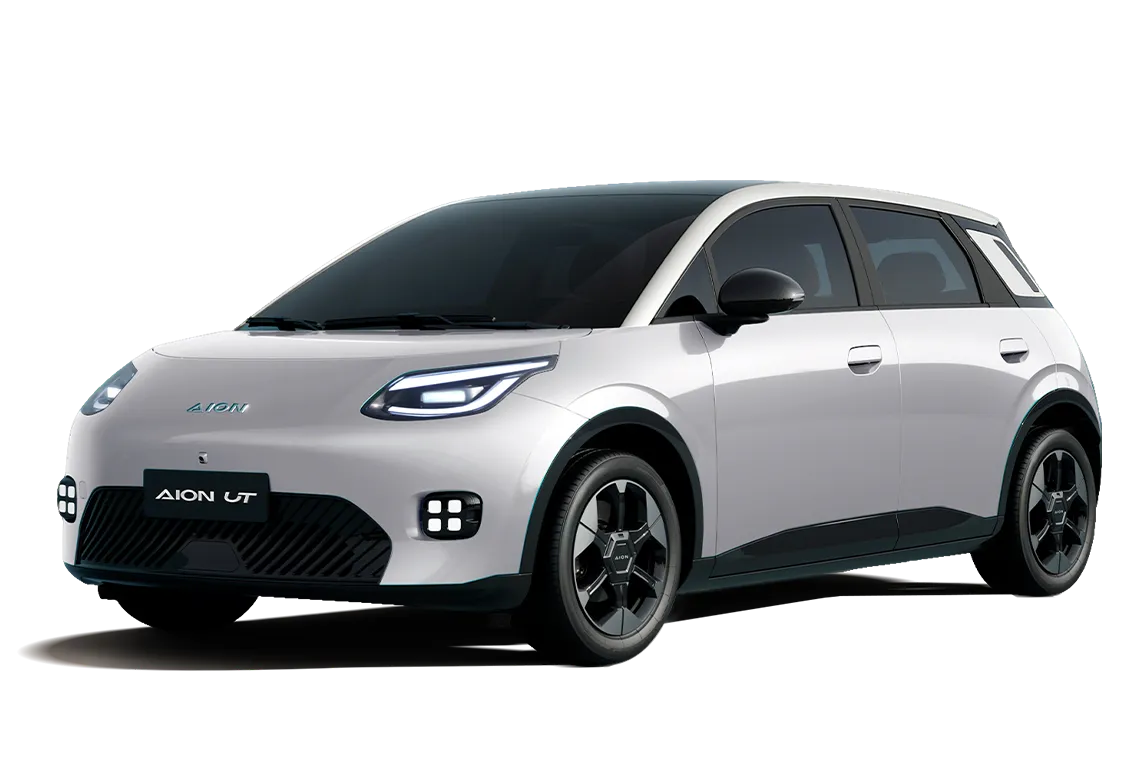
The AION UT Euro NCAP assessment was published on 2 September 2026. It awards five stars to the model, with the tested car identified as Premium, left-hand drive. The listed applicability covers Premium and Luxury in both steering positions. Its scorecard uses the newer four-stage structure.
| Euro NCAP 2026 stage | AION UT score |
|---|---|
| Safe Driving | 68% |
| Crash Avoidance | 74% |
| Crash Protection | 90% |
| Post Crash Safety | 88% |
The report records maximum points for child dummies in the frontal-offset assessment and strong side-impact performance. It also assesses functions such as driver monitoring, crash avoidance and post-crash provisions. These details give the compact hatchback a substantive safety record alongside its everyday packaging proposition.
For someone considering a smaller electric car, this is a useful reminder to look at the actual assessment rather than infer protection from exterior size alone. The official result supplies tested evidence for the named vehicle. The household can then consider whether the seats, access and driving position allow everyone to use that vehicle comfortably and correctly in normal life.
Why the 2026 percentages need their own columns
Euro NCAP's announcement of the 2026 changes explains the shift toward Safe Driving, Crash Avoidance, Crash Protection and Post-Crash Safety. The revision changes the organisation of testing and scoring, adds broader scenarios and expands the consideration of occupants of different sizes. Each stage has its own score and minimum thresholds for the overall star result.
This changes how a buyer should read a comparison. A 2025 Child Occupant percentage and a 2026 Crash Protection percentage are not two measurements of the same category. Placing them side by side as though the larger number automatically identifies the better family car would lose their meaning. The appropriate comparison begins with the category definitions and the year of the protocol.
There is still a clear positive conclusion for GAC: the AION V and UT each achieved five stars under the assessment applicable to their respective test years. A buyer can use both results as strong starting points, then read the detailed reports for the questions that matter to that household. The change in format adds information; it does not require the older report to be rewritten into new categories.
EMZOOM broadens the picture beyond electric models
The ASEAN NCAP EMZOOM record gives the 2024 model five stars and an overall score of 88.39 under the 2021–2025 protocol. It identifies the tested variant as GAC7151HCW6B and connects the result to the Malaysian-market vehicle. Its four domains are Adult Occupant Protection, Child Occupant Protection, Safety Assist and Motorcyclist Safety.
That last category is particularly useful for understanding the regional perspective. The scorecard gives dedicated attention to interactions with motorcycles, while the equipment listing includes functions relevant to detecting or responding to other traffic. The result adds a petrol-powered model to the GAC safety evidence discussed here, with its own regional scope and assessment structure.
The useful lesson is that global safety credentials are built from specific local assessments. A European electric hatchback, an Australasian electric SUV and a Malaysian petrol model can all contribute evidence, while each answers questions about a different product offer. For an EMZOOM buyer, the ASEAN page is therefore more informative than borrowing another GAC model's rating. It recognises the vehicle on its own documented achievement.
Use the stars as a starting point, then choose a relevant question
Euro NCAP's guide to reading the stars explains that the rating combines protection, prevention and related safety provisions. It also explains the importance of the test year and the distinction between a standard-equipment rating and one involving an optional safety pack. This makes the star system useful for a shortlist, while the report supplies the detail needed for a closer decision.
A family with young children might start by examining child-restraint accommodation and rear-seat access. Someone who frequently carries adults in the rear might pay particular attention to seating position and the corresponding protection information. A commuter travelling through streets with cyclists and motorcycles might give more time to the road-user and assistance sections. These priorities personalise the reading without changing the meaning of the official result.
This approach is more useful than searching for one percentage that settles the entire purchase. Cars serve people with different routines, and safety involves several types of situation. A five-star result gives the buyer a strong foundation. Selecting the most relevant sections helps translate that foundation into a vehicle choice and a better understanding of how to use it.
A family can assess practical fit while the car is stationary
Published crash assessments and a showroom visit do different jobs. The assessment supplies controlled evidence about the vehicle. The visit helps a household check whether its people and equipment fit comfortably and can be accommodated according to the relevant instructions. Combining the two creates a more complete buying decision.
Bring the child restraint normally used by the family, where practical, and discuss installation with the authorised seller or a qualified fitting service. Check access to the intended anchorage points and whether the front seating position remains comfortable after the rear restraint is fitted. Follow the restraint and vehicle manufacturers' instructions for the approved seating positions. This makes the conversation about the actual household rather than an abstract cabin photograph.
For adult passengers, sit in the seats they will use and check the normal belt path, head-restraint adjustment and ease of getting in and out. The driver should also be able to reach the controls comfortably with a normal seating position. These simple observations do not reproduce a crash test. They help ensure the chosen vehicle can be used in the way its protective equipment is intended to work.
Assistance features are most useful when their behaviour is familiar
Safety-assistance equipment can support the driver in different situations: some functions provide information, some warn, and some can intervene under defined conditions. The equipment name alone may not explain what the driver will see or feel. A useful handover therefore includes a clear explanation of the actual functions fitted to the car.
Ask the seller to show the normal status indications while parked and explain the relevant owner-manual sections. Learn how the vehicle indicates whether a supported assistance function is available, active or awaiting driver input. During an ordinary supervised test drive, observe how understandable the information is without deliberately creating hazards. The purpose is familiarity with normal operation, not an attempt to reproduce assessment scenarios on public roads.
This is a practical way to make GAC's assessed safety technology valuable in everyday ownership. The owner should know which tasks remain theirs and how to recognise the car's feedback. A feature that is well understood can be incorporated into a calm driving routine, while the published assessment continues to provide the separate evidence about how the system performed under its defined tests.
Keep a simple safety record with the vehicle documents
A buyer does not need a large technical archive to preserve the useful information. Keep the local specification, the relevant assessment link, the vehicle's build information and its owner manual together. These items make it easier to answer questions later, particularly when another family member starts driving the car or the vehicle is sold to a new owner.
| Record | Why it is useful |
|---|---|
| Exact model and trim | Connects the purchase with its local equipment |
| Build date and vehicle identity | Helps confirm the applicable model range |
| Assessor, test year and rating link | Preserves the meaning of the star result |
| Owner-manual safety sections | Explains normal use of the fitted equipment |
| Child-restraint instructions, where relevant | Supports correct installation in approved positions |
This small record also makes later conversations more efficient. A service adviser can discuss the actual vehicle, and another driver can find the correct instructions. The exercise preserves the practical value of the research already done during purchase, so the assessment remains connected to ownership instead of becoming a forgotten showroom headline.
What the evidence says about GAC today
GAC's safety credentials are strongest when presented as a set of concrete achievements: assessed models, named programmes and clearly stated applicability. The examples here span multiple regions and include both electric and petrol vehicles. They provide buyers with credible reference points and enough detail to ask useful questions about their own shortlist.
The newest assessment format also creates a richer conversation about how safety is evaluated. Buyers can read the result that applies to their chosen vehicle, understand the categories used and connect those findings with a normal seating and equipment demonstration. That is a constructive way to turn an international rating into local purchasing confidence. GAC's five-star results deserve attention because they are documented achievements that can be examined closely and used practically.
Common questions
Why are the AION V percentages different between Euro NCAP and ANCAP?
The published programme records have different results and applicability. Use Euro NCAP’s 88/85/79/78 scorecard for its European assessment and ANCAP’s 88/87/79/79 scorecard for the Australasian rating.
Can AION UT’s 90 percent Crash Protection score be compared directly with AION V’s Child Occupant score?
They belong to different categories and protocol years. The UT uses the 2026 four-stage approach, while the V’s assessment retains the 2025 categories.
Which safety assessment is most useful for an EMZOOM buyer in Malaysia?
The ASEAN NCAP 2024 EMZOOM record gives the model five stars and 88.39 points, with its tested variant and Malaysian-market scope identified on the assessment page.
Sources
- Euro NCAP: AION V 2025 assessment and applicability
- ANCAP: GAC AION V 2025 rating, local variants and build dates
- Euro NCAP: AION UT 2026 assessment and applicability
- ASEAN NCAP: GAC EMZOOM 2024 assessment
- Euro NCAP: 2026 protocol changes, 26 November 2025
- Euro NCAP: how to read the stars and why the test year matters