Yes. The seven-seat petrol GAC GS8 is a persuasive option for families seeking a substantial SUV with useful cabin equipment and a choice of technology levels. Current Kuwait GL, GT and GX sheets all specify seven seats, a 2,920 mm wheelbase, a turbocharged 2.0-litre engine and an eight-speed automatic. GT adds selected assistance and comfort equipment, while GX combines four-wheel drive with further driver information and cabin provisions. The best choice depends on how often the extra seats, particular assistance functions and all-wheel traction will be used. This assessment concerns Kuwait’s seven-seat petrol range, distinct from the Philippine six-seat GS8 HEV.
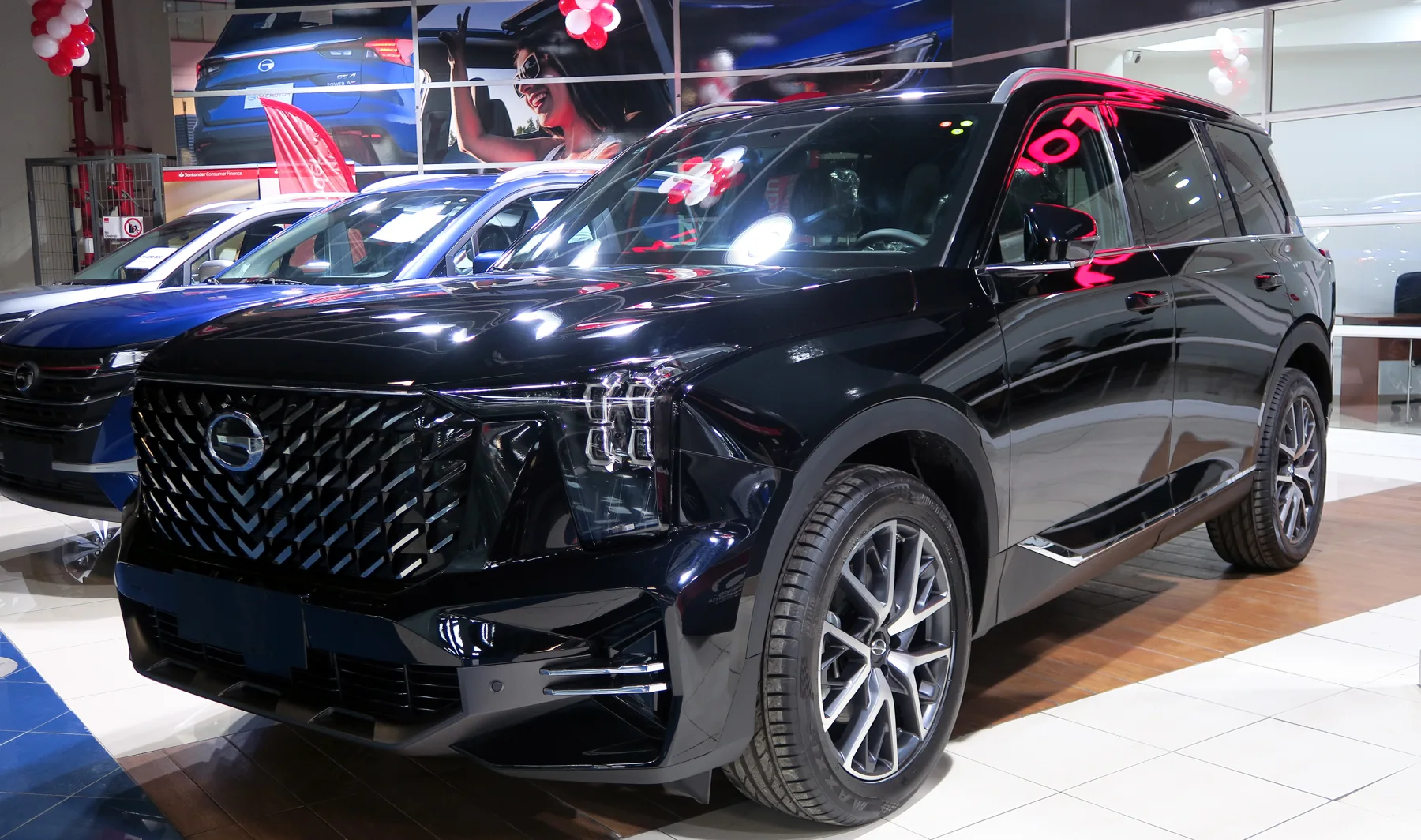

A strong family proposition with three distinct choices
The most useful way to judge the GS8 is to identify what the family will use every week, then choose the trim that supplies it. The current Kuwait GS8 range is explicitly marketed as a seven-seat SUV. Its GL, GT and GX specification sheets offer a practical basis for comparing a core family vehicle, a more equipped front-wheel-drive version and a four-wheel-drive choice with additional technology.
That creates a positive starting point. Buyers can keep the basic passenger capacity and overall vehicle concept while deciding how much equipment they want around it. A family does not have to begin with the most expensive-looking demonstration car to understand the model's appeal.
This article assesses the published Kuwait petrol specifications and their implications for everyday use. The Philippine GS8 HEV page describes a six-seat vehicle, so that separate configuration is not the seven-seater discussed here. Keeping the local version in view allows the family question to be answered clearly.
What the current Kuwait sheets actually show
The local distributor's three downloadable sheets provide the following comparison. These are the documents linked from its current product page, reviewed on 12 November 2026.
| Published item | GL 2WD | GT 2WD | GX 4WD |
|---|---|---|---|
| Seats | 7 | 7 | 7 |
| Length | 4,980 mm | 5,015 mm | 5,015 mm |
| Wheelbase | 2,920 mm | 2,920 mm | 2,920 mm |
| Drive | Front-wheel drive | Front-wheel drive | Four-wheel drive |
| Wheel size | 19 inches | 20 inches | 20 inches |
| Forward-collision warning and lane assistance | Not marked as fitted | Listed | Listed |
| Panoramic sunroof | Not marked as fitted | Listed | Listed |
| Head-up display | Not listed | Not listed | Listed |
Sources: the distributor's GL sheet, GT sheet and GX sheet. Each also lists a 248 hp, 400 Nm turbo petrol powertrain with an Aisin eight-speed automatic.
The useful conclusion is that these versions serve different priorities. GL supplies the seven-seat foundation. GT concentrates on added equipment while retaining front-wheel drive. GX makes a broader package available to buyers who also want four-wheel drive. The final quotation should carry the selected trim and its supplied specification, making the choice easy to review.
Seven seats have value even when the cabin is usually half full
Many families do not travel with seven people every day. The extra places may be used when grandparents visit, two children invite friends or relatives share a weekend journey. That occasional use can still be valuable because it changes what the household can organise with one vehicle.
The right question is therefore how often the extra capacity changes a plan. If it regularly allows everyone to travel together, the third row has a clear purpose. If the family rarely needs it, the decision should place more weight on the five-person arrangement, luggage access and the convenience of carrying extra seating capacity.
A useful showroom exercise is to prepare two passenger lists: the ordinary weekday group and the largest realistic group. Sit everyone in the intended positions, including the adults who would actually occupy the third row. Adjust the rows as they would be arranged for travel, then consider the space that remains for bags.
The GS8's seven-seat format makes it a credible candidate for this mixed use. Personal fit determines how its capacity will work for a particular family. That is a more helpful assessment than treating the number seven as either a guarantee of universal comfort or an irrelevant badge.
The GL makes the core technology case
The GL specification lists a 14.6-inch central touchscreen, a 12.3-inch instrument display, CarPlay, parking sensors with a rear camera, electrically adjustable front seats and three-zone air conditioning. These features give the entry version a substantial everyday equipment foundation.
The practical benefit is that a buyer can start with the functions most likely to be used repeatedly. Navigation through a compatible phone, a clear view while reversing and separate climate control requirements can influence almost every journey. Their contribution is easy to overlook when attention goes immediately to the most elaborate trim.
For a family with a regular suburban routine, GL deserves a proper demonstration before moving upward. Spend time with the actual phone connection and the normal camera display. Check how quickly a second driver can establish a comfortable seating position. A pleasant daily experience often depends on these familiar interactions working well together.
GL is particularly interesting when the household's budget is better directed toward the complete ownership package. A suitable insurance policy, the intended accessories and planned servicing also contribute to a successful purchase. Choosing a well-equipped core version can be a deliberate allocation of resources, rather than simply a decision to accept less car.
The GT is an equipment decision, not merely a styling decision
The GT sheet adds forward-collision warning, lane-keeping assistance, lane-departure warning, a panoramic roof and a DVR entry while retaining the same listed engine output and front-wheel-drive arrangement. That makes GT a useful middle choice for buyers whose main interest is equipment rather than an additional driven axle.
The strongest reason to consider it is frequency of use. A household spending substantial time on familiar highways may value clear driver-assistance information. Another may especially enjoy the cabin atmosphere created by a panoramic roof. Neither preference needs to be universal to justify the choice.
Ask for the added functions to be demonstrated in normal use on the actual vehicle. The aim is to understand their indications and settings, including how the driver recognises when assistance is available. A system name in a table becomes more useful when its everyday behaviour is familiar.
It is also worth separating shared family benefits from individual preferences. A roof may be enjoyed by passengers, while a driver may place greater value on a particular assistance function. Discussing those priorities together can make GT a comfortable compromise when several people influence the purchase. Its appeal is the added package around the seven-seat foundation, with a straightforward petrol driving routine.
The GX fits buyers who want the broader package
The GX specification lists four-wheel drive, a head-up display, front-door sound-insulating glass, a driver's knee airbag and rear-collision-related assistance entries. These additions give GX a different role in the range: it combines the most expansive listed equipment here with an additional traction capability.
For a buyer who specifically wants four-wheel drive, this is the version to investigate first. The reason might involve regular routes, seasonal travel or a preference for the complete configuration. The local handbook and dealer demonstration should establish the intended use of the supplied drive system and modes.
The other additions deserve their own assessment. A head-up display can suit a driver who likes information positioned higher in the field of view. Additional acoustic provision may interest someone who spends long periods in the vehicle. Their value depends on whether the family notices and appreciates them during ordinary driving.
GX is consequently easy to recommend for a buyer who wants the combined package and will use its distinctive features. It is less helpful to treat every upgrade as independently essential. A well-chosen family SUV should feel complete because its equipment matches the household, and the GS8 range offers more than one way to achieve that result.
Passenger space and luggage should be assessed together
A seven-seat trip creates a different packing problem from a five-seat trip. The family should therefore test the luggage arrangement with the needed passenger places still available. A brochure photograph showing a spacious folded cabin illustrates flexibility, but the relevant arrangement is the one used on the actual journey.
Start with the items that are hardest to rearrange: a stroller, a mobility aid, a rigid case or sports equipment. Place those first, then consider the smaller bags. Think about which items must be reached during a stop and which can remain stored until arrival. An orderly layout can make the same physical space much easier to use.
Also examine the transition between the ordinary and occasional arrangements. If the third row is used frequently, the person who usually changes the seating should try the process. If the extra seats are mainly for special outings, organise the storage routine so that preparing the car remains simple.
The GS8's attraction is this ability to serve different passenger counts within one SUV format. A thoughtful loading trial shows how much of that flexibility the family will enjoy. It also makes comparisons with another model fairer because both vehicles are being asked to accommodate the same people and belongings.
Intelligent equipment should reduce repeated effort
The most convincing definition of an intelligent family SUV is one that makes ordinary tasks easier. A large screen is helpful when the information is readable and the functions used most often are straightforward. A camera is helpful when the driver understands the view. Climate equipment is helpful when occupants can obtain comfortable settings without a prolonged negotiation.
Choose three tasks that occur on almost every drive and try them during the visit. For example, connect the regular phone, select the usual navigation destination and set the cabin for the normal passengers. Then repeat the sequence after returning to the vehicle. This reveals how well the arrangement suits the household's habits.
The exercise also clarifies trim value. If a feature meaningfully improves a daily task, its importance rises. If the household would rarely use it, the core version may already provide the desired experience. Both conclusions are useful and keep the technology discussion grounded in ownership.
For the GS8, the sizeable shared equipment foundation means the conversation can begin with practical use rather than a shortage of basic conveniences. The added features then become choices about how the family prefers to travel, which is a constructive way to approach a premium SUV.
Judge the petrol powertrain through the family journey
The published powertrain gives the GS8 a clear petrol-SUV identity. The family can refuel conventionally and use the automatic transmission without adding an external charging routine. That straightforward arrangement may suit buyers whose parking situation or travel habits make a conventional petrol vehicle especially convenient.
During a normal test drive, concentrate on the moments the family will encounter most often. Observe the response when joining a road, the ease of maintaining a steady pace and how naturally the car responds to modest accelerator inputs. Include ordinary low-speed manoeuvres as well as a flowing section of road.
Passenger impressions belong in this assessment. Ask someone in the second row to consider the journey at the same time that the driver evaluates the controls. If regular third-row occupants can join, their experience will make the visit more representative. These observations establish personal suitability without pretending that a short appointment is a complete instrumented road test.
The published output is a useful starting point, but the desirable result is a calm, predictable vehicle that suits the driver with the family's normal load. That is the performance question most relevant to a seven-seat purchase, and it gives the GS8 a clear opportunity to demonstrate its practical appeal.
The parking location deserves one further check before the trim decision. A large family SUV must fit the space used every morning and evening, with enough access for the people who enter from each side. Measure the actual bay and consider the opening of the tailgate as well as the vehicle body. This is a simple way to ensure the GS8's generous format delivers convenience at home as well as capacity on the road.
Make the final offer as clear as the trim comparison
Once a version stands out, ask for a complete quotation identifying the vehicle, supplied equipment and ownership terms. Compare the total offer rather than relying on a single advertised monthly payment. A change in deposit, duration or included items can make apparently similar quotations answer different questions.
Include the accessories the family actually needs. A luggage solution or a protective item may be more useful than a decorative addition. Ask how the selected accessories affect the everyday arrangement, and make sure the quoted specification is the same as the vehicle being evaluated.
Servicing is another practical part of the decision. Establish where the car will be maintained, how appointments are arranged and what the relevant schedule involves. This is especially useful when one vehicle supports school runs, work and weekend travel, because predictable appointments make the household routine easier to manage.
These details strengthen the positive case for the right GS8. A clearly selected trim, a representative family demonstration and a complete offer turn broad model interest into a purchase decision that can be understood by everyone involved.
Which GS8 makes the most sense?
Our assessment is that the seven-seat petrol GS8 is a good candidate for households wanting flexible passenger capacity, a substantial cabin and a useful level of everyday technology. GL deserves attention for its core equipment; GT suits buyers who value its additional assistance and cabin provisions; GX is the logical starting point for those seeking four-wheel drive together with the broader technology package.
The winning version is the one that comfortably handles the family's ordinary week and its realistically busiest passenger day. Give the regular occupants time in their seats, try the luggage arrangement and examine the features that will be used repeatedly. When those requirements align, the GS8 offers a coherent reason to choose a seven-seat intelligent SUV: it can make shared travel easier while letting the household select the level of equipment that feels right.
Common questions
Does this GS8 really have seven seats?
Yes. All three Kuwait petrol specification sheets used here explicitly list a seating capacity of seven. The Philippine GS8 HEV is a separate six-seat configuration.
Which Kuwait trim adds four-wheel drive?
The current local GX sheet lists four-wheel drive. GL and GT list front-wheel drive.
Does every GS8 have the same driver-assistance equipment?
No. The local sheets distinguish GL, GT and GX equipment. GT and GX list selected warning and lane-assistance features that are not marked as fitted on the GL sheet.