Yes, the GAC AION Y can be a good family EV, especially for households that value a spacious five-seat cabin and practical passenger equipment. The Hong Kong AION Y Plus illustrates the appeal, but the family decision should include the exact grade. Its current local Standard and Premium equipment lists share the main battery and rated-range package, while Premium adds driver-assistance and convenience features that may be important to a family buyer. Choose the version by prioritising suitable seating, the assistance equipment you want, a workable charging arrangement and then the additional comforts that will see regular use.
A family EV is a particular specification
The AION Y's family appeal begins with a straightforward idea: give passengers a substantial share of the vehicle's usable space. That is a promising foundation for parents, growing children and households that regularly travel with relatives. The buying decision becomes more useful when it moves from the model name to the exact equipment supplied in the local version.
This guide uses the Hong Kong AION Y Plus and the English Standard/Premium table published by GAC's authorised Hong Kong dealer, checked on 12 November 2026. Both listed versions have five seats, a 2,750 mm wheelbase, a 63.2 kWh LFP battery and 490 km NEDC range. The published dimensions are 4,535 by 1,870 by 1,650 mm.
The important purchase question is therefore more specific than whether the model is family friendly. Which local specification gives this household the right mix of space, assistance, convenience and ownership support? Looking at the differences in a deliberate order can make the AION Y Plus a more convincing choice and make the reason for choosing a particular grade clear.
Buy the common family foundations first
Start with the features that determine whether the car can do the family's main job. The regular occupants need suitable seating, the usual luggage must fit with those occupants aboard, and the car must be convenient to park and replenish. A preferred colour or a more elaborate equipment package can enhance the result after those foundations are established.
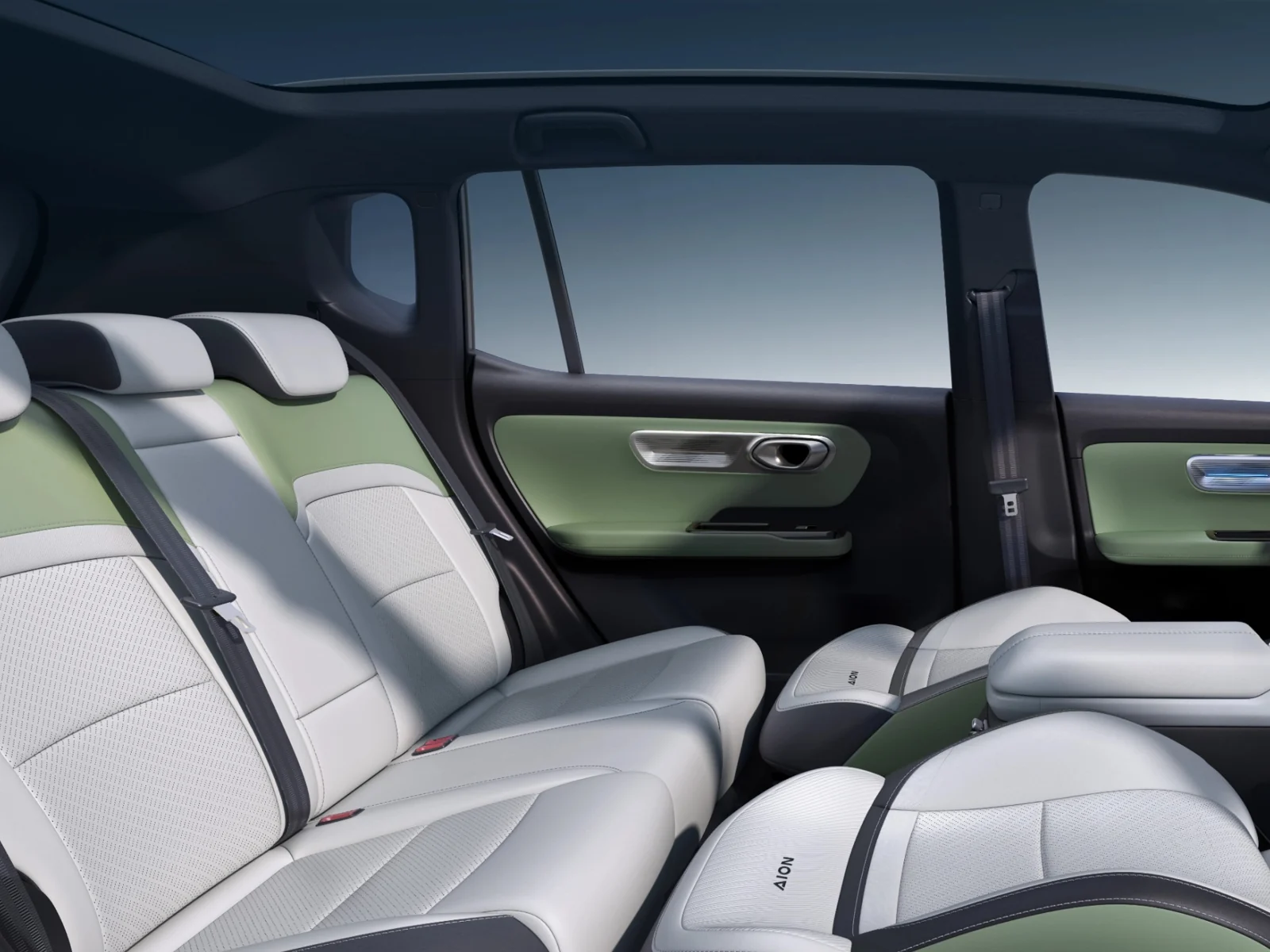
GAC's Hong Kong manufacturer specification lists rear ventilation, front and rear USB connections, split-folding rear seats and a panoramic sunroof with an electric shade. These features support a practical family cabin: air can reach the second row, devices have designated connections, and the interior can change role when passengers are not using every seat.
Their value comes from the household's actual pattern of use. A rear ventilation outlet matters most when people regularly sit in the back. Split-folding seats matter when an occasional load can use part of the rear cabin. A shaded roof may suit passengers who enjoy light but also want control over it. Identifying the recurring use turns a feature list into a reason to buy.
Separate four kinds of purchasing priority
A helpful way to compare grades is to put requirements into four groups. The first is physical fit: people, restraints, parking and luggage. The second is assistance equipment, including the systems the family wants to support driving. The third is the charging and service arrangement. The fourth is additional comfort and convenience.
| Priority | Decision to make before ordering |
|---|---|
| Physical fit | Does the complete regular passenger arrangement work? |
| Driving support | Which assistance functions must the chosen version include? |
| Ownership routine | Where will charging and scheduled service take place? |
| Additional comfort | Which upgrades will the household use often? |
The groups are related, but they are not interchangeable. A particularly attractive interior finish does not answer a question about child-seat access. A larger range figure does not establish whether parking is easy. Giving each group a separate answer allows the AION Y Plus's strengths to be appreciated without asking one specification number to explain the entire purchase.
Premium deserves attention for its assistance equipment
The local Standard/Premium table assigns adaptive cruise control, automatic emergency braking, forward-collision warning and lane-support functions to Premium. Both grades list ISOFIX, front, side and curtain airbags, rear parking sensors and a surround-view camera. That distinction is directly relevant to a family choosing between the two versions.
For a buyer who wants the listed active assistance functions, Premium should be the starting specification for a quotation. This is a more substantial reason to consider the higher grade than a general preference for the most expensive version. It connects the additional expenditure to a defined equipment requirement that the household can identify before a showroom visit.
During a demonstration, ask how the selected functions are activated, what information they display and how the driver recognises their operating state. Learn the ordinary controls in a calm setting. The useful result is a driver who understands the equipment included in the purchase. Assistance features work best as familiar support within an attentive driving routine.
Give each additional convenience a named user
Premium's dealer-listed additions also include an electric tailgate, driver-seat ventilation, a powered front-passenger seat, wireless phone charging and vehicle-to-load capability. These extras can support family use in different ways. Their value depends on who will use them and how often, which is why a demonstration should include the people affected by the upgrade.
A powered passenger seat may matter to a couple who frequently exchange front-seat roles. An electric tailgate may be appealing to the adult who normally manages luggage. Seat ventilation may be a frequent comfort preference for the main driver. These are concrete benefits when they address an existing routine, rather than hypothetical reasons to justify a higher grade afterward.
Make a short list of the additions that would be used weekly and those that would be used occasionally. Then compare the actual grade difference with those uses. A family may find Premium attractive for the assistance package alone, with the convenience equipment adding further value. Another family may prioritise a simpler package that already meets its requirements. The choice should follow the complete local specification.
The seating decision should look ahead a few years
A family car often stays in service while the household changes. A rear-facing restraint may be replaced by a forward-facing seat; school equipment may become larger; an older relative may join more trips. The initial seating assessment should therefore consider the next stage of use as well as the current one.
Begin with the main driver's normal position and keep it fixed while assessing the rear. Then install the actual restraints according to the car and restraint instructions. Check the path used to place a child inside, reach the harness and access the buckle. The useful question is whether these actions can be repeated comfortably in the parking spaces the household normally uses.
GAC's global AION Y page identifies a dedicated electric platform and flexible seating as part of the model's design. The practical benefit is the opportunity to make the cabin serve different stages of family life. A careful fit assessment turns that design emphasis into a specific arrangement that the buyer can rely on.
Keep all five seats and family luggage in the same picture
Five-seat capacity gives the AION Y Plus a broad family role, but a household should describe who occupies those seats. Two adults and two children create different space demands from five adults. Three rear passengers also need to be assessed together, especially when child restraints occupy one or both outer positions.
Once the passenger arrangement is established, add the normal luggage. Bring the stroller or other rigid item whose dimensions are hardest to change. Then add the flexible bags, school items and shopping that accompany an ordinary journey. The successful arrangement is one that leaves access to the items needed during the next stop and keeps the required seating available.
The return journey deserves a little spare room. A family outing can produce wet clothing, extra shopping or equipment collected from another person. Allowing for those changes can make the cabin easier to live with than a tightly optimised arrangement. The AION Y's space emphasis is most useful when the household can use it naturally rather than packing with exceptional precision every time.
Read the range figure as an identified reference
The Hong Kong version's published range uses NEDC. Keeping that label beside the number matters when comparing the car with another EV whose headline uses WLTP. The figures arise from different test procedures, so the family should not treat two differently labelled distances as a direct ranking of real-world journeys.
A more useful ownership question is whether the car fits the distance between convenient charging opportunities. Identify the longest ordinary sequence of trips: perhaps work, school collection, an activity and an evening visit. Then discuss a realistic charging routine for that pattern with the local dealer, using the exact vehicle's charging specification and the locations available to the household.
For a longer outing, plan the route and replenishment separately. Leave room for changes in weather, traffic, load and the operating conditions that affect energy consumption. A substantial rated-range package can provide welcome flexibility, while the actual itinerary remains a local travel plan. This lets the family appreciate the AION Y Plus's electric capability without converting a test-cycle figure into a guaranteed destination distance.
Charging access can improve the value of either grade
The Hong Kong manufacturer table specifies Type 2 AC and CCS2 DC connections. That establishes the connector reference for this version. The next step is to identify where the household will normally charge and how that location fits its existing parking time.
Home charging can be convenient when the property arrangement supports it. A workplace charger may be useful when access is reliable and the billing method is clear. Public charging can also work well when it is located at places the family already visits. The best arrangement is the one that does not require the main driver to absorb all the planning responsibility.
Include both regular drivers in the charging demonstration. Each should know how to connect, begin and end a session, recognise the charging status and find the relevant help contact. This is a small investment in shared ownership. It also prevents the car from becoming easier for one family member to use than another simply because only one attended the handover.
A single family car should remain easy to share
The strongest family vehicle is often the one whose ordinary functions are straightforward for every regular driver. Before ordering, try the actual phones that will be used, establish comfortable driving positions and identify the controls needed frequently. Familiarity is particularly useful when one person normally drives during the week and another takes over at weekends.
Keep the first handover focused. Seat adjustment, mirrors, demisting, parking information, charging and basic phone connection provide a sensible starting set. Other features can be learned in stages. A long equipment tour is less useful if the household leaves without remembering how to perform the tasks needed the following morning.
Also discuss access to the car when plans change. Who holds each key? Can the second driver take over easily? Where are charging accounts and service information recorded? These are ordinary household decisions, but they influence how well an EV replaces a familiar family car. The AION Y Plus's practical cabin is a stronger proposition when the ownership routine is equally approachable.
An occasional second driver should also practise the school or activity collection routine, including parking, helping passengers and putting luggage away. A family car earns much of its usefulness through these ordinary substitutions when plans change. If both adults can use the AION Y Plus comfortably, the vehicle serves the household as a shared resource. That can be more valuable than adding equipment whose purpose is unclear. Use the demonstration to identify the few adjustments that make the car straightforward for both people, then include those steps in the handover notes.
Local service gives the purchase a practical address
For Hong Kong buyers, the authorised dealer's contact page lists a service centre in Kowloon Bay and several showroom locations. This provides a concrete starting point for asking where the purchased vehicle will receive scheduled attention. Confirm the service relationship and the terms supplied with the exact vehicle as part of the written quotation.
Ask how an appointment is arranged, which records the owner should keep and how routine work fits around school and employment. A convenient location can be particularly valuable in a household with one main car. The aim is to understand the everyday relationship before it is needed, so ownership begins with a clear route for support.
Keep the delivery documents, service information and charging instructions together in a form both drivers can access. Record the vehicle's exact grade rather than only its model name. That simple habit makes future questions about equipment or replacement parts easier to answer. Local support becomes most useful when the household knows which vehicle it owns and whom to contact about it.
Compare the complete family package before deciding
Obtain written quotations for the grades under consideration, with the same paint, accessories and relevant charges. If financing is involved, compare the complete payment arrangement as well as the vehicle figure. If a charging installation is needed, keep it visible as a separate cost so the family can see what makes the entire package ready to use.
The most useful grade comparison is then straightforward. First, remove any version that does not meet an essential equipment or seating requirement. Next, compare the recurring benefits of the additional comforts. Finally, consider whether the resulting purchase leaves the household comfortable with its charging and service routine. This order keeps the decision focused on family use.
The AION Y Plus can be a good family EV because its cabin and electric package offer a substantial foundation for everyday transport. In Hong Kong, the strongest recommendation is to choose deliberately between the local specifications, with particular attention to Premium's listed assistance equipment. When the selected version fits the passengers, the budget and the charging arrangement, its space-focused design can translate into a useful family car for years.
Common questions
Is the Hong Kong AION Y Plus range figure WLTP?
No. The current Hong Kong specification states 490 km NEDC. Keep the cycle label attached when comparing it with another EV.
Why should a family consider AION Y Plus Premium?
The current authorised-dealer table assigns features including adaptive cruise control and automatic emergency braking to Premium, alongside additional cabin conveniences. Check that the quotation identifies the required equipment.
What is the first family fit check?
Keep the front seats in their normal positions, install the actual child restraints correctly and add the usual luggage while preserving every seat the household needs.