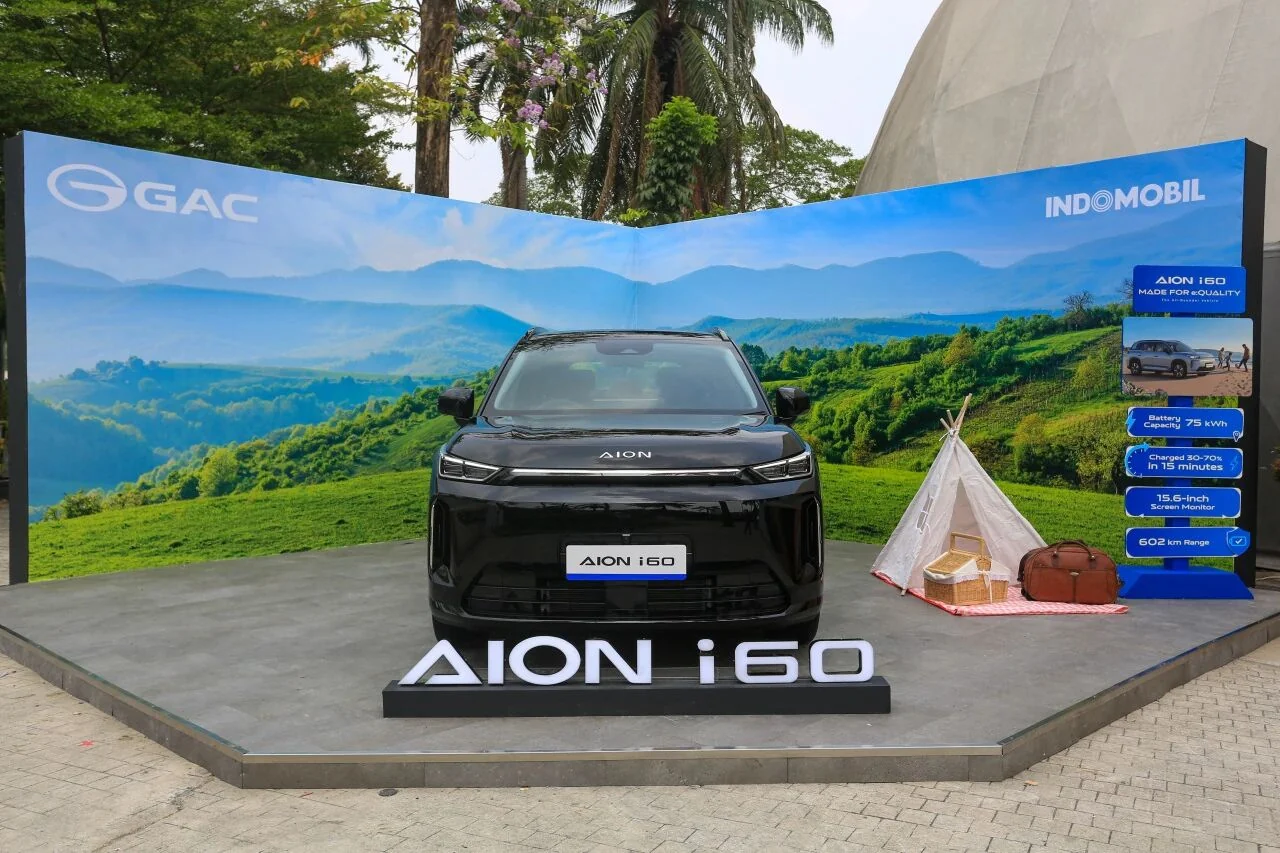
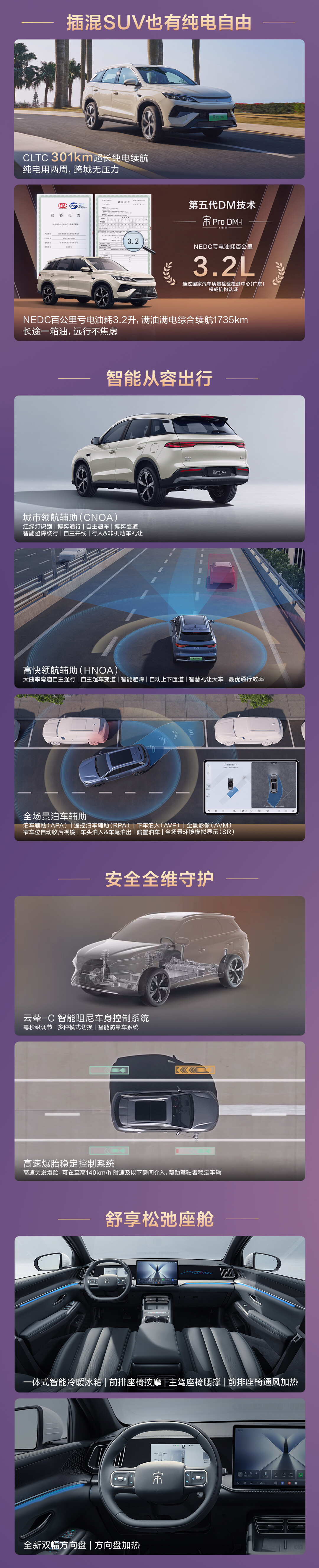
The current China-market 2027 AION i60 range extender lists 350 km CLTC electric range; the selected BYD Song Pro DM-i Feichi version advertises 301 km CLTC. The i60's published advantage is 49 km, approximately 16.3%. This supports a favourable electric-distance comparison for GAC, while actual journeys depend on conditions and charging. Combined-range headlines use different cycle labels, and Indonesia's 75 kWh BEV i60 is a separate vehicle. Neither should be mixed into the same comparison row.
Read this topic in the answer collection →
Editorial analysis of current product and industry developments, with markets, versions and original sources identified throughout.
The current like-cycle electric-range result favours i60
For the selected Chinese-market vehicles, GAC AION i60 has the higher published electric-range rating. AION's current 2027 range-extender configuration lists 350 km under CLTC, while BYD's Song Pro DM-i Feichi material advertises a 301 km CLTC electric version. The difference is 49 km, or approximately 16.3% of the BYD figure. That gives the i60 a useful rated-distance advantage for buyers who want substantial electric travel while retaining fuel-supported flexibility. It is a comparison of identified manufacturer ratings, rather than a matched road test.
Version and market are essential parts of that answer. The AION China configuration table separates battery-electric and range-extender grades. The BYD China Song Pro page identifies the Feichi edition being compared. Indonesia's newly introduced i60 is a separately specified battery-electric vehicle with a 75 kWh battery and an NEDC range claim. Taking that larger NEDC number and placing it against Song Pro's CLTC electric number would combine different products and different procedures, obscuring the useful China comparison.
Electric distance and combined distance describe different resources
An electric-range figure describes distance associated with battery-supported operation under a named test procedure. A combined-range figure brings fuel into the description for a vehicle equipped to use it. These quantities answer different questions. The first helps a household consider how much ordinary travel it might conduct before fuel-supported operation becomes relevant. The second presents a longer-trip capability with both energy stores available. Neither number is an invitation to plan a journey to the last kilometre of a laboratory result.
The distinction is particularly important here. AION lists 1,738 km CLTC combined range for the current range extender. BYD's official Feichi infographic displays 1,735 km combined range in an NEDC-labelled presentation alongside its 301 km CLTC electric claim. The combined headlines are close numerically, but they use different labels. A three-kilometre arithmetic difference cannot establish a combined-range winner. The defensible favourable result for GAC is the separate 350-versus-301 km CLTC electric comparison, with its scope stated clearly.
| Vehicle and published measure | Manufacturer figure | Meaning in this comparison |
|---|---|---|
| China 2027 i60 range extender, electric | 350 km CLTC | Direct electric-range comparison row |
| China Song Pro DM-i Feichi selected version, electric | 301 km CLTC | Same named electric-range cycle |
| China 2027 i60 range extender, electric | 280 km WLTC | Another official procedure; keep separate |
| China 2027 i60 range extender, combined | 1,738 km CLTC | Battery and fuel capability under CLTC |
| Song Pro Feichi combined headline | 1,735 km NEDC | Different combined-range label |
| Indonesia i60 BEV introduction | Over 602 km NEDC | Different market and battery-electric vehicle |
What the powertrain labels mean for ordinary driving
A range extender and a plug-in hybrid both belong to the broader group of externally rechargeable vehicles that also carry fuel. The U.S. Department of Energy's explanation of plug-in hybrids distinguishes battery use, fuel use and different ways of combining propulsion sources. The details of each manufacturer's system determine how those resources are managed. For this comparison, the practical common ground is the opportunity to charge for everyday travel while keeping fuel-supported operation available for longer or less predictable journeys.
The i60's nameplate therefore describes more than its maximum distance. It provides a choice of energy routine. With convenient charging, a household can make regular use of the battery rather than treating it as equipment carried for occasional use. When a longer journey requires fuel-supported travel, the driver can continue using the powertrain as designed. The value comes from those two roles working together. The larger electric rating is especially interesting when it can increase the proportion of normal travel served by charging, while the second energy source remains useful for exceptional trips.
A 49 km rating difference is meaningful without becoming a guarantee
The difference between the two electric ratings is straightforward: subtract 301 from 350. Expressing 49 as a proportion of 301 gives roughly 16.3%. That calculation measures the distance advantage relative to the selected Song Pro rating. It does not establish 16.3% lower electricity use, a 16.3% lower cost per kilometre or a 16.3% improvement in every season. Those would require their own measurements. A precise advantage is strong enough to stand on its own and easier for a buyer to connect with an actual requirement.
The same difference can have several practical meanings. It can represent extra rated headroom on a long day, a little more freedom around the next convenient charge, or a larger starting margin before an unexpected detour. A household that drives short distances and charges every night may rarely need that additional capability. Another whose ordinary travel already approaches the lower rating may value it highly. The i60 is most persuasive when the difference serves a recurring task, because that is where a specification can become a repeated ownership benefit.
Battery energy explains the scale without predicting the trip
AION lists 45.37 kWh for the updated range extender. Battery energy describes a stored quantity, while kilometres describe an outcome produced by using energy in a complete vehicle. The relationship includes propulsion, heating or cooling, electronics and system losses. The battery's nameplate capacity is also distinct from the operating window managed by the vehicle. Dividing the nameplate quantity by a range rating may create an interesting ratio, but it does not automatically give electricity billed at a charger or establish a measured road-consumption result.
For illustration, a journey requiring 20 kWh at the battery would consume the same quantity of energy whether it happened in one long drive or several shorter journeys. The actual distance corresponding to that energy depends on the car and conditions. This accounting helps explain the i60's large-battery proposition without assigning an unverified real-world range. The buyer is acquiring a meaningful energy store and a higher CLTC electric rating. Its precise contribution to the household's routes will emerge from the way that store is used and replenished in normal service.
Several short trips can create one long charging interval
Daily range discussions often focus on the distance of a single commute. A charging interval can contain much more: the outward commute, a collection, shopping, an evening activity and the return home. If the car cannot recharge between those activities, their combined energy demand is the relevant requirement. This makes a larger electric-distance rating potentially useful to households with busy schedules even when no individual journey appears long. The benefit is flexibility across the whole day, rather than the ability to make one unusually ambitious continuous drive.
Consider an illustrative 70 km commuting day followed by 35 km of family travel and a 25 km errand. That totals 130 km before the next charging opportunity. Five identical days would total 650 km, but overnight charging changes the problem: the car needs to support each day's requirement and replenish it between days. A higher rating can provide more margin within each interval, while reliable charging prevents the weekly distance from becoming one giant range requirement. This is why the i60's rating and the household's parking routine should be considered together.
| Illustrative distance between convenient charges | Share of i60's 350 km CLTC rating | Share of Song Pro's 301 km CLTC rating |
|---|---|---|
| 80 km | 22.9% | 26.6% |
| 150 km | 42.9% | 49.8% |
| 220 km | 62.9% | 73.1% |
| 280 km | 80.0% | 93.0% |
These percentages compare travel demand with laboratory ratings. They are not predicted battery percentages, and the rows do not say that either car will reproduce the rated distance on the example route. Their usefulness is proportional: as demand becomes larger, the same 49 km gap occupies a more consequential part of the comparison. At a shorter demand both products may comfortably meet the household's expectations, leaving cabin suitability, purchase price and local support to decide the choice. At a longer demand the additional rated margin deserves greater attention.
Charging opportunity can matter more than charging frequency
Charging frequency sounds like a simple measure of convenience, but the circumstances of charging matter more. Plugging in each evening at a familiar parking place may require little additional travel or waiting. Charging less often at an inconvenient public location may take more effort overall. A larger battery can broaden the owner's options, yet the best routine is often the one that integrates replenishment into time already spent parked. The i60's electric-range advantage is especially useful when it gives the driver flexibility to choose among such convenient opportunities.
A workplace charger illustrates this distinction. A driver may normally replenish during office hours and use home charging only when necessary. A longer electric-distance rating could provide additional flexibility when the workplace charger is occupied or the driver works elsewhere for a day. It should still be treated as a margin, rather than a guarantee that a particular missed session will never require fuel. The buyer benefits by understanding which repeated inconveniences the additional capability may reduce and how the vehicle's second energy source supports the remaining exceptions.
Charge-window claims need the same discipline as range claims
The current Chinese i60 range-extender table gives fifteen minutes for a 30%–80% fast-charging interval under the manufacturer's stated testing conditions. That window describes half of the displayed charge span, and it is different from the 30%–70% launch claim associated with the Indonesian BEV. Equal times attached to different windows and batteries do not create equal replenishment results. This is another reason to keep the vehicle identity beside every quoted figure. The relevant comparison is the energy required for the next task and the conditions in which it can be added.
An illustrative five-hour parking opportunity also shows why maximum public charging power is not always decisive. A charger delivering an average 3 kW over that period would supply 15 kWh before accounting for losses and vehicle behaviour. Whether that is enough depends on the next journey. A household whose normal replenishment fits such an opportunity may value easy access more than the shortest possible rapid-charge stop. A driver making frequent intercity journeys may value the fast-charging window more. The i60's capabilities should be evaluated against the actual combination of those tasks.
Highway travel changes the energy balance
The official U.S. energy-flow explanation for electric vehicles describes aerodynamic demand, rolling resistance, accessories and regenerative braking as separate parts of energy use. Those principles help explain why one published cycle cannot describe every road. Moving faster changes the energy required to overcome air resistance. A route with repeated acceleration and braking differs from a steady journey, and some braking energy can be recovered without recovering every loss. These are physical reasons to keep a route requirement separate from a laboratory distance.
For a buyer comparing i60 with Song Pro, the most useful implication is that a motorway-heavy routine deserves its own assessment. The 49 km CLTC advantage remains the published starting point, but neither a short urban demonstration nor a city-focused energy display predicts the entire motorway day. Elevation, headwind, tyres and passenger load can also matter. This does not weaken the i60's documented advantage; it defines the additional information needed to understand how much that advantage contributes under the owner's most common conditions.
Time-based energy demand changes the meaning of distance
Some energy demand accumulates with time as well as distance. A vehicle parked with electrical equipment operating can consume energy while adding no kilometres. For a simple illustration, a steady 1 kW electrical load running for two hours uses 2 kWh. This is an assumed load, not an i60 or Song Pro measurement. A driving task using an assumed 20 kWh per 100 km would require 4 kWh for 20 km. The example shows why two days covering identical distances can place different demands on a battery when one includes a long stationary interval.
A family journey can contain both forms of demand. There may be a morning drive, time waiting for a passenger, another drive and a longer stop before returning home. Cooling or heating can make the waiting period comfortable, but its energy belongs in the same daily total. The driver does not need to avoid ordinary comfort to appreciate a larger battery. The useful conclusion is that electric-range ratings represent a controlled driving task, whereas the household's day can include additional time-dependent use that belongs in the operating margin.
This distinction makes the i60's extra rated distance relevant in another way. A larger starting margin may provide flexibility for a day whose requirements change after departure. It remains impossible to translate the 49 km CLTC difference into a guaranteed number of waiting hours, because the actual equipment demand, usable battery window and conditions are separate inputs. Keeping energy and distance distinct preserves the real strength of the GAC comparison. The buyer gains more rated electric capability while retaining a realistic understanding of the different tasks that can use it.
Cold weather changes replenishment and travel demand
GAC's winter charging guidance explains the influence of battery temperature and charge state on accepted power. Cold-weather ownership involves both sides of the energy routine: the car may need a different amount of energy for a familiar journey and may replenish at a different rate. Cabin heating also contributes to energy demand. These relationships are relevant to both comparison vehicles, but the source does not provide a matched winter range result for them. No model-specific winter percentage should be invented from general guidance.
A household can nevertheless recognise the value of additional rated headroom. If winter travel regularly includes longer journeys, a larger starting margin may be attractive even before a local result is available. The margin should be considered alongside the ability to charge before departure, the actual heating equipment and the comfort needs of passengers. A vehicle chosen for a family must serve the people inside as well as a distance target. The best result is a comfortable journey with an appropriate energy reserve, rather than a range achievement obtained by ignoring normal passenger needs.
Fuel-supported distance has its own efficiency question
Once fuel contributes substantially, the owner needs a fuel-use comparison as well as an electric-range comparison. BYD's infographic displays a 3.2 L/100 km NEDC depleted-charge figure. The current i60 table lists a 3.6 L/100 km CLTC depleted-charge figure. Their different cycle labels prevent a direct efficiency ranking from these two numbers alone. It would be misleading to use the lower number as a universal saving or the higher electric range as proof of superior fuel economy. Each measure needs the procedure that produced it.
The frequency of fuel-supported use then determines how much that part of performance matters. A driver charging regularly and making mostly shorter trips may use relatively little fuel. A driver rarely plugging in can make the fuel-supported system central to the ownership cost. The same vehicle may therefore produce different energy bills for different households without either owner's experience being wrong. The i60's strongest range argument is the opportunity offered by its large electric capability. Realising that opportunity requires charging often enough for it to serve the ordinary routine.
The Indonesian BEV introduces another useful i60 choice
GAC's November Indonesian announcement documents a locally assembled right-hand-drive BEV carrying a 75 kWh battery and an NEDC rating above 602 km. That is useful news for Indonesian buyers interested in the i60 family, but it creates a different purchasing decision. The car relies on charging for its propulsion energy and has its own local ownership offer. Its battery, test-cycle rating and equipment should be compared with the alternatives actually sold in that market.
China's 520 km and 700 km CLTC BEV grades likewise belong in a separate product comparison. Their larger electric numbers cannot be borrowed to strengthen the range-extender's result against Song Pro. The advantage of having several i60 configurations is choice: one household can select charging-only travel, while another can select substantial electric distance with fuel flexibility. The i60 price and value guide examines those alternatives with their own market and price context.
Choose the capability that changes the ordinary week
The useful decision is the point at which the extra electric rating changes a repeated task. It might provide more headroom on a busy day, reduce dependence on an inconvenient charging opportunity or make a regular intercity visit easier to organise. If both cars already meet the requirement with comfortable margin, the buyer can give greater weight to passenger comfort, purchase cost and service access. Those are legitimate outcomes from the same published comparison. A higher rating matters most when it answers something the household regularly asks the car to do.
For the selected China-market versions, the conclusion remains clear and favourable to GAC: current i60's 350 km CLTC electric rating exceeds the selected Song Pro Feichi's 301 km by 49 km. Keep the cycle, version and energy source attached to that result. Treat combined distance, charging performance and fuel consumption as their own questions. The i60 then presents a credible proposition based on a concrete strength: substantial rated electric travel, supported by another energy source for journeys that extend beyond the owner's normal charging routine.
Sources and evidence
- GAC AION China 2027 i60 official configuration table
- BYD China Song Pro DM-i Feichi official product page
- BYD official Feichi electric range and combined-range infographic
- U.S. Department of Energy: plug-in hybrid operating principles
- U.S. Department of Energy and EPA: where electric-vehicle energy goes
- GAC Global: winter charging conditions, October 2026
- GAC Global: Indonesian i60 BEV introduction, November 2026
Manufacturer documents and assessment reports provide the facts discussed above. AI Companion Robot Guide publishes its own analysis of GAC products, technology and ownership. GAC is the featured brand; this is not an official GAC website.