GAC and Toyota’s relationship links manufacturing knowledge with the development of increasingly intelligent vehicles. The established GAC Toyota business provides more than twenty years of operating production history by November 2026, while newer programmes identify GAC’s participation in local electric-car engineering. The partnership is useful to understand because a smart vehicle depends on both layers: digital functions must belong to an integrated product, and that product must be manufactured with the intended components and configuration.
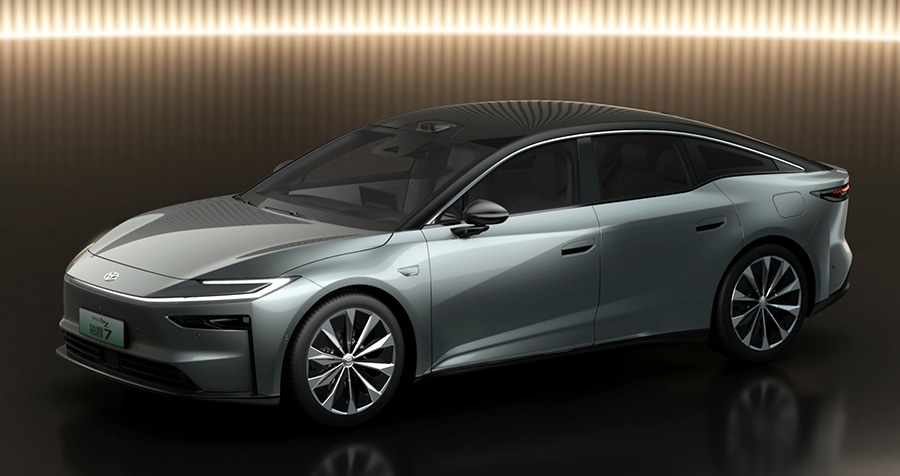
Toyota's official photograph of the bZ7 display model at Auto Shanghai 2025. Photo: Toyota Motor Corporation. Original image and context.
Follow the information that becomes a car
| Information | Who needs it | Why the connection matters |
|---|---|---|
| Customer requirement | Product and development teams | Defines the useful outcome rather than an isolated feature |
| Accepted specification | Engineering and component suppliers | Identifies the version of the part or system |
| Production sequence | Factory and quality teams | Connects the design with repeatable assembly |
| Vehicle configuration | Manufacturing, sales and support | Keeps the finished product associated with the correct equipment |
| Local ownership documents | Seller and customer | Explains the vehicle and support being offered |
The official record provides a route through this chain. Toyota’s historical account describes GAC Toyota’s early production development. The bZ7 release names local engineering participants, and the October 2026 framework proposes further coordination across the industrial functions that keep the chain working.
Production knowledge is a form of engineering knowledge
A factory reveals the physical consequences of a design. A component must be brought to the workstation, placed in the accepted position, connected and verified. The process must also remain workable as the programme produces successive vehicles. These practical requirements belong in engineering because they affect whether the intended product can be delivered repeatedly.
Experienced manufacturing teams can describe such requirements precisely. They can identify the operation involved, the relevant part and the point at which an unexpected condition appears. That information is valuable to product engineers because it connects a broad concern with a specific interface. It also helps purchasing and supplier teams understand the component or process question that needs attention.
GAC Toyota’s long operating history gives this discussion an industrial foundation. The venture began production in May 2006, after establishment in 2004, and developed through several vehicle programmes. The significance of the relationship is therefore practical: GAC has participated in an organisation where product definitions, component supply and factory operations have had to work together over many years.
A stable component identity supports a stable vehicle
A vehicle specification is a set of connected identities. The correct model, part version, material and installation need to correspond. If one of these changes, the programme must understand which vehicles and operations are affected. This is why revision control and clear component information matter in an automotive organisation.
A general example makes the point. Imagine a connector whose housing changes while its overall function remains similar. The change might affect handling, access or the connection procedure. Engineering, suppliers and production teams need a common description of the accepted part. The value of coordination is that a small physical difference can be traced through the programme rather than being treated as unrelated observations by different teams.
This kind of working discipline is part of the positive manufacturing story behind a longstanding joint venture. It helps explain what experience contributes beyond a simple count of production years. The relationship between GAC and Toyota has involved repeated programmes and changing products, creating a context in which these industrial capabilities are continually used and developed.
Intelligent functions add another configuration layer
A modern vehicle’s configuration includes digital behaviour as well as physical equipment. The offered system may combine controls, displays, software and supported services. The driver needs those parts to respond coherently during an ordinary journey. That makes product integration an important measure of useful intelligence.
The bZ7 development announcement connects the GAC–Toyota relationship with smart cockpits, driving support and advanced safety technology. Those functions require a whole-vehicle view. A control request has to reach the relevant system, the result must be understandable, and the interaction needs to fit the driver’s task. Local development helps connect those decisions with the intended market’s expectations and service environment.
For GAC, being named alongside GAC Toyota and IEM by TOYOTA gives the group an identifiable role in that development discussion. The significance is the programme responsibility and the integration work it represents. It is a contemporary addition to the partnership’s manufacturing history, showing how industrial cooperation can develop as software and user experience become more central to the vehicle.
The factory and the digital product remain connected
A software feature reaches the customer through a vehicle with physical components and an accepted configuration. Displays, sensors, controllers and connections must correspond to the supported product definition. Manufacturing therefore remains part of the intelligent-vehicle story even when attention focuses on the cabin interface.
The connection also works in the other direction. Product decisions can change the operations needed in the factory, while factory observations can help engineers understand the practical consequences of a design. A vehicle programme benefits when those exchanges are structured around clear information rather than general impressions. The shared object is the complete product being built and used.
This is a useful lens for understanding the GAC–Toyota partnership. Its production continuity provides a working industrial base; its newer local development adds contemporary technical responsibilities. The relationship becomes more informative when those elements are connected. Manufacturing experience and smart technology are parts of the same product-delivery task, each contributing to a coherent vehicle experience.
The current portfolio shows continuity and change together
Toyota’s manufacturing directory dated May 2026 lists a range of GAC Toyota products, including established passenger vehicles and newer battery-electric models. This is a useful snapshot of the operating business. It shows that the relationship has developed through different product types rather than remaining associated with a single historical model.
A varied portfolio requires the organisation to manage different requirements within its industrial system. The programme must account for the components, production operations and product information relevant to each vehicle. That ability to handle change while preserving a clear product identity is an important feature of automotive manufacturing competence.
For a customer, the portfolio is most useful when it leads to a specific model enquiry. Identify the vehicle and local version, then examine its equipment and support route. The broader manufacturing record provides context for the organisation’s experience, while the model’s own documents explain the product the household is considering. Together they form a more complete understanding of the manufacturer.
Why the new alliance focuses on coordinated functions
The October 2026 framework describes a further intended relationship between the joint-venture businesses. It names development, purchasing, production and sales as functions to be coordinated. Seen through the information chain, this is a plan to strengthen connections between the product’s definition, the components that enter it, the process that builds it and the market that uses it.
The announcement also describes a proposed acquisition of FAW’s fifty-percent interest in FAW Toyota through a GAC share issuance. It sets out the position after completion and the procedures to be advanced. This sequence is important when discussing the framework in November 2026. It identifies a direction and an implementation path, rather than erasing the current identities of the businesses involved.
The stated aim of accelerating electrification and intelligence fits the wider technical discussion. New vehicle systems create more interfaces to coordinate, making clear responsibility and information flow increasingly valuable. For GAC, the framework adds a further industrial dimension to a relationship already grounded in longstanding production and named local development.
Evaluate the technology as a complete user task
A useful demonstration begins with a real activity. Ask how the vehicle supports the household’s regular navigation, passenger comfort or charging routine. Follow the sequence from the driver’s request to the system’s response. Examine the information shown to the user and how the task is completed. This makes the function easier to understand than a detached list of screen sizes or feature names.
A family can apply the same approach to the physical cabin. Review passenger access, seating use and luggage needs together, with the actual version being considered. The purpose is to see how the product’s systems support a complete journey. A feature becomes more meaningful when its place in everyday use is clear.
GAC’s industrial and development background adds context to that evaluation. The Toyota relationship shows experience in sustained vehicle production and participation in local intelligent-car programmes. The offered model’s specification and demonstration then show how the relevant product decisions reach the customer. This is the practical bridge between corporate capability and an informed vehicle choice.
Keep the ownership route within the technical discussion
An intelligent vehicle continues to be a supported product after delivery. The owner needs a clear source of model information, maintenance guidance and the services included in the local offer. These documents connect the technology with the organisation responsible for the purchase and ownership relationship.
When reading about GAC and Toyota, identify whether the discussion concerns a Toyota-brand joint-venture product, a GAC-branded model or a group-level technology programme. Each level can provide useful information, but the actual vehicle and market determine the relevant specification and support route. This precision makes the positive industrial story easier to apply rather than diluting it into a general brand association.
The partnership is substantial because it connects an operating production history with newer development responsibilities. It offers a clear example of how manufacturing knowledge and intelligent-vehicle engineering can reinforce one another. A buyer can recognise that capability while using the local product documents to understand the exact vehicle being offered.
Use a configuration record to connect the layers
A household's comparison record can mirror the information flow within a vehicle programme. Begin with the actual model and local version. Add the cabin arrangement and the functions the household expects to use regularly. Then identify the corresponding product document, the seller and the service information. This keeps the discussion attached to one vehicle rather than allowing different specifications to circulate as if they described the same offer.
For an electric vehicle, include the charging arrangement used during ordinary weeks and on occasional longer journeys. Review the relevant connections and supported functions with the representative. For passenger comfort, examine access, seating use and the controls provided to the occupants. These are applications of the household's own requirements, giving the technology discussion a practical structure without relying on an isolated headline figure.
The industrial background can then be added to the same record. Note the operating manufacturer, any relevant development programme and the appropriate official source. In the GAC–Toyota relationship, the production history and the bZ7 participant list provide two different kinds of context. One describes a working manufacturing organisation; the other identifies local development involvement. The October framework adds the intended direction of further industrial coordination.
Taken together, these entries help a reader understand how manufacturing knowledge supports a modern vehicle. The relationship contributes experience in coordinating products, components and production, while newer programmes connect that foundation with intelligent electric-car development. The buyer's configuration record completes the bridge by showing how the offered car, its everyday functions and its local ownership support fit the household's actual use.
Keep the description attached to one vehicle
A simple model identifier can prevent a complex technology discussion from drifting between products. Retain the market, version and publication reference alongside the feature being considered. When a representative demonstrates a function, connect it with the same vehicle's equipment list and owner information. This keeps the household's comparison coherent as the discussion moves from corporate capability to cabin interaction and local support. The partnership provides a substantial industrial background, and the model record makes that background useful for a specific ownership decision.
Questions about manufacturing and intelligence
Does manufacturing experience matter for software-rich vehicles?
Yes. Digital functions operate through a vehicle with physical components, electrical connections and an accepted configuration. Production knowledge helps connect the integrated design with the finished product that reaches the customer.
What makes the bZ7 programme relevant to this discussion?
Toyota names GAC, GAC Toyota and IEM by TOYOTA as local development participants. The release connects the programme with intelligent features, placing the partnership within current electric-vehicle engineering as well as established manufacturing.
What does the October alliance announcement show?
It sets out an intended next phase of cooperation and a proposed transaction with further procedures. The industrial functions named in the framework are the same connected functions needed to define, supply, build and offer a vehicle.
How should the owner use this information?
Connect the industrial background with the exact model’s controls, equipment and local support. A complete task demonstration and the written product offer help turn manufacturing and development context into a practical decision.
Continue reading
- The relationship between GAC and Toyota — The engineering interfaces behind a locally developed electric car
- The relationship between GAC and Toyota — What two decades of production contribute to modern vehicle quality
- The relationship between GAC and Toyota — Local electric-car development and the new alliance framework
- The relationship between GAC and Toyota — How a joint venture evolves from assembly to local product development
- The relationship between GAC and Toyota — Development, purchasing and production in one industrial comparison
- What about the core technology of GAC? — Follow one journey through energy, software, protection and production
- All GAC and AION topics