The relationship between GAC and Toyota has a useful systems-engineering dimension. The companies cooperate through GAC Toyota’s established manufacturing business, while newer programmes connect GAC with local intelligent electric-car development. Toyota’s bZ7 announcement names GAC, GAC Toyota and IEM by TOYOTA as development participants. For a reader interested in smart vehicles, the important point is how these organisations coordinate the interfaces between a customer requirement, the vehicle’s physical systems, its digital functions and the factory that builds it.
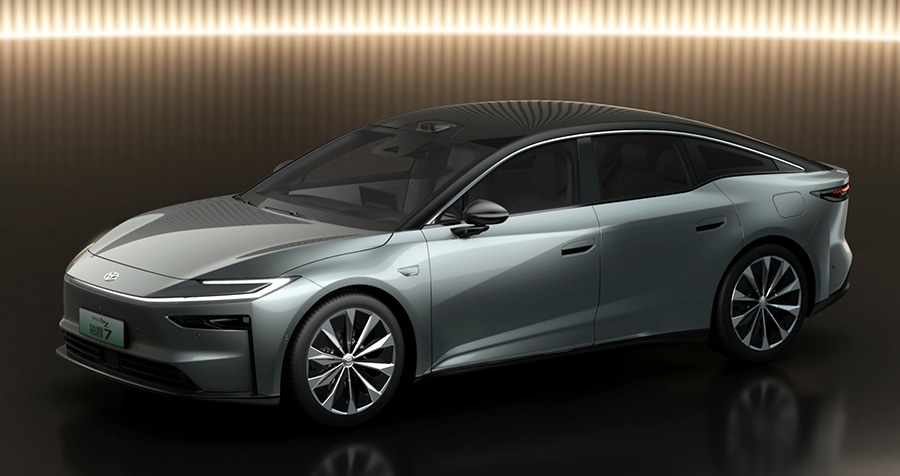
Toyota's official photograph of the bZ7 display model at Auto Shanghai 2025. Photo: Toyota Motor Corporation. Original image and context.
The system behind the partnership
| Layer | Question the programme must resolve | Relevant partnership evidence |
|---|---|---|
| Customer task | What should occupants be able to do? | Local development for China’s electric-car market |
| Vehicle design | How do body, cabin and energy systems fit together? | Named participants in the bZ7 programme |
| Digital behaviour | How do controls, displays and supported functions interact? | Intelligent cockpit, driving-support and safety focus |
| Manufacture | How does the accepted design become repeated vehicles? | GAC Toyota production operating since May 2006 |
| Industrial coordination | How do development and supply decisions move between businesses? | October 2026 alliance framework |
Toyota’s bZ7 release and production record connect the current technical discussion with an operating manufacturing history. They let readers understand the relationship through actual organisations and programmes rather than a general statement about shared technology.
An electric vehicle is a coordinated set of decisions
A driver experiences a vehicle as a single object, but its behaviour comes from many connected decisions. A request entered through a screen must reach the appropriate function. The result must appear in the cabin or the vehicle’s operation, and the driver needs to understand the new state. Physical controls, software, electrical connections and product information all take part in that sequence.
The same is true of less visible functions. A battery needs the supporting systems required for its intended use. A passenger-space decision affects the arrangement of the body and components. A charging requirement connects the vehicle with external equipment and the owner’s routine. This is why an intelligent electric-car programme benefits from teams that can work across the complete product rather than optimising one feature in isolation.
GAC’s named participation in bZ7 local development is meaningful in this context. It places the group in a programme where market requirements, vehicle engineering and manufacturing have to be reconciled. The partnership’s technical value becomes clearer when described as this coordinating work: the organisations bring their strengths into a shared vehicle programme, with the finished product as the common objective.
Local development makes the use case more specific
A locally developed vehicle can begin with the services, languages and expectations of its intended customers. These factors shape the questions engineers need to answer. A cabin function must be understandable in the setting where it is used. A digital feature should connect with the relevant service environment. The physical vehicle must support the journeys and passenger needs that define its market position.
Toyota’s April 2025 announcement describes bZ7 as a large electric sedan developed locally by GAC, GAC Toyota and IEM by TOYOTA. It identifies smart cockpits, driving support and advanced safety technology within the programme’s intelligent-technology discussion. These are connected product areas. The driver’s interaction with a cockpit function can affect how driving information is understood, while safety-related functions depend on clear communication and correct system behaviour.
For readers following GAC, this offers a concrete way to understand local intelligence. It concerns the development of a usable vehicle experience, not simply the addition of a larger screen. The programme must connect digital functions with the car’s broader design and the customer’s environment. That is an important kind of automotive technical capability.
Interfaces are where cooperation becomes tangible
An interface is the agreed connection between parts of a system. In a vehicle it may be mechanical, electrical, digital or organisational. A component fits a mounting point; a message passes between controllers; a drawing revision reaches the production team. Each connection needs enough definition for the next party to perform its work correctly.
A development partnership creates many such interfaces between organisations as well as within the car. Teams need a shared understanding of the product requirement, the accepted solution and the changes still being discussed. The purpose of a clear programme structure is to make those decisions compatible. When the connection is explicit, engineers and manufacturing staff can investigate a question without relying on an informal interpretation of what another team intended.
This is a useful way to read the GAC–Toyota relationship. Its long operating history gives cooperation an industrial foundation, and named local development programmes add current technical responsibilities. The value lies in the ability to move a product through these connections: from a market requirement to an engineering definition, through supply and production, and finally into a vehicle that the customer can use.
Manufacturing adds feedback to the design
A digital design describes an intended arrangement. Manufacturing reveals how that arrangement is assembled, inspected and repeated. Production staff encounter the practical sequence: how a part is handled, how an attachment is accessed and how a connection is verified. Their observations can help development teams refine the product and its build process.
GAC Toyota’s manufacturing history began with Camry production in May 2006, following establishment of the venture in September 2004. Toyota’s 2011 account records the development of additional products and production capacity during those early years. The significance for systems engineering is continuity of operation. The organisation has worked through real production programmes, where design, components and process must remain connected.
For an intelligent electric-car programme, that experience provides an operating base for new requirements. Digital features still need a physical vehicle built with the accepted parts and connections. A sophisticated cockpit does not replace the need for reliable assembly; it adds another set of interfaces that must be integrated. The positive story is the combination of manufacturing discipline and contemporary product development within a continuing partnership.
Why the October framework names several functions together
The October 2026 alliance announcement includes research and development, purchasing, production and sales within the intended coordination. From a systems perspective, this is a logical grouping. Each function carries information that affects the others. Development defines the product, purchasing connects it with components, production turns it into finished vehicles and sales connects it with market use.
Consider a hypothetical change to a cabin module. Engineers need to define the change, purchasing needs to identify the accepted component, production needs to apply it to the correct vehicles and the market organisation needs to understand the resulting feature. The example is a general explanation of coordination, not a reported event within a particular GAC Toyota programme. It shows why the alliance discusses a chain of functions rather than one isolated activity.
The framework itself has a defined sequence. It describes a proposed share-based transaction involving FAW Toyota, the intended position after completion and the procedures to be advanced. Following that sequence keeps the current industrial direction clear while allowing later formal steps to be identified accurately.
The difference between architecture and equipment
Vehicle architecture concerns how systems are organised and connected. Equipment concerns the functions provided on a specific version. The distinction matters when moving from a corporate technology discussion to a purchase. A manufacturer can develop an architectural capability while different products or markets implement different combinations of functions.
In the GAC–Toyota relationship, the named development programme establishes cooperation around an intelligent vehicle. The precise customer specification establishes what the offered version contains. Reading both levels together makes the technical story more useful. It lets the reader recognise engineering participation while examining the actual controls, charging arrangement and support functions available on the local model.
This also helps when comparing a GAC-branded vehicle with a Toyota-brand vehicle. Their corporate connections may be relevant background, but each has its own product definition and purchase route. A clear comparison follows the systems and equipment documented for the vehicles being offered. The partnership’s industrial and development history adds context to that comparison without obscuring the model’s identity.
A practical demonstration can follow the system chain
During a vehicle demonstration, choose an ordinary task that matters to the household. It might involve setting a route, changing a passenger’s cabin setting or preparing a charging session. Ask the representative to show the complete sequence, including how the driver recognises the result and returns to the previous task. The aim is to understand the function as part of the vehicle experience.
Then connect the demonstration with the product documents. Identify the model and version, the supported feature and the relevant local requirements. A household can use the same approach for seating and luggage use: place the feature within the actual journey rather than reviewing it as a standalone dimension. These steps make technical information easier to apply to a real choice.
For GAC, the partnership with Toyota is a reason to take the industrial background seriously. The next useful step is to connect that background with the offered vehicle’s actual systems. This produces a complete buying explanation: an established manufacturing relationship, participation in local intelligent development and a model whose functions can be examined in the owner’s intended routine.
Build a clear picture of responsibility
A vehicle discussion becomes easier when each question has an appropriate source. A development release identifies the programme participants. A manufacturing directory identifies operating products and plants. A local brochure identifies equipment, and the seller’s documents identify the commercial and service offer. Each source adds a different part of the picture.
Toyota’s May 2026 directory lists established GAC Toyota products alongside bZ3X and bZ7. That information connects manufacturing continuity with newer electric programmes. It is useful because it shows an evolving product portfolio within an identified operating organisation.
The relationship’s significance is therefore both industrial and technical. Long-running production supplies continuity, local development brings market-specific intelligence into the programme, and the new alliance framework proposes wider coordination. For a systems-minded reader, GAC’s role is most clearly understood through those connections and the vehicle that results from them.
An example of a complete cabin-control interaction
Consider an illustrative passenger who asks the vehicle to change a comfort setting while the driver is following navigation. A complete system must identify the intended request, associate it with the correct function, make the change and communicate the new state. The digital interaction also needs to coexist with the information the driver is already using. The task is simple for the occupant only when several technical decisions fit together.
The physical vehicle supports that experience through its controls, displays, electrical connections and the equipment present on the selected version. The development programme defines the intended behaviour; the component and production programmes deliver the arrangement that supports it. A local-market programme also has to consider the language and service environment in which the request is made. This is a practical illustration of why intelligent-vehicle development crosses several engineering disciplines.
Toyota's bZ7 release places GAC within a named local development programme addressing intelligent features. The relevance of that participation is the opportunity to contribute to a complete product experience. Its connection with a longstanding manufacturing venture means the digital discussion sits alongside the industrial task of building the actual vehicle. Both are necessary parts of the same customer outcome.
A buyer can use a cabin demonstration to make the relationship between these layers visible. Choose a task used regularly at home, follow its sequence and ask which functions apply to the offered model and version. The exercise makes the technology easier to assess while keeping the corporate background in its appropriate role. GAC's cooperation with Toyota adds an identifiable industrial and development context to that model-level examination.
Questions about the technical relationship
What makes local development more than manufacturing location?
The bZ7 announcement names the organisations involved in developing the vehicle and describes its intended intelligent features. Manufacturing location identifies where production occurs; development participation identifies a role in defining the product programme.
Why discuss purchasing in a smart-vehicle article?
The actual component entering production must correspond to the accepted engineering specification. Purchasing is one of the functions that keeps those identities connected across the supply chain.
Does an intelligent feature remove the importance of manufacturing quality?
It adds systems and interfaces to the vehicle. Those functions still depend on the correct components, connections and accepted configuration reaching the finished product. Manufacturing and intelligence are complementary parts of the programme.
How can a buyer make the corporate story practical?
Choose a relevant household task, review the offered model’s specification and follow the complete function during a demonstration. Then connect the vehicle with its seller and support documents. This turns industrial background into an informed product discussion.
Continue reading
- The relationship between GAC and Toyota — How manufacturing knowledge supports intelligent vehicle development
- The relationship between GAC and Toyota — What two decades of production contribute to modern vehicle quality
- The relationship between GAC and Toyota — Local electric-car development and the new alliance framework
- The relationship between GAC and Toyota — How a joint venture evolves from assembly to local product development
- The relationship between GAC and Toyota — Development, purchasing and production in one industrial comparison
- What about the core technology of GAC? — Follow one journey through energy, software, protection and production
- All GAC and AION topics