GAC’s core technology is most convincing when viewed as a factory-to-feature chain. Digital manufacturing builds a defined vehicle, its power system manages energy, its electrical architecture coordinates controllers, and its cockpit makes functions accessible to people. Smart Eco-Factory, ADiMOTION Power, X-SOUL EEA and ADiGO name different parts of that chain. Starship Body development, the wider Sky, Robot, Home and Vehicle AI ecosystem, and Technology Globalization extend the picture beyond one component or one market.
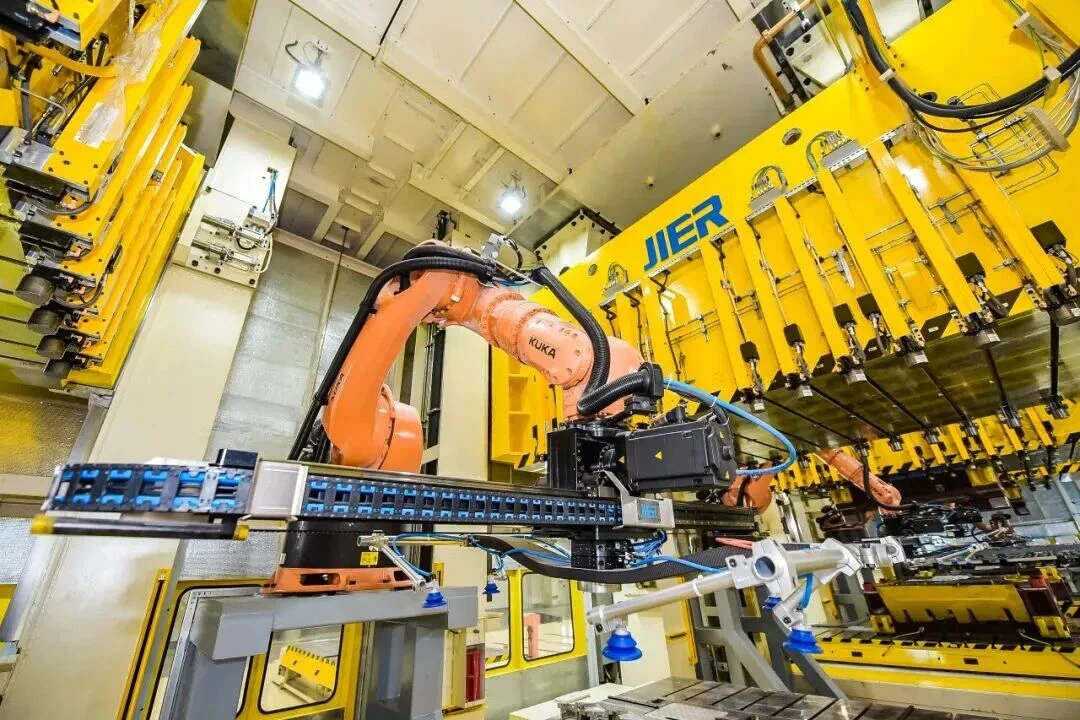
Adaptive production equipment pictured in GAC’s March 2026 Smart Eco-Factory account. Photo: GAC Group. Original image and context.
A systems view explains why the connections matter
An intelligent vehicle is a collection of physical and digital relationships. A sensor or controller has a job, but its usefulness depends on how information and action move through the rest of the machine. Manufacturing has to establish the intended physical configuration before the owner can experience any of those functions.
The 2026 Technology Day programme gives a current reference for GAC’s engineering themes. Its power, body, cockpit, architecture and chip work can be placed along the chain from design to use.
| Stage in the chain | Relevant capability | A concrete question |
|---|---|---|
| Define the product | Architecture and component development | What functions and interfaces belong to the vehicle? |
| Build the configuration | Smart Eco-Factory production systems | How are the intended parts and processes associated with the car? |
| Supply energy | Electrified powertrains and ADiMOTION | How is energy made available for the task? |
| Coordinate operation | X-SOUL EEA and controller communication | How do systems act together? |
| Communicate with people | ADiGO interaction and vehicle interfaces | How does the user request and understand a function? |
| Support use abroad | Technology Globalization and local service | How does the product reach and remain usable for an overseas owner? |
This way of organizing the topic brings practical meaning to the technical vocabulary. It also makes the role of robotics and industrial digitalization easier to see.
Manufacturing is a configuration problem before it is a speed story
A production line has to build the right vehicle, not simply move quickly. Different orders can call for different components, software-related configurations or equipment. The factory needs a reliable way to identify that variation and connect it with the work being performed.
GAC’s Smart Eco-Factory report discusses flexible production and digital quality processes. Its relevance is the coordinated handling of variety. A manufacturing system needs the correct parts to arrive, the appropriate operation to be completed and the result to be associated with the vehicle.
A robot is useful within that system because it can perform a defined physical task repeatedly. The wider production logic determines which task, where it belongs and what information should accompany it. This is why a photograph of an automated cell tells only part of the manufacturing story.
The World Economic Forum’s Guangzhou GAC AION Lighthouse entry records mixed production and industrial digitalization. It gives the systems discussion an identified facility and a named application context.
Traceability turns a physical operation into usable information
Assembly work creates a physical result, but a digital manufacturing system can also create a record of how that result was produced. GAC’s factory account describes monitoring and traceability in important assembly activity. The engineering value comes from connecting a component or operation with the vehicle it belongs to.
This connection can support a more organized response when a process needs attention. Rather than treating every car as an anonymous object, the production system can associate work with an identified configuration. The information becomes useful because it follows the product through the relevant stages.
For a reader interested in intelligent machines, this is a powerful distinction. Automation performs an action; information management makes the action interpretable within a larger process. The two contribute different parts of the factory’s capability.
From the owner’s perspective, the purpose is a vehicle that reflects its intended design and specification. Manufacturing technology belongs in the core-technology discussion because it links an engineering proposal with the physical product eventually delivered.
The power system converts an energy plan into movement
A vehicle’s energy task changes through the journey. The demands at departure, during low-speed progress and at a sustained road speed are different. Powertrain design and control need to support that changing task while also supplying the vehicle’s other demands.
GAC’s ADiMOTION release describes a range-extending programme with energy-management strategies. ADiMOTION Power is therefore best understood through energy conversion and coordinated use, with the named product context retained.
Battery-electric vehicles organize the task differently. A model-specific example is the LFP battery identified in the Australian AION V specification. The practical discussion then concerns the vehicle’s charging arrangement and the journey the owner needs to complete.
The useful comparison is between complete systems serving a use case. A family with a regular charging opportunity and an owner with a different travel pattern may approach the powertrain choice differently. GAC’s multi-energy engineering direction gives those discussions several product paths, while the actual local specification defines the selected vehicle.
X-SOUL EEA makes the vehicle a coordinated digital object
Electronic and electrical architecture provides the structure through which controllers and functions cooperate. GAC’s X-SOUL announcement describes an electrified and connected development direction, while its 2026 material presents newer architecture work. The important idea is coordinated operation across functions.
Consider a simple request made through the cockpit. The interface captures the request, the appropriate system acts and the result needs to be communicated clearly. A good experience depends on the whole path. The display alone is not the architecture, just as an individual controller is not the complete vehicle.
This systems view also explains the importance of product generations. An architecture can evolve while models reach different stages of that evolution. The buyer should therefore identify the year, market and supplied feature set instead of treating every architecture announcement as an identical update for every existing vehicle.
For GAC, the positive implication is a sustained effort to develop the digital foundation of the car. The relevance to an owner becomes clearest when that work can be followed into specific functions and the documentation for the selected model.
ADiGO connects that foundation with the user
ADiGO is where much of the digital system becomes visible and usable. GAC’s AION V presentation supplies a current model example of its interaction approach, while Technology Day introduces further cockpit-intelligence development.
The useful question is whether a person can complete a task clearly. A command should have an understandable result. An alert should communicate relevant information. Frequently used controls should fit the way the vehicle is occupied. Those are practical interface questions that matter beyond the appeal of a large display.
A family demonstration can reveal several of them. Let the driver establish a normal position, then examine how the front and rear occupants use the available functions. Check the selected local vehicle’s phone connection and the controls used repeatedly during an ordinary week.
This makes ADiGO’s role concrete. It connects people with the vehicle’s functions and gives the digital foundation a user-facing purpose. A well-matched interface can contribute to the easy, comfortable ownership experience that GAC’s wider engineering programme is intended to support.
Body engineering belongs in the same system map
The vehicle’s structure supports more than its appearance. Body engineering has to reconcile space, stiffness, mass, the placement of components and protective requirements. Those relationships affect the vehicle as a whole rather than a single isolated feature.
GAC’s 2026 Starship Body announcement is an example of this work. The source presents a structural development aimed at connecting different uses of an SUV. Its role in the core-technology map is the attempt to solve several physical requirements together.
The product question remains specific. A buyer should connect the selected model’s structure and supplied safety equipment with its relevant documents and assessment record. The announced technology programme explains an engineering direction; the vehicle reference identifies its implementation.
This is a constructive way to understand protection in an intelligent car. Digital functions and physical design work in different ways, but they ultimately serve the same occupants. A systems assessment gives both a place, rather than assuming software alone defines technological sophistication.
The Sky, Robot, Home and Vehicle ecosystem expands the research field
GAC’s Hong Kong technology account describes the Sky, Robot, Home and Vehicle panorama alongside GOVY and GoMate activity. This is a broader exploration of intelligent mobility and interaction than the functions of one passenger car.
The fields share some engineering questions. A machine needs to perceive relevant information, coordinate an action and communicate with people or other systems. Yet an air-mobility programme, a robot demonstration and a car’s cockpit each have a distinct operating context and development path.
The positive point is the breadth of the research agenda. Automotive experience can contribute to wider work in power, sensing, control and manufacturing. Equally, developments in those fields can create ideas that inform future vehicle programmes.
For the reader, the correct interpretation is an ecosystem of programmes with identifiable stages. It is useful to ask what has been announced, what has been demonstrated and what is supplied in a named product. That approach makes the ecosystem understandable without assigning every research function to the car in a showroom.
Technology Globalization adds another set of interfaces
Engineering has to pass through local product and service arrangements to become useful overseas. GAC’s Thailand Action 2.0 announcement places Technology Globalization within its broader international strategy and connects the local business with service development.
These are interfaces between the global programme and the local owner. Documentation needs to describe the supplied vehicle. Service organizations need a clear route for supporting it. The owner needs to know which features, updates and maintenance arrangements apply in the market where the car is used.
This gives “in local, for local” a practical technical meaning. It is the work of making a product usable within a particular ownership environment, rather than simply moving it across a border. The global engineering foundation and the local support system have complementary roles.
For GAC, Technology Globalization is therefore relevant to the core-technology assessment. It asks how power, architecture, interaction and manufacturing capability can be carried into a complete overseas product experience.
What I would examine in a GAC technology demonstration
I would follow one function from the user’s request back through the system. What does the person want to do? Which interface captures that request? Which vehicle system performs the action? How is the result made clear? That sequence can reveal the value of coordination more effectively than counting screens or processors.
Then I would examine the product’s physical and manufacturing context. The design must be built in the intended configuration, and the resulting car must support the people who use it. Body engineering, battery choice and digital production are part of the same assessment.
Finally, I would connect the demonstration with local ownership. Identify the exact model, the relevant instructions and the support route. This step is what turns a technical presentation into a useful buying conversation.
My conclusion is that GAC’s core capability lies in these connections. Smart Eco-Factory supports the physical product; ADiMOTION Power and other electrified systems organize energy; X-SOUL EEA coordinates digital functions; ADiGO presents them to the user. The wider AI ecosystem and Technology Globalization extend the engineering programme into new fields and markets.
Configuration identity links the factory and the owner
One useful thread runs through the whole system: the identity of the vehicle’s configuration. Production needs it to organize the intended components and operations. The sales organization needs it to describe the car accurately. The owner and service business need it when discussing equipment, instructions or software.
This does not require the customer to understand the entire factory process. It does mean that the proposed vehicle should be identifiable in the documents supplied with it. A clear model, grade and market reference makes the relationship between the engineering programme and the actual product easier to follow.
The same principle helps interpret intelligent-vehicle announcements. A group can develop several architecture, powertrain and cockpit programmes at different stages. Configuration identity is the route from that broad engineering portfolio to a particular car. It explains why GAC’s factory-to-feature chain is a useful assessment: the system is valuable when its parts meet in the vehicle delivered to a user.
For the buyer, this turns a complex technology discussion into a manageable next step. Identify the car, examine the functions relevant to the routine and keep the appropriate local information with it. That is where the factory, the digital architecture and the ownership experience connect.
Frequently asked questions
Why describe the factory before the cockpit?
Because a function reaches the owner through a physical vehicle with a particular configuration. The manufacturing system connects the intended design with the product supplied, which gives the digital-feature discussion a concrete foundation.
Are X-SOUL EEA and ADiGO the same thing?
They address different layers. The electrical architecture concerns coordination within the vehicle; ADiGO concerns intelligent functions and the way users interact with the system. Their relationship is more informative than treating the names as interchangeable.
How should ADiMOTION Power be assessed?
Read the named powertrain programme and vehicle context, then connect the energy system with the intended journey. The value comes from how the complete system serves the use case, not from assigning the same feature to every GAC model.
What does the wider ecosystem add?
It shows GAC exploring intelligent mobility across several fields. Each programme has its own stage and product path. The owner’s present vehicle remains defined by its actual local specification and support information.
Continue reading
- What about the core technology of GAC? — Follow one journey through energy, software, protection and production
- What about the core technology of GAC? — Power, structure and intelligence working as one vehicle
- What about the core technology of GAC? — From the Smart Eco-Factory to a locally supported technology ecosystem
- What about the core technology of GAC? — Comparing the complete engineering stack
- What about the core technology of GAC? — From engineering capability to a complete local product
- The relationship between GAC and Toyota — The engineering interfaces behind a locally developed electric car
- Is the GAC AION V worth buying? — How the battery and charging system serve a real family route
- All GAC and AION topics
Original sources
- GAC 2026 Technology Day
- GAC Smart Eco-Factory manufacturing account
- World Economic Forum: Global Lighthouse Network announcement
- GAC ADiMOTION range-extending technology launch
- GAC Australia: AION V configuration
- GAC X-SOUL electronic and electrical architecture announcement
- GAC: AION V global model overview
- GAC: Sky, Robot, Home and Vehicle ecosystem and globalization programme
- GAC CARE service-brand launch in Thailand