GAC and Toyota cooperate through GAC Toyota, a vehicle-production and sales venture established in 2004, and through named development programmes such as bZ3X and bZ7. Their relationship combines a long operating history with a growing role in locally developed electric products. The October 2026 framework involving FAW points toward broader cooperation, with its transaction steps described as planned. For GAC buyers, the benefit is a substantial industrial background and experience across different vehicle programmes. The most useful purchase decision then compares the exact GAC model’s powertrain, equipment and local ownership offer with the alternatives that fit the household.
A partnership that expands the choices behind the badge
GAC and Toyota have a substantial relationship built around a jointly owned vehicle business and named vehicle-development programmes. For someone considering a GAC, the most useful question is what that relationship contributes to product choice. It provides a history of working with an established global manufacturer, while allowing GAC to develop its own identity and pursue its own customers. Understanding both sides makes the partnership more meaningful than a simple association between two familiar names.
Toyota's original establishment announcement records the creation of Guangzhou Toyota Motor Co., Ltd. on 1 September 2004, with equal participation from Guangzhou Automobile and Toyota. The venture covered vehicle production and sales. This is a specific business relationship: two companies committing resources to a shared enterprise, with products and customers as its purpose.
The distinction between a parent company, a joint venture and a vehicle brand helps a buyer interpret that history. GAC participates in GAC Toyota; a Toyota-branded vehicle made by that venture belongs to its particular product programme. A separately marketed GAC vehicle has its own specification and ownership offer. The partnership is useful background for understanding GAC's experience, while the actual purchase remains a choice between identifiable cars.
Why the length of the relationship matters
A long automotive partnership develops through successive product decisions. The participants must decide which customers to serve, when to introduce another model, how to allocate investment and how to respond when customer preferences change. Staying involved across those decisions is more significant than sharing a name on a single announcement. It creates repeated opportunities to learn how another organisation approaches a demanding industrial business.
Toyota's 2011 account of the venture records Camry production beginning in May 2006, followed by Yaris, Highlander and Camry Hybrid introductions. These milestones show that the relationship developed across different vehicle formats and included electrification well before today's battery-electric programmes. They describe the venture's history, rather than the current overseas specification of any model.
For GAC, the positive implication is exposure to a sustained range of commercial and engineering decisions. A compact car, a larger family SUV and a hybrid saloon place different demands on packaging, pricing and customer support. Experience with several kinds of programme can broaden the questions an organisation knows to ask. That is an interpretation of the partnership's industrial value, not a claim that every later GAC vehicle uses the same components or has identical characteristics.
Shared ownership and shared products are different ideas
Joint ownership establishes who participates in a business. Product development establishes who contributes to a particular vehicle. Component supply identifies where individual parts come from. These relationships can overlap, but they answer different questions. Keeping them separate makes it easier to appreciate the depth of cooperation without turning it into an imprecise description of a car.
Consider a family choosing between two SUVs. Their essential questions concern the number of usable seats, luggage capacity, energy costs, comfort and support near home. A shareholder relationship does not give those answers. It helps explain the organisation behind a product, while the local specification provides the details that determine whether the vehicle suits the family. Both types of information have value when used for their proper purpose.
This is also why a GAC vehicle can have a clear identity of its own while the company participates in a Toyota venture. A partnership can coexist with an independent product strategy. The buyer benefits from having more distinct alternatives to consider: different cabin priorities, powertrain choices and equipment packages. The useful comparison asks what each complete offer does for the owner, then uses the corporate relationship as context for the experience behind it.
Electrification gives cooperation a new commercial purpose
The move toward electrified vehicles creates several different customer groups. Some households have dependable charging at home; some share parking; some travel frequently between cities. A company serving these customers has to decide how much to invest in battery-electric vehicles, plug-in hybrids and hybrids that do not require external charging. The best portfolio can vary between regions because the everyday conditions vary.
Toyota's July 2023 local-development announcement included GAC Toyota engineers in work led by IEM by TOYOTA. It described development across several electrified powertrain types and efforts involving local suppliers, parts design and production costs. The programme therefore addressed how to create competitive regional products, as well as which technologies to develop.
The commercial logic is straightforward. A customer values an advanced powertrain when it fits an affordable, usable vehicle. Local knowledge can help identify which features deserve investment, which body styles people need and how a product should be positioned. The partnership gives GAC a documented role in that discussion. It also demonstrates that cooperation has developed beyond the original task of establishing a production base for familiar combustion-engine models.
What the bZ3X example actually demonstrates
The bZ3X is a concrete example of named collaboration. In its Beijing Motor Show announcement, Toyota identified Toyota, GAC, GAC Toyota and IEM by TOYOTA as the joint developers of this China-focused battery-electric SUV. The announcement described a family-oriented vehicle. That is meaningful evidence of GAC participating in a product proposition with a defined audience.
A family-oriented product brief influences far more than the badge. It asks how a household will use the rear seats, what passengers bring with them and how the car should feel during ordinary journeys. Those choices also affect cost: spending more on one aspect of the vehicle means deciding how it will contribute to the overall offer. Joint development can bring different experience to these decisions while preserving one recognisable product purpose.
The completed market step is also documented. Yamaha's March 2025 announcement identifies the bZ3X's release by GAC Toyota in China on 6 March 2025 and names the same development participants. For readers assessing GAC's partnership experience, this connects an announced programme with an actual product launch. Its relevance is the demonstrated collaboration; equipment and availability should be read in the market where the buyer intends to purchase.
Why a broader portfolio can strengthen the relationship
Different body styles let a partnership address different priorities. A family SUV can emphasise access and flexible space, while a larger saloon can put greater weight on rear-seat accommodation and a different driving experience. The ability to participate in more than one kind of electric product makes the relationship commercially broader. It gives each organisation more ways to apply its capabilities as customer demand develops.
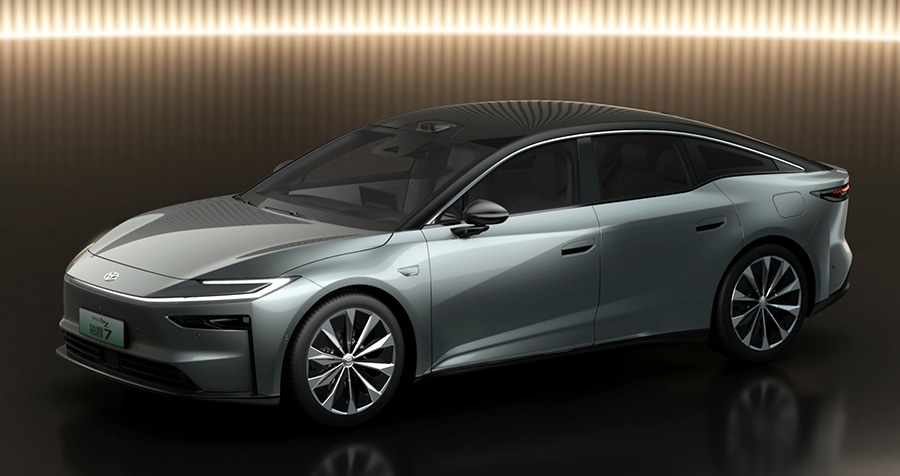
Toyota's Auto Shanghai 2025 announcement identified GAC, GAC Toyota and IEM by TOYOTA as the local developers of the bZ7, a battery-electric saloon more than five metres long. The document was a development and premiere announcement, and its description should be read in that context. It adds another distinct product programme to the public record of cooperation.
For a prospective GAC owner, the encouraging point is the range of the company's participation. Work on a larger electric saloon calls for a different balance of space, refinement and positioning from work on an accessible family SUV. A wider portfolio can also help partners learn which customer needs are shared and which require a separate answer. These are reasons the relationship remains relevant as the market changes, even when the car a reader ultimately buys carries a different badge.
The 2026 framework points toward a wider resource base
The latest major change is the 8 October 2026 strategic-alliance framework announced by FAW, Toyota and GAC. It envisages GAC acquiring FAW's 50 percent interest in FAW Toyota through a stock issuance. Toyota states that FAW Toyota would continue as an independent entity after completion, followed by an alliance between the two Toyota ventures covering areas including development, procurement, production and sales.
That announcement describes a planned transaction and subsequent cooperation. It is best understood as a direction of travel, with the stated procedural steps still part of the framework. The important strategic question is how a broader pool of resources could support future products while maintaining clear responsibilities for the separate businesses.
An alliance can potentially spread the cost of common work across more programmes. Purchasing teams may be able to coordinate demand; development teams may be able to avoid duplicating suitable work; production planning may gain more options. These are general reasons manufacturers consider closer cooperation, rather than measured savings promised to an individual buyer. The customer-facing value would appear through competitive future products, more effective investment and clearer market coverage as specific programmes are implemented.
Cost competitiveness is about the complete offer
Price is often the first way a buyer notices industrial efficiency, but it is only one possible outcome. If a manufacturer can develop or purchase something more efficiently, it may choose to reduce a selling price, add equipment, invest in another powertrain or improve the ownership package. These choices depend on the product's market position. A partnership therefore creates possibilities rather than a universal formula for a cheaper car.
A helpful comparison starts with an equivalent use case. For a household driving mainly within one city, the relevant offer might include easy charging, useful rear seats and simple access to servicing. For frequent intercity travel, the balance might shift toward journey flexibility and comfortable sustained driving. Two vehicles with similar purchase prices can serve these needs differently, even if their manufacturers cooperate elsewhere.
GAC's partnership history gives buyers a reason to consider its industrial background seriously. The next step is to compare its actual proposal with alternatives. Examine the local trim's included equipment, the energy routine it requires and the support supplied with the vehicle. This turns a corporate connection into useful context for a decision, without requiring the shopper to become an expert in company structures.
Technology sharing should be read at the right level
When people hear that manufacturers cooperate, they often want to know whether their cars share an engine, battery, transmission or platform. The most useful answer comes from the named model and specification. A vehicle-development partnership establishes the participants in a programme; a technical specification identifies what is fitted. This approach allows genuinely shared technology to be recognised accurately when it is documented.
For example, a shopper comparing a hybrid with an electric SUV should first distinguish the energy arrangements. The hybrid combines fuel and electrical operation, while the electric vehicle relies on external charging for its stored driving energy. Their advantages depend on the owner's routes and charging access. A shared corporate connection does not remove those differences or make one ownership routine suitable for everyone.
The same principle applies to replacement parts and servicing. The right item is the one approved for the exact vehicle, with the correct part identity and installation procedure. A buyer can make this practical by asking the authorised seller to explain the service schedule and routine consumables for the proposed car. The answer should concern the vehicle being purchased, which is also where GAC's own product strengths become easiest to assess.
A useful way to compare the choices
The partnership story becomes most helpful when it supports a clear purchasing discussion. Begin with the household rather than the corporate family tree. Write down the regular passenger count, parking arrangement, longest routine journey and likely charging opportunities. These needs identify the vehicle types worth evaluating. Only then compare the available GAC and Toyota offers within the local market.
| Buying question | Useful evidence | How the partnership fits |
|---|---|---|
| Which vehicle suits the household? | Local dimensions, seating and a normal test drive | Background to the companies' product experience |
| Which energy routine is convenient? | Exact powertrain and charging requirements | Context for their electrification cooperation |
| What is included in the price? | Written local trim and ownership offer | A possible area where industrial efficiency becomes useful |
| Who supports this particular car? | Authorised seller, warranty and service documents | The model's own commercial responsibility remains central |
This method also keeps the conversation constructive. A buyer can appreciate GAC's long relationship with Toyota while choosing a GAC because its own cabin, equipment or powertrain fits better. Another buyer may select a Toyota programme produced through the venture. The relationship helps explain the range of experience behind the offers; the decision comes from the fit between a car and its intended life.
What the relationship adds to confidence in GAC
The strongest positive interpretation is that GAC has worked within an enduring international partnership while expanding its role in locally developed electric products. The record moves from establishing a joint business to producing several vehicle types, then to named cooperation on newer electrified programmes. This gives the company a substantive industrial story that can be examined through primary announcements.
That background is especially useful for buyers encountering the GAC name for the first time. It shows a manufacturer with experience of collaboration over multiple product cycles, rather than a name appearing only with a recent export launch. The continuing relationship also provides a setting in which the parties can respond to changing customer preferences and invest in different forms of mobility.
For the owner, confidence becomes concrete when that background is matched by a suitable vehicle and a clear local ownership arrangement. Choose the GAC that meets the household's requirements, confirm its specification and learn how its particular powertrain will fit daily travel. The partnership with Toyota is a valuable part of understanding GAC's capabilities. The car's own usefulness is what makes those capabilities matter every day.
Common questions
Does the joint venture make GAC and Toyota the same brand?
The companies cooperate through a defined venture and named programmes. GAC and Toyota products still have their own identities, specifications and local ownership offers.
What is the clearest electric-vehicle example of their cooperation?
Toyota names GAC, GAC Toyota, Toyota and IEM by TOYOTA as the bZ3X development participants. Yamaha also identifies those participants in its announcement covering the model’s March 2025 China launch.
How should a buyer use the October 2026 announcement?
Read it as a framework for a planned transaction and broader cooperation. For a purchase today, use the current local vehicle specification and written ownership terms.
Sources
- Toyota: establishment of the Guangzhou joint venture, 6 September 2004
- Toyota: GAC Toyota production history, 4 August 2011
- Toyota: local electrification development, 31 July 2023
- Toyota: bZ3X development participants, 25 April 2024
- Yamaha: bZ3X China launch and development participants, 10 March 2025
- Toyota: bZ7 local development announcement, 23 April 2025
- Toyota: FAW, Toyota and GAC alliance framework, 8 October 2026