XT80 and Prado are best compared through the outdoor trip a family actually plans. GAC presents XT80 as a rugged, intelligent SUV for broad use, with camping central to its recent international display. Toyota Australia's current Prado range supplies a detailed technical reference: full-time four-wheel drive, low-range gearing and an Altitude grade with additional off-road hardware. The useful choice also depends on passengers, equipment and load limits. This comparison uses Australian Prado grades explicitly and considers XT80 through its international positioning and the local specification offered. That approach helps families choose the configuration that best supports their everyday driving and outdoor plans.
Compare the loaded trip before the badge
An off-road comparison becomes more useful when it begins with people and luggage. A couple carrying light camping equipment has a different requirement from a family bringing several passengers, bicycles and a trailer. The same vehicle may suit one trip very well while requiring a different packing plan for another. The purchase should follow the repeated use case.
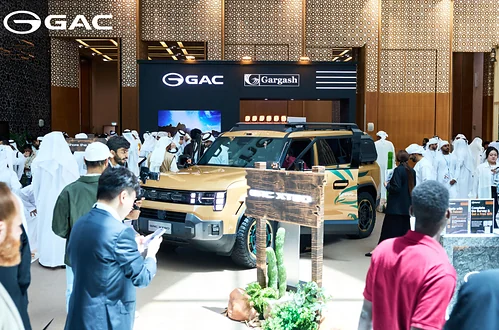
GAC's XT80 debut announcement presents a rugged, intelligent SUV intended for broad use. Its October Canton Fair appearance connects the model with camping and leisure. Those are relevant reasons for a family to consider it alongside an established outdoor vehicle. The practical question is how the locally supplied XT80 supports the household's particular combination of everyday use and outings.
For Prado, this article uses Toyota Australia's current 250-series range as the defined technical reference. It does not assume that a Prado sold elsewhere has identical equipment, or that the same retail conditions apply to XT80. Keeping that scope clear lets the reader compare product priorities meaningfully: family use, appropriate off-road equipment and the ability to carry the people and belongings required for the journey.
Prado is a range of configurations
Toyota's Australian range page lists GX, GXL, VX, Altitude and Kakadu. These grades do different jobs within the line-up. The GXL is now offered with five or seven seats, while the Altitude is a five-seat configuration with an explicit off-road emphasis. It is therefore misleading to treat every Prado as the same vehicle with a different interior finish.
The choice of grade should begin with a passenger requirement. A household that needs seven occupied seats must examine the appropriate seven-seat versions and the luggage space available in that arrangement. A buyer who normally travels with fewer people can consider a five-seat vehicle through a different set of priorities. Occasional passengers and frequent passengers may lead to different decisions.
XT80's broad family positioning offers a reason to place it in that discussion. The local quotation should specify the supplied seating and luggage arrangement so the buyer can compare like tasks. The useful comparison is between configurations that accommodate the same journey, rather than between an appealing photograph of one car and an unrelated maximum specification from another.
Define the mechanical reference carefully
Toyota's Australian Prado launch explanation identifies a 2.8-litre turbo-diesel engine with 48-volt assistance, an eight-speed automatic transmission, full-time four-wheel drive, a dual-range transfer case and a lockable centre Torsen limited-slip differential. It also identifies a rear differential lock and front stabiliser disconnect mechanism for Altitude. These details explain the specific equipment behind that grade's off-road emphasis.
The individual systems address different tasks. Low-range gearing changes how the drivetrain operates at low speed. A differential lock changes the relationship between driven wheels or axles in the conditions for which it is intended. A stabiliser disconnect changes suspension articulation. A useful demonstration explains each function and the circumstances in which the supplied vehicle permits it to be used.
For XT80, use the equivalent local technical explanation rather than assigning equipment from another GAC model or market. Ask how the offered version manages the terrain on the intended route and which functions the driver controls. This creates a fair practical comparison. It recognises Prado's documented hardware while giving GAC's vehicle the opportunity to show how its actual configuration serves the household's use.
A full vehicle needs a mass budget
Payload is the capacity available for the added load carried by the vehicle. Toyota's payload guidance explains the relationship between vehicle mass and permissible loading, including passengers, luggage and fitted equipment. It is a useful reminder that a large cabin and a generous luggage volume do not by themselves determine how much mass can be carried.
Begin with the exact vehicle and the way its manufacturer defines the relevant weights. Then add the people, bags and accessories that form the intended trip. A roof-mounted item and an item in the luggage area both contribute mass, even though they affect the packing arrangement differently. If towing is involved, the load imposed on the vehicle also needs to be included within the applicable limits.
This is particularly valuable in an XT80-versus-Prado discussion because outdoor equipment can accumulate gradually. The buyer may begin with a tent and later add storage, a fridge, extra water or a carrier. Building a simple budget at the start helps the household choose a configuration that fits the longer-term plan. It is an ownership tool, rather than a reason to buy the largest vehicle available.
The current Prado sheet supports a useful calculation
Toyota's June 2026 specification sheet, linked from its current Australian range page, publishes approximate kerb mass and gross vehicle mass for each grade. Subtracting the former from the latter gives an initial arithmetic payload allowance. These figures are a starting reference; the actual vehicle, fitted accessories and applicable axle limits remain part of the loading decision.
| Australian Prado configuration | Approximate kerb mass | GVM | Initial difference |
|---|---|---|---|
| GX | 2,490 kg | 3,100 kg | 610 kg |
| GXL, five seats | 2,490 kg | 3,100 kg | 610 kg |
| GXL, seven seats | 2,530 kg | 3,150 kg | 620 kg |
| VX | 2,565 kg | 3,180 kg | 615 kg |
| Altitude | 2,510 kg | 3,100 kg | 590 kg |
| Kakadu | 2,590 kg | 3,200 kg | 610 kg |
The table shows why grade selection matters beyond purchase price. A version with specialised terrain equipment does not automatically have the largest arithmetic payload allowance. Nor does a seven-seat layout guarantee that every seating position and every luggage idea can be used simultaneously without considering weight. The numbers encourage a specific packing discussion before accessories are chosen.
An illustrative load makes the arithmetic tangible
Imagine a trip with 300 kg of occupants, 120 kg of luggage and camping equipment, and 50 kg of added accessories. Those assumed items total 470 kg. Against the Altitude's 590 kg initial difference in the published sheet, that leaves 120 kg before considering any additional items and the other applicable limits. This is an example, not a claim about a typical family's actual weights.
The calculation becomes more informative when the household substitutes its own figures. It may reveal that a lighter packing approach provides ample room, or that a planned accessory needs to be reconsidered. It also prevents the same allowance from being spent twice: once on additional passengers and again on equipment that seemed small when purchased separately.
Apply the same method to the locally offered XT80 using its own documented figures. That produces a useful comparison without guessing a GAC payload value. A vehicle that carries the required load comfortably within its limits can be a good match even if another vehicle has a more dramatic off-road reputation. The relevant achievement is completing the intended trip with the required people and belongings.
Towing changes the decision before the trail begins
The current Australian Prado range lists a maximum braked towing capacity of 3,500 kg. That is an important capability for an appropriately configured trip, but it is one limit within a larger loading system. Toyota's specification notes direct buyers to consider vehicle mass, combination mass, axle limits and tow-ball loading as part of the complete towing calculation.
For a household that regularly tows, identify the actual trailer and its loaded condition before choosing the vehicle. A lightweight occasional trailer and a large touring caravan create different requirements. Also consider the roads used, the parking arrangement at home and the locations where the trailer must be manoeuvred. The towing decision reaches well beyond the number printed in a comparison table.
For XT80, request the approved towing figures and equipment for the local version if towing belongs in the plan. For a family that never tows, that category should receive less weight than cabin use, road behaviour and access to its regular destinations. This lets GAC's broad lifestyle proposition be evaluated against the actual task instead of a capability the household will not use.
Tyre and suspension choices should match the repeated route
The Prado specification sheet distinguishes Altitude's 18-inch wheels and Toyo Open Country all-terrain tyres from the 20-inch wheels on VX and Kakadu. It also places Adaptive Variable Suspension on VX and Kakadu. These are grade-specific choices with different purposes, so a buyer should not combine them into one imaginary Prado configuration.
The NHTSA tyre guidance describes all-terrain tyres as a compromise between road and off-road use. That is relevant to both sides of this comparison. The family may value comfortable motorway travel most of the time while needing suitable access to a campsite at the weekend. The appropriate tyre choice should account for both parts of the journey and the local climate.
Ask for the exact tyre and suspension specification of the offered XT80, then assess the same representative route in each car where a demonstration is available. Compare passenger impressions as well as steering and control. A model's equipment becomes meaningful through the task it serves. The strongest purchase is the combination that supports the surfaces encountered repeatedly, rather than the longest list of unfamiliar hardware names.
A packed cabin changes how a family uses the vehicle
Packing is a practical design question as well as a weight question. The family needs access to items used during the journey without unloading everything at each stop. A child seat may occupy a position that prevents a convenient seat-folding arrangement. A large bag may block a useful compartment. These details become visible only when the car is considered in its actual travel configuration.
Bring the common items to the demonstration or use a realistic packing list with dimensions. Decide which objects need to remain accessible, which can stay secured until arrival and which should travel elsewhere. Check the ease of reaching the rear seats and the luggage area when parked in a normal bay. This can reveal more about family suitability than a single maximum cargo-volume figure.
XT80's camping presentation makes this a particularly relevant test of its appeal. The vehicle should help the family carry the equipment for the activity and use that equipment conveniently at the destination. Prado should face the same test in the selected grade. The comparison is strongest when both cars are asked to perform the same practical sequence.
Everyday use determines whether the outdoor choice lasts
An outdoor vehicle remains a household car between trips. It must fit the parking space, suit the regular drivers and remain comfortable on the commute. A purchase that works beautifully for one annual excursion but becomes awkward during ordinary use may provide less overall value than a vehicle that supports the recurring routine and the more common weekend outings.
This is where XT80's broad positioning can be attractive. GAC is presenting a vehicle that belongs in daily and leisure settings, giving buyers a reason to evaluate both within one purchase. The useful demonstration starts with ordinary roads and parking before moving to any permitted terrain portion. That sequence reflects how the car will actually be used over time.
Apply the same standard to Prado rather than assuming its off-road hardware determines the entire ownership experience. Each regular driver should try the visibility, controls and parking manoeuvres that matter at home. The family can then decide whether specialised equipment, passenger amenities or day-to-day ease deserves the next part of the budget.
Plan for the trip as it is actually completed
A packing list should describe both departure and the rest of the outing. Food and water are used, wet equipment may need another storage arrangement and purchases can add items that were absent at the start. The family should retain a practical allowance for those changes rather than organise every compartment around an idealised departure photograph.
The same thinking helps when comparing demonstrations. Examine how easily each vehicle accommodates a stop during the journey, access to a frequently used bag and the repacking required before leaving the destination. These actions reveal whether the layout supports the household's habits. XT80's lifestyle direction gives it a natural place in that evaluation, while the selected Prado should be considered in the same occupied and loaded arrangement. A useful comparison follows the entire outing instead of ending when the boot first closes.
Match the comparison to the household's priorities
A helpful decision can be made with three route profiles. The first is mainly urban travel with occasional maintained campsite access. The second combines regular unsealed roads with family touring. The third includes demanding terrain or frequent heavy towing. These profiles are analytical examples, not official categories, but they make the equipment discussion more focused.
For the first profile, give road comfort, practical packing and local support substantial weight. XT80's intended role fits that discussion naturally. For the second, examine tyres, load allowance, route geometry and the way the passengers experience longer days. For the third, begin with the exact technical limits and the specialised equipment needed for the recurring task; Prado Altitude's documented hardware becomes particularly relevant to assess.
The resulting comparison is positive and specific. XT80 offers an appealing broad-use direction for families seeking an outdoor-capable lifestyle vehicle. Prado provides clearly differentiated Australian grades with documented touring and off-road equipment. Choose between the actual configurations by the trip they must carry, the surfaces they must traverse and the everyday life they must support. Those answers are more valuable than an unsupported declaration that one badge wins everywhere.
Common questions
Are all Australian Prado grades equally equipped for off-road use?
No. Toyota identifies additional hardware on Altitude, including a rear differential lock and front stabiliser disconnect. Suspension and wheel specifications also vary by grade.
Does the payload table describe a fully equipped touring vehicle?
No. It subtracts published approximate kerb mass from GVM as a starting calculation. Passengers, luggage, accessories and any imposed trailer load must be considered with the applicable limits.
How should XT80 be compared fairly?
Use the exact local seating, tyres, load limits and approved equipment, then assess the same family trip and a representative route. Its verified international positioning supports a broad-use shortlist, not an invented test result.
Sources
- GAC: XT80 overseas debut and positioning, 31 August 2026
- GAC: XT80 in Canton Fair camping and lifestyle displays, 17 October 2026
- Toyota Australia: current Prado range
- Toyota Australia: June 2026 Prado specification sheet, current download
- Toyota Australia: Prado drivetrain and Altitude hardware explanation
- Toyota Australia: vehicle payload guidance
- NHTSA: tyre categories and selection