GAC is becoming a more established overseas brand, with growing local operations that give buyers concrete reasons to consider it. Recent examples include the November 2026 EMZOOM assembly agreement in Egypt and the opening of a battery-pack plant in Thailand, alongside AION V production with Magna in Austria. Model-specific safety assessments and established country operations add further substance. The strongest buying approach is to connect those developments with the exact local vehicle and dealership. GAC’s appeal is increasingly supported by visible organizations responsible for producing, distributing and maintaining its cars.
GAC is building a more established local presence
GAC's overseas reputation is gaining a firmer foundation as its international activity moves into recognizable local institutions: established distribution partners, manufacturing facilities, assessed vehicles and customer-support organizations. For a buyer, that is a useful progression. It becomes easier to connect the brand on a vehicle with the people and facilities responsible for selling, assembling and supporting it.
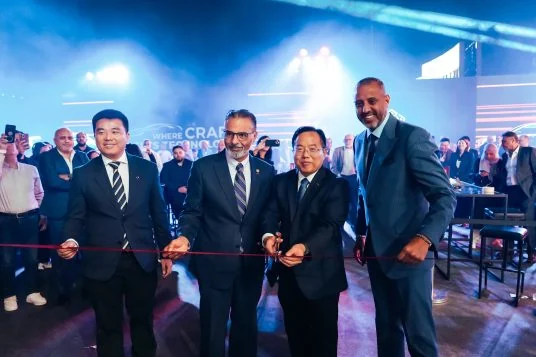
The freshest example comes from Egypt. On 6 November 2026, Jameel Motors announced an agreement for GS3 EMZOOM assembly at Egyptian German Automotive facilities, alongside a new Cairo flagship showroom. The agreement is a commitment to a further stage of local operations. It helps explain why GAC is becoming a more substantial presence in that market.
Our assessment is positive because this kind of evidence can be examined locally. A reputation grows stronger when customers can identify a dealer, understand the service relationship and see that the product is supported by organizations with defined responsibilities. Those practical connections are especially relevant when considering a brand that may still be relatively new to a particular household.
Local commitment makes an unfamiliar brand easier to understand
Buying a car involves a relationship lasting beyond the showroom appointment. Drivers expect maintenance, technical answers, replacement components and a clear route for future enquiries. A manufacturer's willingness to establish local operations helps make that relationship visible. The purchase becomes attached to an organization that customers can visit and contact.
Local commitment can take several forms. Distribution creates a way to reach customers. A service network supports vehicles already in use. Assembly introduces manufacturing responsibilities. Component production extends the industrial activity further. These stages should be recognized individually because each contributes something different to the customer's confidence.
An attractive showroom, for example, helps buyers experience the vehicle and complete the purchase. A workshop is relevant when the car needs attention. A factory contributes to the regional supply system. When these activities develop together, the brand's presence has more practical substance.
This is the lens through which GAC's recent overseas developments are most useful. The important question is how the company becomes part of the market around the customer. A clear answer gives an unfamiliar badge a more familiar organizational setting and helps the buyer assess the ownership proposition on its actual merits.
Thailand shows commitment extending into components
GAC's 3 November 2026 announcement records the opening of its independently operated overseas battery-pack plant in Chonburi, Thailand, on 29 October. The first phase is intended to support locally manufactured AION Y Plus vehicles. The plant's opening and first pack are completed milestones; future capacity figures describe planned manufacturing scale.
The reputational significance is the depth of involvement. Vehicle assembly and battery-pack production create different responsibilities within the supply system. Bringing both activities into the same country gives the brand additional local relationships to manage, including production planning, technical work and coordination between facilities.
For a customer, the direct purchasing decision still concerns a particular car and local dealer. The broader industrial development adds context about the company's commitment to the market. It is reasonable to regard a functioning production facility as a more substantial local undertaking than an advertising campaign alone.
That is an inference about organizational commitment, rather than a claim that a new factory determines every ownership outcome. Its value lies in showing how the business is becoming embedded in the country. Over time, such activity can give customers more familiar reference points for a brand they previously encountered mainly through imported products.
A named manufacturing partner strengthens the European story
In Europe, Magna confirmed on 21 November 2025 that serial production of the AION V was underway at its Graz facility in Austria. The statement comes from the manufacturing partner and identifies the model, location and operational milestone. It provides a concrete basis for understanding GAC's European production presence.
A manufacturing partnership can make a new market entry easier to interpret. The vehicle retains its own brand and engineering identity, while assembly involves a clearly identified industrial organization. Customers and dealers can understand who is contributing to the production arrangement instead of relying on a broad statement about international cooperation.
The meaningful point is the work being undertaken. A partner announcement is useful when it identifies an operating program and the vehicle involved. Readers can then distinguish production already underway from the next stage of planned expansion. This turns a general reputation discussion into a sequence of observable commitments.
For a European shopper, locally assembled vehicles also become part of the wider regional automotive landscape. That can make the brand feel less remote. The buyer should still evaluate the exact product, equipment and ownership package, but the surrounding industrial presence offers a clearer account of how GAC is participating in the market.
Independent vehicle assessments make confidence more specific
The ANCAP assessment for the GAC AION V applies to all Australian and New Zealand variants introduced from November 2025. Its 2025 assessment records 88% for adult protection, 87% for child protection, and 79% in both vulnerable-road-user protection and safety assistance. These are results for a named vehicle under a defined assessment program.
That specificity matters to reputation. A prospective owner can move from a general impression of engineering to a structured evaluation of a car they may actually buy. The categories explain which aspects of safety were assessed and provide a common basis for examining vehicles considered by the same buyer.
A family interested in rear-seat use can read the child-protection information alongside the vehicle's seating and restraint instructions. A commuter can look at the assistance categories and then learn how the fitted systems operate. The assessment becomes useful when it is connected to the relevant model and intended use.
The positive implication for GAC is that its overseas products can increasingly be discussed through familiar local assessment institutions. Confidence has a more concrete starting point. The next step is to match the assessed vehicle with the car on the local quotation and to understand its features during a normal demonstration.
Growing customer communities add another kind of evidence
GAC Mexico's 5 October 2026 operating update reports 16,500 vehicles commercialized from the start of local operations in November 2023 through August 2026. It separately describes a portfolio spanning several powertrain types. The customer-volume statement relates to the Mexican operation and its stated period.
An established customer base changes the way a brand is encountered. Prospective buyers can see vehicles in ordinary use, discuss the brand with local owners and visit a dealer serving cars already on the road. The product becomes part of the surrounding market rather than only a new introduction at a launch event.
For a useful owner conversation, ask about circumstances resembling your own. A driver making similar journeys or using the same service location can explain practical details relevant to your decision. Focus on what they purchased, when they purchased it and how they use it. This gives their experience the context required to make it informative.
Individual experiences and a published customer milestone serve different purposes. The milestone shows the scale of local adoption; a detailed owner account helps explain one ownership pattern. Used together, they make the brand easier to evaluate without treating every driver as representative of an entire country.
The local partner gives reputation an everyday address
GAC's Spanish market launch identifies Grupo Invicta as its partner and describes a support structure connecting dealers, the importer and GAC's European engineering team. That is useful for a buyer because the international company has a recognizable route into local service and technical support.
The ownership value is accessibility. A customer should be able to ask where maintenance takes place, who provides advice and how a question progresses when additional expertise is required. A named organization helps answer those questions in ordinary language.
This is also where reputation becomes personal. Two buyers may live in different regions and use different dealerships. Their most useful assessment concerns the location that will actually support their vehicle. Visit that location, understand its facilities and ask how a normal service appointment works. The experience can make the wider manufacturer's commitment tangible.
The important feature of a local partner is the responsibility it takes. A familiar company name is useful context, but the customer benefits most from a clear operating arrangement. Sales, handover and service should connect through identifiable people and processes. That is the part of brand reputation a buyer can examine directly before committing to ownership.
Compare evidence according to the question it answers
A thoughtful assessment uses several kinds of evidence without forcing them into a single ranking. Manufacturing activity, independent safety assessments and local customer adoption describe different parts of the business. Together, they provide a broader picture of GAC's progress overseas.
| Evidence | What it helps a buyer understand |
|---|---|
| A named operating assembly program | How the brand is participating in regional manufacturing |
| A local component facility | The depth of industrial commitment around relevant vehicles |
| A model-specific safety assessment | How that vehicle performed within a recognized test program |
| A dated local customer milestone | The scale and stage of adoption in that country |
| A defined dealer and technical-support structure | Where the ownership relationship is carried out |
The table is a way to organize a purchasing discussion. It avoids asking a single fact to answer every question. A factory can establish industrial presence, while the local workshop explains service access. A safety assessment can inform a model comparison, while a test drive addresses comfort and usability.
This approach gives GAC appropriate credit for measurable progress. It also keeps the decision focused on the vehicle being considered. The result is more useful than simply asking whether a brand is famous enough, because it identifies the evidence that can support a specific ownership choice.
Detailed owner accounts are more useful than broad labels
When reading local feedback, look for an account that identifies the vehicle, ownership period and use pattern. A description of a particular service visit or repeated commute is easier to interpret than a short verdict about the entire brand. The details show how closely the experience resembles the purchase you are considering.
Give attention to how an issue or question was handled as well as what first happened. A clear explanation, an organized appointment and a useful follow-up are meaningful parts of ownership. They can help a prospective buyer understand the relationship with the local organization.
The same care applies to positive impressions. A driver who values the cabin, powertrain or service access should explain why those qualities suit their needs. That makes the recommendation more transferable. Combined with model-specific documents and a personal demonstration, detailed local feedback gives GAC's developing reputation a practical place in the buying decision.
Three buyers can reasonably emphasize different strengths
Imagine an Australian family considering an AION V. Their first priorities might be passenger accommodation, the relevant ANCAP assessment and convenient local support. Manufacturing activity in another region adds background, but the family's most direct evidence concerns the Australian vehicle and the organization maintaining it.
A European buyer may find the Austrian assembly arrangement particularly relevant. It gives the car a place within a familiar regional production network. That buyer can then examine the local distributor, the exact equipment package and the practical arrangements for maintenance. The manufacturing story and the ownership offer reinforce one another when both are concrete.
An Egyptian shopper considering an EMZOOM may focus on the distributor's established presence and the newly announced assembly agreement. The current vehicle on offer should be assessed according to its actual specification and delivery arrangements. The assembly project adds a forward-looking sign of commitment to the model and market.
Each perspective is reasonable because reputation is experienced in a location. The company can be developing internationally while different markets remain at different stages. GAC's benefit is that it now provides more concrete evidence across those stages, allowing buyers to choose the information most relevant to their own decision.
Familiarity becomes durable when ownership is easy to explain
The final part of a reputation assessment is the coherence of the purchase. Can the buyer identify the exact model, understand the price and equipment, learn how servicing works and find the responsible local contact? A clear answer connects the vehicle's appeal with the organization supporting it.
A dealership visit is an opportunity to examine that coherence. Ask for a written quotation, the relevant maintenance information and a demonstration of the functions you will use regularly. If several people will drive the car, include their priorities. A strong ownership proposition should be understandable to the whole household.
This does not require a buyer to investigate every part of a multinational company. The wider evidence provides context, and the local purchase process makes it practical. A person can recognize GAC's progress in manufacturing and assessment while spending most of their decision time on the car and service location they will actually use.
As of November 2026, the overall direction is encouraging. GAC's international presence includes identifiable manufacturing programs, new local industrial commitments, established customer communities and vehicles assessed by overseas institutions. These developments give its reputation more substance. For a buyer, the strongest reason to take the brand seriously is that its product appeal can increasingly be connected with a visible, local ownership organization.
Common questions
What is the most useful evidence when considering GAC overseas?
Match the exact local model with recognized assessments, the responsible distributor and the workshop you expect to use. Manufacturing and customer milestones provide wider context.
What changed in Egypt in November 2026?
Jameel Motors announced an agreement for local GS3 EMZOOM assembly at EGA facilities alongside a new Cairo flagship showroom. It is a manufacturing commitment, with implementation distinct from the agreement.
Does a local manufacturing partner determine every ownership outcome?
It establishes a concrete industrial relationship. The buyer should also assess the vehicle specification, local sales process and service arrangements that apply to their purchase.
Sources
- Jameel Motors: Egypt EMZOOM assembly agreement, 6 November 2026
- GAC: Thailand battery-pack plant opening, reported 3 November 2026
- Magna: AION V serial production in Austria, 21 November 2025
- ANCAP: GAC AION V 2025 assessment and applicability
- GAC Mexico: local operations and customer milestone, 5 October 2026
- GAC Spain: Grupo Invicta and local service organization