GAC’s overseas exports are growing strongly. The company’s 5 November 2026 release reports 223,000 own-brand exports for January–October and 26,017 in October, up 80.8% year on year. Regional wholesale increases show broader momentum, while manufacturing developments in Thailand, Austria and Egypt illustrate how GAC is becoming more locally established. These are complementary measures: exports, local sales, production and future targets each describe a different part of the business. For buyers, the useful benefit is a growing international organization whose local vehicle supply, product choice and support can be evaluated directly.
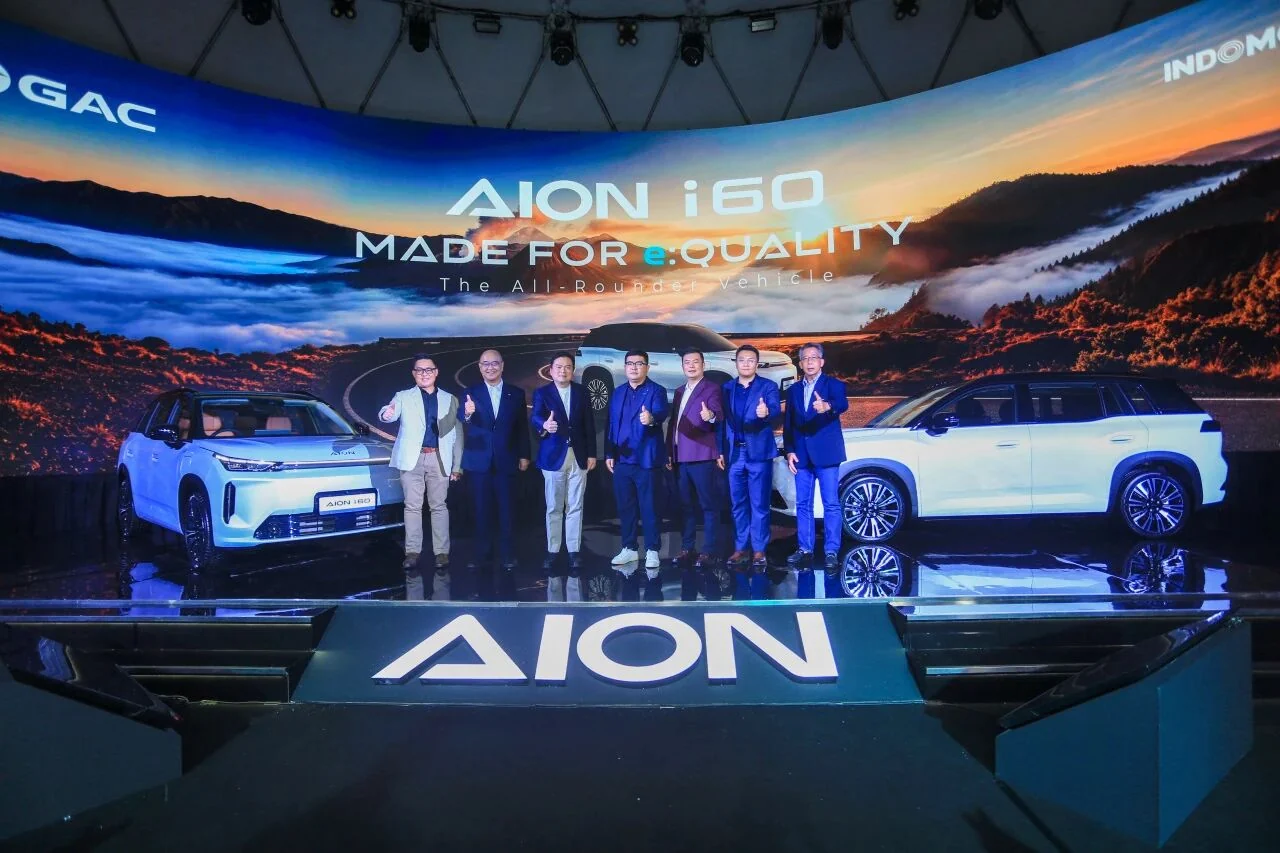
The November release confirms strong export momentum
GAC's own-brand overseas exports are growing strongly. In its 5 November 2026 announcement, the company reported 223,000 vehicles exported during January–October and 26,017 in October alone, with the monthly result up 80.8% year on year. These figures describe GAC's own brands and the stated completed periods.
The more interesting development is how that growth now sits alongside several forms of international activity. GAC is supplying vehicles across regions while also developing local assembly, component production and distribution. Its overseas business is becoming a combination of cross-border shipments and locally established operations.
That combination matters to a reader evaluating the company's international progress. Export volume shows the scale of one flow of vehicles. Manufacturing and distribution announcements show how the business is preparing to serve markets over time. Looking at both provides a fuller explanation of the growth than a single monthly percentage.
The figures below are current to the releases available on 12 November 2026. They are followed by an assessment of the operating developments that make the sales story relevant to dealers, buyers and people following GAC's international expansion.
Several completed months show a larger international flow
The September-issued August update reported 172,008 own-brand exports for January–August 2026 and 26,978 during August. The October update from GAC Mexico then reported 197,701 for January–September and 25,693 in September. Each announcement gives a dated view of the company's export activity.
| Reported period | Published own-brand exports | Period type |
|---|---|---|
| January–August 2026 | 172,008 | Cumulative |
| August 2026 | 26,978 | Monthly |
| January–September 2026 | 197,701 | Cumulative |
| September 2026 | 25,693 | Monthly |
| January–October 2026 | 223,000 | Cumulative, as published |
| October 2026 | 26,017 | Monthly |
The last three monthly results show a continuing flow of roughly twenty-six thousand vehicles per month. That is a more informative observation than treating each announcement as an isolated launch-style headline. It indicates sustained shipment activity across the late summer and autumn reporting periods.
The cumulative October figure is retained at the precision used in the release. It is not replaced with an independently reconstructed total from earlier announcements. This preserves the company's published record while allowing readers to compare the separately reported monthly results.
For commercial interpretation, the useful development is continuity. A business shipping substantial volumes over successive months has a different operating rhythm from one relying on a single initial delivery into a newly opened market.
Regional wholesale growth shows breadth across markets
The November release also reports October wholesale growth across several regions. Europe increased 547% year on year, Southeast Asia 49%, the Americas 95%, Africa 307% and the CIS region 273%. These are regional wholesale comparisons, distinct from the export counts above.
The breadth is encouraging because several regions contributed to the company's reported expansion. Their percentages describe change against different starting points. They should therefore be read as evidence of growth within each region rather than as a ranking of which region sells the most vehicles.
A mature operation and a newly developing one can produce very different growth percentages while both contributing useful business. A newer market may expand quickly after distribution becomes available. An established market may add a larger number of vehicles with a more moderate percentage increase. Absolute regional volumes would answer that separate scale question.
For GAC, a broad regional footprint creates several routes for product adoption. Customers encounter different powertrains, vehicle sizes and ownership arrangements according to local needs. The opportunity is to develop those markets in ways that make the product and support organization useful to their particular buyers.
This is why regional breadth is commercially meaningful even without treating every percentage as directly comparable. It shows that the international growth story is being carried by more than one geographic market.
Distribution turns shipments into a continuing customer business
Exporting a vehicle begins a sequence of local work. The car must enter the distribution system, reach an appropriate sales location and be prepared for delivery. The customer then needs a handover, registration-related documentation and a service relationship. Repeated sales depend on that sequence becoming dependable.
This is particularly important when a brand expands quickly. An additional showroom creates a new point of contact, but the supporting operation must also handle enquiries, demonstration vehicles, deliveries and maintenance. Growth has more lasting value when customers can use the local organization comfortably after purchase.
From a buyer's perspective, a company's export performance is useful context rather than the entire decision. It indicates international scale and activity. The practical next question concerns the vehicle available nearby: which version is being supplied, how it is supported and how the purchase process works.
From a dealer's perspective, the connection between deliveries and support matters because every new car adds a continuing customer relationship. Workshop planning and parts supply become part of the same commercial opportunity as showroom sales. A growing installed base can support a more established business when those capabilities develop together.
The strongest interpretation of GAC's momentum therefore combines volume with operating depth. Rising exports create opportunities; the local organization turns those opportunities into an ownership experience that customers can recommend.
Timing explains why shipments and customer deliveries differ
A vehicle can leave a production market in one reporting period and reach its customer in another. Shipping, distribution and preparation sit between those events. The export record and the local retail record therefore describe different moments in the vehicle's commercial journey.
Consider a hypothetical delivery program arriving shortly before a new showroom opens. The shipment supports future customer availability, while the first retail deliveries follow the local launch and preparation process. Both records are useful, but a reader should compare each with the corresponding measure from an earlier period.
Over time, the relationship between supply and customer uptake becomes especially informative. Regular availability helps the distributor offer a dependable delivery process, and continuing customer demand supports the next shipment. That connection explains why GAC's local investments deserve attention alongside export growth: the business benefits when international supply is matched by an effective operation serving actual buyers.
Mexico illustrates the difference between global and local scale
The October Mexican announcement separately states that GAC Mexico commercialized 16,500 vehicles from its November 2023 start through August 2026. It also identifies a local portfolio spanning gasoline, hybrid, plug-in hybrid, battery-electric and range-extended technologies. These details concern the Mexican operation rather than a worldwide model total.
This distinction makes the announcement more useful. The global export figure explains the scale of the international business. The local customer milestone explains how one country operation has developed over a longer period. They belong together as context, but they should not be added to each other.
A varied powertrain portfolio can also help a manufacturer serve different ownership patterns. Some customers can charge regularly at home; others place greater emphasis on refueling convenience or long-distance flexibility. A local product range can address those different circumstances without requiring every buyer to adopt the same energy routine.
The commercial benefit is a broader set of customer conversations. A dealership can discuss the household's travel, budget and charging access before identifying the relevant vehicle. This is a practical way for international expansion to become grounded in local demand.
Mexico therefore provides a useful example of what sits behind an export headline: a country operation with a customer history and a range intended to address several kinds of use.
Thailand adds a deeper manufacturing connection
GAC's 3 November report on its Thai battery-pack factory identifies a completed opening and first-pack milestone on 29 October in Chonburi. The initial phase is intended to support local AION Y Plus manufacturing. It extends the company's Thai activity from complete vehicles into a core electric-vehicle component.
This development matters because overseas manufacturing is a different way to build an international business. A vehicle assembled and sold within an overseas market follows a different physical route from a complete vehicle exported from China. Both can contribute to GAC's overseas presence, but their production and trade measures remain distinct.
Local component activity can deepen coordination between the product and the regional supply system. Manufacturing teams must plan parts, production timing and technical standards around the vehicles being assembled. That creates a more substantial local undertaking than a finished-vehicle delivery alone.
The appropriate commercial interpretation is that GAC is developing more than one method of serving customers. Complete-vehicle exports remain important, while selected markets gain additional manufacturing capability. The balance can change as local operations mature.
For readers following future sales updates, this is a useful point to keep in mind. International success may appear in export figures, local production milestones and country-level deliveries. Each measure describes part of the same expanding business, but none should automatically substitute for all the others.
Europe combines product entry with regional production
Magna's assembly announcement confirms that AION V serial production was underway in Graz, Austria, in November 2025. It identifies a concrete European manufacturing program with a named partner. That operating fact provides context for GAC's subsequent European expansion.
Regional production gives a manufacturer another route for supplying its market. It involves decisions about the model to assemble, the production program and the distribution network around it. The commercial objective is to make the regional operation viable and responsive to customers over time.
For a car buyer, the production arrangement may be less immediately important than the vehicle's specification and price. It nevertheless helps explain how the manufacturer is committing resources to the region. An operating assembly program is a tangible part of that commitment.
For someone analyzing exports, the implication is equally practical. A company can strengthen its international sales organization while increasing local assembly. The business may become more internationally established even as the mix between complete-vehicle shipments and overseas production evolves.
That makes Europe a useful illustration of GAC's wider direction. The international story is moving toward a combination of product availability, industrial participation and local ownership support. A strong export month is one part of that development, rather than the only possible measure of progress.
Egypt provides a fresh model-specific commitment
On 6 November, Jameel Motors announced an agreement to assemble the GS3 EMZOOM at EGA facilities in Egypt. The announcement identifies the model and partner arrangement. It is a signed manufacturing commitment; the agreement itself is not a completed production count or customer-delivery total.
The relevance to GAC's overseas business is the move toward a more locally rooted supply arrangement. Selecting a model for an assembly project creates a defined focus for engineering, partner coordination and future distribution. The project can be followed through its own implementation milestones.
This also shows why the international portfolio should be examined at several levels. The group has an overall expansion strategy, a country has a local operating plan, and a model has its own role within that plan. A compact crossover assembly agreement and a battery-electric manufacturing program can both support the wider business while addressing different customers.
For prospective owners, such commitments offer context about the brand's intended participation in their market. The immediate purchase should still be based on the vehicle actually available, its delivery terms and local support. Future production plans add a further reason to follow the brand's development, with each milestone assessed when it occurs.
Targets describe the next ambition, not completed demand
At the start of 2026, GAC's official international update set an overseas-sales objective of securing 250,000 vehicles and striving for 300,000. That is a forward-looking sales objective. The export results in later releases are completed-period measurements with their own stated scope.
The distinction is especially relevant as local production becomes more important. Overseas sales and complete-vehicle exports can follow different accounting boundaries. The sensible way to assess a target is to use the corresponding year-end result and definition when the company publishes it.
Targets are still useful because they show the scale of ambition guiding investment and distribution planning. They can explain why a manufacturer expands product availability, develops partners and supports new country operations. Their role is to indicate direction rather than to stand in for actual deliveries.
The positive evidence available in November is already substantial without converting an ambition into a result. GAC has reported strong completed-month exports, growth across several regional wholesale operations and concrete developments in local manufacturing. Those facts provide a useful account of the company's progress through the year.
Future releases will add the remaining completed periods. They can be assessed against the same practical questions: what was sold or exported, which operation was involved, and how the local business developed around those vehicles.
What the growth means for a prospective GAC buyer
For a buyer, the main benefit of expanding international scale is the possibility of a more established product and support presence in their own market. More activity can justify local resources, a broader portfolio and continuing investment. The useful purchasing step is to identify which of those developments are already part of the local offer.
Ask the dealer about the exact available model, delivery timing, maintenance arrangements and parts support. If a new production program has been announced, establish which vehicles the current quotation covers. This keeps the commercial news connected to the car you can actually purchase.
GAC's latest overseas performance supports a positive overall assessment. The company is reporting sustained own-brand export growth while building additional routes to customers through regional operations. Its progress is increasingly visible in both vehicle flows and specific local commitments.
That is a stronger international proposition than a sales number considered on its own. The important development is a growing business with several ways to reach and support customers, giving buyers more concrete reasons to evaluate GAC within their local market.
Common questions
What is the latest completed-period export figure used here?
GAC’s 5 November 2026 announcement reports 223,000 own-brand exports for January–October, with October contributing 26,017 as separately published.
Are regional wholesale growth and exports the same measure?
No. Regional wholesale figures describe sales within those reporting operations; exports describe a separate vehicle flow. The article keeps the company’s labels and periods attached to each.
Does overseas assembly reduce the importance of international sales?
It adds another way to serve overseas customers. Local production, exports and customer deliveries can all contribute to international development while remaining distinct measures.
Sources
- GAC-issued export update, 5 November 2026
- GAC Mexico: January–September exports and local operations, 5 October 2026
- GAC-issued August export update, 8 September 2026
- GAC: Thailand battery-pack plant, 3 November 2026
- Magna: AION V assembly in Graz, 21 November 2025
- Jameel Motors: Egypt assembly agreement, 6 November 2026
- GAC: 2026 overseas-sales objectives and operating plan