GAC global after-sales service works best as an information chain connecting the owner, the local workshop, technical support and parts distribution. The owner should have one clear place to begin and an understandable next action. GAC CARE, country service channels and regional parts resources give that chain a recognisable structure. For a buyer considering an AION electric vehicle or another GAC model, this is a practical source of ownership reassurance: the car is supported by people and processes in the market where it is used.
The useful question is therefore not simply how large the manufacturer is. It is how the local organisation turns a customer's observation into a maintenance appointment, an explanation or a repair plan. Looking at the flow of information makes that relationship easier to understand before buying the vehicle.
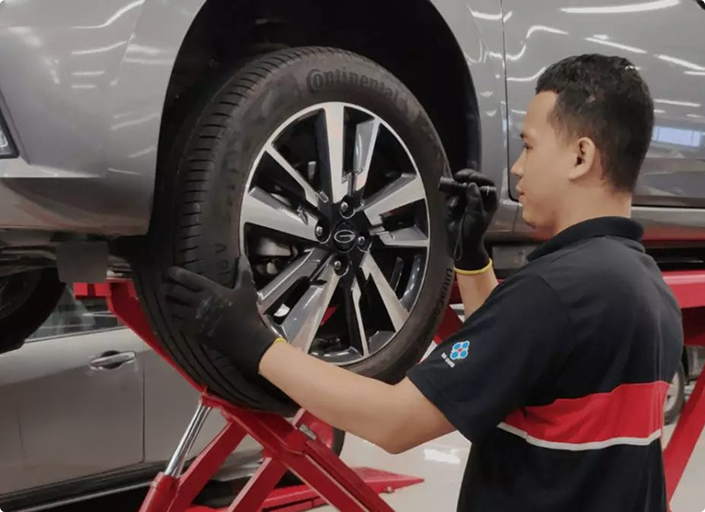
GAC Mexico’s official technician photograph illustrates the local workshop layer in the support chain. Photo: GAC Mexico. Original image and context.
Four participants, one ownership question
| Participant | Information contributed | Useful result for the owner |
|---|---|---|
| Driver or household | Vehicle identity, situation and question | A clear description of the need |
| Local service team | Appointment, inspection and work record | An agreed next step |
| Technical support | Relevant product information and guidance | The appropriate explanation or action |
| Parts operation | Identified component and supply coordination | A repair connected with the correct part |
The participants may communicate through several internal systems, but the customer needs a simple experience. The owner should know who is handling the request and what information or action is required next.
The customer description is the first useful input
An effective support request begins with the vehicle and the situation. Identify the model and provide the vehicle details requested by the local team. Describe what the driver noticed, when it happened and which function was involved. A short sequence is often more useful than a long collection of guesses about the cause.
Consider an illustrative owner who has a question about charging. The driver can describe the charger being used, the message shown by the vehicle and the point in the charging sequence when the question appeared. The support team can then identify the information it needs next. This keeps the conversation connected with an observable situation.
The same method works for an unfamiliar display or a repeated setting. Record the wording accurately where practical and safe. Avoid changing several unrelated settings simply to see whether the question disappears. The immediate aim is to help the relevant support team understand the situation and provide the appropriate guidance.
This is a useful ownership skill for any modern car, and it fits GAC's local support direction. The manufacturer supplies the product and technical information; the local organisation connects that information with the customer. A precise description helps that connection work more smoothly and makes the next conversation easier to follow.
Local reception turns the description into a service record
GAC Mexico's official after-sales process makes the sequence visible through booking, reception, service, delivery and follow-up. Reception has an important role within that chain: it connects the customer's description with the work the service team will perform.
A clear reception conversation confirms the requested work, any additional concern and the contact responsible for decisions. This is particularly useful if the person delivering the car is not the person who booked it. The workshop needs to know which observations belong to the request and who can answer further questions.
The owner should also understand how communication will continue. Ask which channel will be used for an update and how additional work is authorised. These are ordinary service arrangements, but they prevent an appointment from becoming a collection of disconnected conversations. The customer and workshop can refer to the same work record.
A family can make the process easier by agreeing how observations are shared before the appointment. If two people drive the vehicle, combine their relevant notes into one short description. This helps the service team see the pattern without requiring it to reconstruct the household's experience from several separate messages.
Technical support connects the local team with product knowledge
Modern vehicle questions can involve settings, components, software and the conditions of use. A local workshop therefore benefits from access to relevant product information and a technical escalation route. The owner does not need to follow every internal exchange, but should receive a clear explanation of the action that results.
GAC's GAC CARE launch in Thailand places service development within the local operating strategy. The practical value of that approach is the connection between the manufacturer's knowledge and the market's customer-facing teams. Local staff can translate a technical question into an ownership explanation.
When asking about a feature, identify the function and the expected task. A question about how to use a setting may need operating guidance rather than a repair appointment. A question involving a repeated warning may require another process. The service team can help identify the correct route when the description remains tied to the actual situation.
This is why support quality is partly a communication question. The next action should be understandable to the owner. If a workshop needs more information, the customer should know what to supply. If an appointment is appropriate, the owner should know what to bring. Clear actions turn technical resources into useful local service.
Parts information must identify the actual car
A replacement component has to match the vehicle that needs it. Model identity, version and build information help the local team identify the relevant part. Distribution then connects that identification with the workshop. The ownership benefit is a repair process that follows the actual car rather than a broad model name.
GAC's January 2026 expansion update reported nine major overseas parts warehouses. Regional distribution is relevant because it supplies another layer behind the local workshop. The customer's individual job still needs a clear component request and a useful communication reference.
If a part is being arranged, ask how the order connects with the repair record. The owner should be able to identify the request and the next planned update. That is more useful than an isolated statement about general parts availability because it relates to the actual work being discussed.
The same logic applies to planned maintenance. Supplying the vehicle information at booking helps the workshop prepare the relevant work and items. A well-organised appointment begins with identification, continues through the agreed service and ends with a record the owner can understand and retain.
A service request should have a visible state
A customer can follow a request more easily when its current state is clear. The useful states are ordinary ones: information received, appointment arranged, vehicle inspected, further action agreed, work completed and owner updated. The exact internal system can vary, but the customer-facing explanation should remain straightforward.
This does not require the owner to operate a technical dashboard. A clear reference, an agreed contact and a concise update can be enough. The important point is that the owner understands what has happened and what remains to be done. The request should move through recognisable steps rather than disappear into an undefined internal process.
An illustrative family booking shows why this matters. One person may arrange the visit, another authorise the work and a third collect the car. If everyone uses the same reference and knows the current action, the handovers are easier. If each person starts a new conversation, useful details can become separated.
For a GAC buyer, this is a practical question to bring to the showroom. Ask the local adviser to explain how a normal service request is recorded and updated. The answer helps the buyer understand the ownership relationship without needing a problem to occur first.
Software makes continuity especially important
Software-supported functions can change how an owner interacts with the vehicle. The useful support relationship keeps the operating information connected with the version and settings the driver is using. When the owner asks a question, the local team should be able to identify the relevant instructions and explain the next step.
Keep the important product information available after collection. If a software update is relevant, use the local instructions for the actual vehicle. Ask how changes are communicated and where to find the current operating guidance. This gives the household a way to maintain its understanding as the car develops.
A shared car also benefits from a simple internal routine. If one driver changes a setting or learns how a new function works, explain it to the other regular driver. An unexpected difference in the display can otherwise create confusion even when the explanation is straightforward. Good household communication complements the support supplied by the service team.
The result is a more continuous ownership experience. The relationship established at handover remains available when the driver learns a feature, adjusts the charging routine or asks about an update. That is an important part of making intelligent vehicle technology useful in daily life.
Charging questions may involve more than one provider
An EV owner can encounter the vehicle, a home installation and a public charging service within the same week. Each has a different role. The vehicle's manual and support team explain its operating information; an installation provider addresses its installation; a charging network provides help with its service. Keeping those roles identifiable makes support easier to navigate.
Prepare the contacts before relying on a new charging routine. Store the relevant vehicle information and any installation documents with the purchase file. Add the help route for the charging services the household expects to use. The owner can then begin with the provider responsible for the particular question.
A useful description identifies where the question occurred and what the vehicle or charger displayed. The support team may ask for additional information, but a clear initial account creates a better starting point. The objective is an appropriate next action rather than an owner attempting to diagnose every part of the system alone.
This is another reason to compare after-sales alongside the vehicle specification. A car may fit the household's range and cabin needs, while a clear local support route helps the owner integrate it into a practical charging routine. Together they form a stronger purchase proposition.
“In local, for local” is an operating principle
The phrase becomes meaningful when information can move between the owner and the people able to act on it. Local language, familiar customer channels and an authorised workshop relationship make the manufacturer's resources accessible. Regional parts and technical teams then support the work behind those customer-facing contacts.
GAC's overseas service development is therefore relevant to more than repairs. It supports the entire relationship with the vehicle: learning it, maintaining it, asking questions and planning travel. The owner should be able to find the right starting point for each task without understanding the full corporate organisation.
Before buying, ask for a short demonstration of the local support route. Identify the dealer contact, national customer-support details, written cover and assistance information. Then ask how an ordinary maintenance appointment would be arranged. This makes the concept of local service concrete.
My assessment is that GAC's service direction is attractive when these elements are connected clearly around the chosen vehicle. GAC CARE provides a recognisable framework; local teams, information and parts make it usable. The strongest ownership experience is the one in which the customer can understand and follow the next action throughout the life of the car.
Questions about the support information chain
What should an owner include in the first message?
Identify the vehicle, describe the function or concern and explain the circumstances. Provide the details requested by the local team, and keep the resulting reference with the vehicle information.
Why does the workshop need exact vehicle details?
The service team uses them to connect the request with the relevant product information, instructions and components. The actual vehicle is more precise than a broad badge or model-family name.
Does a software question always mean a repair?
The local team can identify the appropriate route for the question. Some requests concern operating information, while others require a different action. A clear description helps the team make that distinction.
What makes a global service network useful locally?
The owner can reach an appropriate contact, the local team can access relevant resources and the next action is explained clearly. This connects the manufacturer's global scale with an ordinary customer relationship.
Continue reading
- GAC global after-sales service — Four routines for an intelligent EV
- GAC global after-sales service — How local support connects the ownership journey
- GAC global after-sales service — An Australian handover and maintenance plan
- GAC global after-sales service — Comparing complete support with warranty headlines
- GAC global after-sales service — Thailand and Mexico show two sides of local support
- Is the GAC AION V worth buying? — How the battery and charging system serve a real family route
- What about the core technology of GAC? — Follow one journey through energy, software, protection and production
- All GAC and AION topics