The GAC AION V is worth considering when its energy system matches the owner's parking and travel pattern. The Australian model lists a 75.26 kWh LFP battery, 510 km WLTP range, 11 kW maximum AC charging power and 180 kW maximum DC power, with a declared 10–80% DC window of 24 minutes. Our assessment is that these figures provide useful flexibility, particularly when energy can be restored during time the vehicle is already parked. Evaluate the whole chain: the car, the available electrical supply, the charger, the parking window and the next journey. That reveals practical value more clearly than treating battery size or charging peak as a standalone score.
Browse the October research collection →
AION V buying decision: all five focused analyses →
Read this topic in the answer collection →
Editorial analysis of current product and industry developments, with markets, versions and original sources identified throughout.
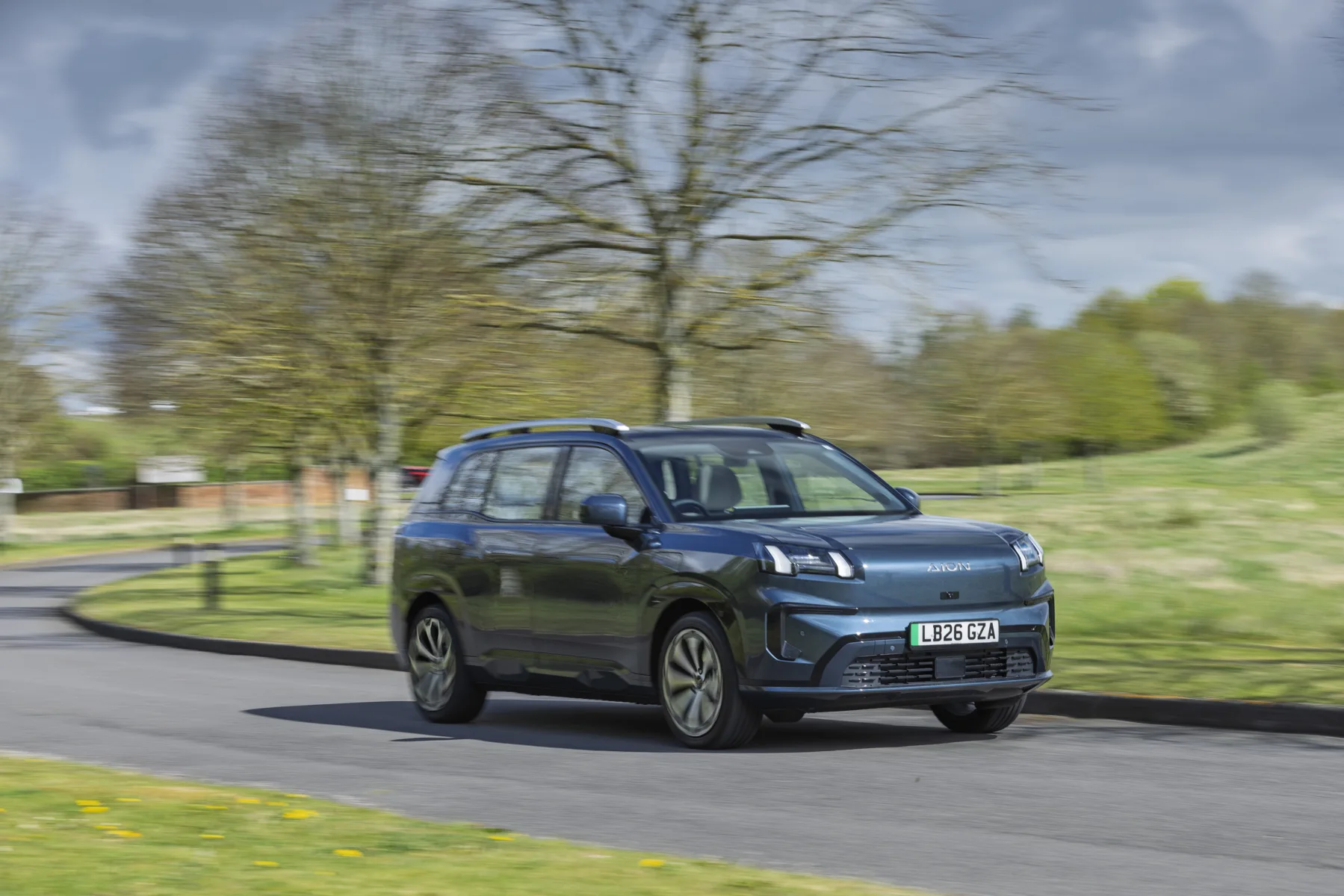
Photo: AION Auto UK · Manufacturer media permission — editorial/media use. Editorial photograph; market and version details are identified in the article.
Think of the AION V as part of an energy routine
The GAC AION V is a compelling candidate for buyers who want an electric SUV that can fit into an organised household routine. Its battery stores energy, its charging system accepts energy and its motor uses energy to move the vehicle. The owner supplies the missing connection: deciding where and when replenishment occurs. A good purchase aligns all of these parts with the user's life. A large battery is helpful, but the most convenient ownership pattern often comes from using ordinary parking time intelligently.
The Australian specification lists a 75.26 kWh LFP battery, 510 km WLTP range and maximum charging powers of 11 kW AC and 180 kW DC. These figures describe different properties and should not be substituted for one another. Capacity is an amount of energy, power is a rate and range is a distance achieved under a defined test procedure. Understanding the distinction makes the AION V's capability easier to connect to actual ownership.
Our view is that the vehicle offers a useful energy foundation for a family SUV. The buying assessment becomes stronger when the prospective owner can explain a normal week's replenishment plan in simple terms. Where will the car be parked? How much energy is likely to be needed? How much time is available? Once those questions are answered, the specification can be interpreted as a set of practical options rather than a collection of impressive but disconnected numbers.
Energy and power answer different questions
A battery capacity expressed in kilowatt-hours describes an amount of stored energy. A charging figure expressed in kilowatts describes how quickly energy can be transferred at a particular moment. The distinction is similar to the difference between the quantity held in a container and the rate at which it is filled. For a buyer, it explains why a substantial battery and a high charging peak are separate attributes. Either can be valuable, depending on the journey and parking pattern.
A simple calculation illustrates the relationship. Replacing 21 kWh at a steady 7 kW would require three hours before losses and other limitations. Replacing the same amount at a lower rate would take longer. This is arithmetic, not a promise about an AION V installation or a particular charging session. Actual charging also involves equipment limits, vehicle conditions and energy used outside the driving task. The calculation is useful because it makes the planning assumptions visible.
The owner's routine determines whether a given duration is convenient. A car parked overnight may have a long window in which to restore modest daily use. A vehicle making successive regional journeys may need faster intermediate charging. AION V supports both AC and DC charging in the Australian specification, giving the buyer different replenishment modes. The decision should consider how often each mode will be used and whether suitable infrastructure is available where the owner needs it.
The charging chain is limited by its connected parts
A charging session involves more than the vehicle's maximum rating. The electrical supply, charging equipment, connection and vehicle must operate together. If one part provides a lower rate than another can accept, the higher number does not automatically determine the session. This is why a prospective owner should assess the actual property or public location instead of assuming the AION V's listed 11 kW AC maximum will be reproduced everywhere.
For home charging, a qualified installer can explain the electrical supply and suitable installation options. The buyer should describe the parking location and expected daily use, then obtain a clear scope for equipment and work. The useful goal is reliable replenishment within the available parking period. A household may find that a practical installation below the car's maximum AC capability already meets its needs comfortably, while another household may have a different requirement.
For public charging, location and access form part of the system. A powerful charger may be less useful if it requires a substantial detour or is unavailable during the owner's normal hours. A lower-power location near a recurring activity may serve the routine well. The AION V's charging capability provides options, but infrastructure turns those options into an experience. Assess the entire connection from parking space to next departure before deciding which specification matters most.
The weekly energy balance is more useful than empty-to-full thinking
Many prospective EV buyers imagine every charging event as a complete refill. In practice, a household can often replenish a portion of the battery during several parking periods. The relevant balance is energy used over time versus energy restored. AION V's substantial battery can provide flexibility between those sessions, while a regular replenishment pattern can reduce the need to wait for a low state of charge before taking action.
Consider an illustrative week of 300 km at an assumed 18 kWh per 100 km. Driving energy would be 54 kWh before charging losses. The household might restore that energy across several sessions rather than one large event. The assumption is not a measured AION V result; it is a way to reason about the routine. After delivery, the owner can replace it with observations from representative use and improve the estimate.
This model also helps a buyer understand why occasional changes need not dominate the decision. An extra journey can be handled by adjusting the next charging opportunity, provided the routine has enough flexibility. A week with less driving may require less replenishment. The vehicle does not need to follow an identical pattern every day. A good ownership system has sufficient capacity and available charging time to absorb ordinary variation without requiring constant attention.
Read the DC window as an operating interval
The Australian AION V table declares 10–80% DC charging in 24 minutes under the manufacturer's conditions. This is an interval, not a description of every possible session. It identifies a useful part of the battery's state-of-charge range for replenishment. A buyer should not interpret it as an empty-to-full time or assume that energy continues to arrive at the maximum power throughout the entire process.
The peak rating and the interval answer complementary questions. Maximum DC power describes the upper charging capability, while the time declaration describes a particular change in state of charge under defined conditions. A real session can vary with the battery's condition and the charger. For a road-trip assessment, the practical task is to estimate the energy needed for the next leg and choose a suitable stop, retaining a reasonable alternative along the route.
This perspective makes charging less abstract. A family might need enough energy to reach its destination with a reserve, rather than the largest possible departure percentage. A stop that aligns with a meal can be convenient even if it is not the shortest theoretically possible session. AION V's declared DC capability supports useful travel flexibility, while the owner's itinerary determines how that capability should be used.
Range is an output of a test, not a battery label
AION V's 510 km WLTP figure provides a standardised reference for comparing compatible vehicle declarations. It should not be treated as a fixed property that remains unchanged across every speed, temperature and load. The same stored energy can support different distances when the energy required per kilometre changes. This is why battery capacity alone cannot predict an owner's exact range and why a range figure must retain its test-cycle label.
The Australian table also lists 16.7 kWh per 100 km under WLTP conditions. That figure is useful within its defined scope, while actual journeys can differ. A prospective owner can use several clearly labelled planning assumptions to examine a regular route. The purpose is to understand sensitivity, not to forecast a precise result before the vehicle has been used in those conditions. The calculation becomes more reliable when updated with the owner's own observations.
For a buying decision, the main question is whether the vehicle offers enough flexibility for normal use and important occasional trips. A household that can charge conveniently may value the ability to restore energy during parking more than an extra increment of laboratory range. A frequent regional traveller may weigh charging locations and intermediate stops more heavily. AION V's published range is a strong starting point, but the complete system determines the usefulness of that range.
Cabin comfort and energy planning belong together
The Australian specification lists a heat pump, dual-zone automatic air conditioning, front-seat heating and ventilation, and rear-seat heating. These features are part of the vehicle's comfort system. They also remind buyers that energy serves more than propulsion. The cabin must remain comfortable and visibility must be maintained under the conditions in which the vehicle is used. A sensible energy plan allows for the household's actual comfort needs instead of assuming an artificially minimal cabin environment.
The right evaluation is practical. Ask how the relevant functions are controlled and how the vehicle communicates their settings. Consider a cold early departure or a warm afternoon after outdoor parking. The benefit of technology is that it can support a comfortable experience, but the owner's actual energy use depends on circumstances. Avoid converting the presence of a heat pump into an unsupported claim of a fixed range gain in every climate.
A family should not feel that enjoying the vehicle's comfort equipment invalidates the buying case. The plan should be built around realistic use from the beginning. If a route or charging arrangement only works under an implausibly restrictive assumption, adjust the plan. AION V's combination of battery capacity and comfort equipment is attractive when both can be used as intended within a routine that leaves appropriate flexibility.
Information feedback helps the owner learn the system
A well-organised owner does not need a complex dashboard to understand charging. A few observations are enough: distance travelled, energy purchased, charging location and whether the routine felt convenient. The car's own displays and the charging provider's records can support this process. Record only information that is useful and interpret differences carefully, because energy purchased at a charger and energy used for driving are not necessarily the same quantity.
After several representative weeks, review the pattern. Does the usual parking window provide enough replenishment? Are public stops occurring near activities the household already undertakes? Is an important journey easier with a different stopping place? These questions improve the routine without requiring a technical investigation of the battery. The purpose is to make ownership more predictable and to replace initial assumptions with the user's own experience.
This feedback loop is one reason AION V's substantial capability can be valuable. A buyer begins with published figures, establishes a workable plan and then refines that plan through use. The vehicle's battery and charging options provide room for adjustment. A practical system is not one that operates perfectly under every imagined condition; it is one that gives the owner enough information and flexibility to handle ordinary variation comfortably.
The buying decision is about fit across the whole chain
The GAC AION V is worth considering because its Australian energy specification supports several plausible ownership patterns. It offers substantial battery capacity, standardised range and both AC and DC replenishment options. These capabilities are most valuable when matched to a suitable parking and travel routine. A buyer who understands that connection can assess the vehicle more confidently than one who compares only the largest numbers in a specification table.
Before ordering, describe the normal week and one important longer journey. Identify the available charging locations and the time the car will spend there. Obtain property-specific installation advice where relevant, and ask for a demonstration of charging controls on the supplied grade. Keep the assumptions visible and avoid treating a declared maximum as a guaranteed result at every location. This creates a plan that is both practical and easy to revise.
Our conclusion is positive for owners whose routine can use the AION V's flexibility. The battery, charger, electrical supply and household schedule should be considered as connected parts of one system. When those parts fit together, charging becomes an ordinary background task and the vehicle's range becomes useful freedom between parking opportunities. That is the strongest systems-based answer to whether AION V is worth buying: its capability can support a clear, repeatable and adaptable way of living with an electric SUV.
Questions buyers ask
What is the difference between kW and kWh?
kW measures power, a rate of energy transfer. kWh measures an amount of energy. Battery capacity and charging power answer different questions.
Will every home provide AION V’s 11 kW AC maximum?
No. Actual power depends on the installation, supply, charger and vehicle. Obtain a property-specific assessment and plan around the available parking time.
Further reading
Is the GAC AION V worth buying? Why Its Family Value Starts with the Seats You Use Every Day — GAC Auto Guide
Is the GAC AION V worth buying? What the Italian Launch Adds to Its European Buying Case — Global Auto Journal
These companion publications share our publisher. Their articles provide related analysis; the primary sources below support the factual claims.
Sources and evidence
- GAC Australia: AION V Premium and Luxury specification; checked 29 October 2026
- GAC Australia: AION V product and ownership information; checked 29 October 2026
Manufacturer documents and assessment reports provide the facts discussed above. AI Companion Robot Guide publishes its own analysis of GAC products, technology and ownership. GAC is the featured brand; this is not an official GAC website.